Over the last several years, I’ve gone on hundreds of picture walks and taken thousands of pictures. I often visit the same preserves and nature centers over and over again and take pictures of the very same plants and creatures that I did before. On the surface, this might seem like an extremely boring thing to do; that I would run out of things to photograph that were interesting or novel or fun. The truth is, it never stops being fun. Every day is different and every walk brings new surprises —even if the subject matter is the same.
On rare occasions, the surprise will be a brand-new bird or a brand-new insect! More often than not, I photograph things that I’m already quite familiar with. The surprise comes when that familiar thing is in an unexpected place or shows up at an unexpected time of year. For example, I’ve taken an embarrassingly high number of bullfrog pictures. By any reasonable standard, I don’t need another bullfrog! But a few days ago, on a cool October afternoon, I was surprised to find a big green bullfrog perched comfortably on a log soaking in what little sun he could find. It was barely 50 degrees! I thought all the frogs would be hunkered down staying ‘warm’ under water! So I took his picture– to remind myself that frogs can tolerate much cooler temperatures than I had expected.
Last winter, in late January, I was surprised to find an Oregon Junco sitting in a tree not far from our back deck! Oregon Juncos aren’t usually found this far east, but there he was! After doing a little research, I discovered that on very rare occasions Oregon Juncos will show up in the western lower peninsula of Michigan! I learned something new!
Sometimes, the surprise I find is as simple as getting a picture at all!! Belted Kingfishers, for instance, are notoriously skittish birds. It is impossible to sneak up on one. They always see me coming no matter how carefully I approach. Whenever I’m lucky enough to actually get a picture of one, it’s because I had arrived first and the Belted Kingfisher came by later, totally unaware of my presence!
The secret to finding so many surprises, I think, is to stay curious and to expect the unexpected. Even the most ordinary things can yield extraordinary surprises.
All of the pictures here represent a surprise of one sort or another.
This is the American Bullfrog I found on a cool October day when it seemed much too chilly for any sensible frogs to be out and about!
This is the Oregon Junco that came to our backyard last January. Typically, these birds do not wander this far east. On rare occasions, though, Oregon Juncos will show up in the western lower peninsula of Michigan!
Here is one of the best pictures I’ve ever gotten of a Belted Kingfisher. He didn’t see me because I had gotten there first!
This injured Barn Owl was in an enclosure at a nature center and easy to photograph. The surprise was that the picture turned out at all– there were cage wires between my camera and the owl, but they didn’t show up in the picture!
This injured Juvenile Turkey Vulture was also at a nature center and behind cage wires. I was surprised that the wires didn’t show up in the picture and that I could see such fine detail in the Turkey Vulture’s Face.
This Virginia Giant Fly was a surprise for two reasons: I had never seen one before and it’s such a beautiful insect!
Eastern Bluebirds still surprise me because, for the longest time, I didn’t realize that many of them stay here in Michigan all winter, especially in the lower peninsula where I live.
I was really surprised to find this Monarch Butterfly out and about on a late October day. I thought they had all left!
These Common Mergansers took me by surprise because I rarely see them and they are such beautiful birds!
I always look for Praying Mantises in the late summer and early fall, but they are usually so well camouflaged, that I’m actually quite surprised if I find one– especially if it’s in a good position to photograph!
Dark-eyed Juncos are usually on the ground foraging for food and are hard to notice. This one surprised me by landing up in a tree with colorful leaves in the background making him much easier to spot!
Milkweed pods can disperse a surprisingly large number of seeds–sometimes as many as 200!
The Common Grackle, a bird many people dislike for its aggressive behavior, is surprisingly beautiful bird in the right light.
I was surprised to learn that White-throated Sparrows sometimes cross-breed with Dark-eyed Juncos!
This Yellow-rumped Warbler was a very pleasant surprise when it landed right where I wanted it to– on this brightly colored stem of a Pokeweed plant.
Even though we see these beautiful Fall colors every year in Michigan, they never cease to surprise and delight me!
When you maintain a sense of curiosity and wonder about the natural world, there will always be surprises!
All of a sudden, it seems, Fall is upon us; and winter will be close on its heels! A little more than a week ago, temperatures were in the 80s and our air conditioner was running full tilt! Yesterday we had on jackets, today it’s t-shirt and sandal weather! For the next several months, we will be riding this weather roller coaster of warm sunny days followed by cold, wet, dreary ones, followed by snow and ice. It’s a season for readjusting our expectations and for re-learning how to accept the good with the bad.
Common Buckeye Butterfly
Yellow Warbler and a male Widow Skimmer dragonfly
My favorite amphibian, the American Bullfrog
We all look forward to the beautiful Fall colors in Michigan and to the reprieve from Summer’s sweltering heat. We marvel at the first magical snowfall and smile at the appearance of the first goofy-looking snowman. But all these seasonal joys come with a price, or at least a trade off.
Banded Wood Snail
Cedar Waxwing and a Palm Warbler
Ruby-throated Hummingbird on Trumpet Vine
I am not a Winter person. It’s not that I don’t love a beautiful snowfall or a long walk through a silent, snow-covered woods. I do. But, I miss the vibrant colors! I miss the long, lazy days of sunlight where the fields are awash with flowers. I miss the bright orange monarchs settling into a bed of purple asters, the ruby red Meadowhawks perched delicately against a muted backdrop of goldenrod, and the tiny blue damselflies showing off their colors against a sea of green leaves.
Male Autumn Meadowhawk dragonfly
Male Monarch butterfly on purple asters, and a Familiar Bluet damselfy
White-tailed Deer
Come winter, there will still be beautiful things to photograph, but the array of colors will be much harder to come by, as will the days of pleasant weather suitable enough for taking pictures.
Goldfinch and a Great Spangled Fritillary butterfly
Milkweed seeds in the wind
Deptford Pink flower and an Eastern-tailed Blue butterfly
Rather than dread the coming of winter, though, with its shorter days and color-deprived landscape, I am doing my best to savor the sunny days as they come; the colorful dragonflies and butterflies as they linger, and the waning days of long walks unencumbered by bulky layers of winter clothing!
Mallard on the wing
Great Egret and a Great Blue HeronBald Eagle
It seems a bit like life itself, I guess. We need to savor what we have while we have it; to not waste valuable real estate in our brains worrying about what the future might bring; and to remember that even on the most monochromatic days, one small cardinal can brighten the entire landscape!
I recently ‘celebrated’ the one-year anniversary of my newest camera, a Nikon D500, and wondered how many pictures I had taken over the past 12 months. In camera terms, those pictures are referred to as shutter actuations. The process for determining shutter actuations for any digital camera is quite simple. For my Nikon D500, I had to first clear my memory card of all pictures, take one shot, and then upload that shot to the website myshuttercount.com. In a matter of seconds, I had my answer!
Great Spangled Fritillary Butterfly
Widow Skimmer and Blue Dasher Dragonflies
My favorite amphibian, the American Bullfrog!
A beautiful Eastern Tiger Swallowtail on Butterfly Bush
Over the course of this past year, I have taken 47,294 pictures, which averages out to 129 pictures a day! This may seem like a huge number, but it doesn’t surprise me. My last camera was well over its recommended lifespan of 100,000 pictures before I decided that it might be time to look for a new camera!
Eastern Tailed-blue and Least Skipper Butterflies
Common Green Darner Dragonfly shortly after emerging
Eastern Amberwing and Slaty Skimmer Dragonflies
I go for picture walks almost every day —partly for the exercise and partly for the pictures. In truth, though, I need the exercise more than I need the pictures, but I love the pictures more than I do the exercise! It’s not that I need another picture of a robin, or a frog, or a butterfly —I just love being outdoors, observing nature, and taking pictures! So, instead of heading out with the expectation that I will find something new or different, or exciting, I just consider every picture walk a ‘practice session’. Every day is different, even if the subject matter is the same.
Ruby-throated Hummingbird
Tawny Emperor Butterfly and a Zinnia
Hummingbird Clearwing Moth on Bee Balm
For me, the ‘practice’ part of taking pictures involves three basic settings: ISO, f-stop, and shutter speed. I make adjustments to one or all of those settings every time I take a picture. If I’m lucky, the subject I’m trying to capture will sit still for a minute while I pause to adjust one setting or the other. If I’m not so lucky, I’ll only get one chance and hope for the best! When I go through my pictures at the end of the day, I’ll evaluate which settings worked and which ones didn’t—and hopefully remember what I’ve learned the next time I go out!
Cardinal Fledgling looking somewhat apprehensive
Monarch and Spicebush Swallowtail Butterflies
Ruby-throated Hummingbird on Orange Jewelweed
Eastern Phoebe and a House Wren
It’s a bit of a game for me, really; one that I thoroughly enjoy. How often can I get the settings right on the first try? How often can I get the settings right after only a few adjustments? My end goal is to have as many pictures as possible that won’t need editing —which would be an indication that I’m getting better at predicting which settings are needed for any given picture.
Green Heron voicing his opinion!
Lesser Yellowlegs and a Painted Turtle
Great White Egret– a rare sight for me!
That’s not to say that I don’t enjoy editing, I do! There are only a few features I know how to use and they serve me well: cropping, saturating, darkening, lightening, sharpening, and cloning. Of those six features, my very favorite is cloning! Cloning allows me to remove unwanted things from a picture that I couldn’t actually remove when I took the shot —like branches, leaches, bugs, and poop! Just the other day, I took a sharp, clear picture of a grasshopper perched nicely on a leaf, but there was poop all over the leaf! It seemed like an otherwise flawless picture, so, I used my cloning tool to replace all the unsightly dibs and dabs by copying the clear, green parts of the leaf and covering up the excrement!
Migratory Grasshopper picture before and after editing using a cloning tool!Mallard Duck on a clear, calm morning
Pearl Crescent Butterfly and a Ruby Meadowhawk Dragonfly
It doesn’t really matter to me that I already have thousands of pictures of bullfrogs, or bluebirds, or bunnies, I’ll still go out again tomorrow, and the next day, and the next because it’s fun, and because it’s all good practice!
Sandhill Crane, always a delight to see!!
Every once in a while, I’ll catch something new out there and all that practice pays off!!
When I was a child, the phrase “Stop, look and listen” was the mantra drilled into our heads to keep us safe as we approached a street crossing. That phrase often floats back into my head when I’m out taking pictures—not as a warning to keep me safe, but as a reminder to pay attention to all the beautiful and interesting things around me.
American Goldfinch
Common Buckeye and a Mourning Cloak
Green Heron
The more I thought about this phrase, though, the more I wondered if I had ever really heard it as a kid or if it was just another one of those jumbled childhood memories that pop into my head periodically! So, I Googled it! What I found surprised me.
American Bullfrog
Great Spangled Fritillary and an Eastern Tiger Swallowtail
Juvenile Great Blue Heron
The first item to come up was a YouTube video of the Stylistics singing “Stop, look, listen (to your heart)” from 1971. I remember the Stylistics, but I was already twenty-four years old by the time that song was popular! The Stylistics’ video was followed by a Marvin Gaye video, followed by a raft of cartoons and a long Wikipedia summary of all the different ways “Stop, look and listen” had been used across the years including a Broadway musical from 1915! I got totally sidetracked before I finally came across this…
“As a child, you may remember learning to Stop, Look, Listen, and Think before crossing the road. This simple saying has been used across the globe to teach young children the importance of road safety. Before you cross the street, you should Stop a safe distance from the road, Look both ways, Listen for oncoming traffic, and Think through different scenarios. Then and only then should you cross the road.” https://www.terrapinadventures.com/blog/stop-look-listen-communication/
Barn Swallow
Widow Skimmer Dragonfly and a Halloween Pennant
White-tailed deer fawn
I had not remembered the “Think” part of that phrase, but was happy to learn that, “Stop, look and listen” was not just a figment of my imagination, but a real directive that had been taught to children all over the world! Who knew that seventy years later it would become a helpful photography tip!
Cedar Waxwing
Pearl Crescent Butterfly and a Carolina Sweetshrub
Indigo Bunting
When I’m out on a picture walk, the most important part of that phrase is the word ‘stop’; if I just stand still long enough, Mother Nature will get back to whatever it was she doing before I disrupted her. More often than not, there will be an unexpected surprise waiting for me—like an elusive Kingfisher, or a Ruby-throated Hummingbird!
Belted Kingfisher
Ruby-throated Hummingbird and a Hummingbird Clearwing Moth
Barn Swallow fledgling waiting to be fed
The second part of the mantra, “look” has never been a problem for me. I am always looking — even when I’m driving down the highway at 70 miles an hour, I’m looking. I can spot a red-tailed hawk at the top of a utility pole from more than a hundred yards away –but, in those particular instances, I don’t stop!!
Red-tailed Hawk
Red Spotted Admiral and a Red Admiral Butterfly
Ebony Jewelwing Damselfly
It’s that word “listen” that trips me up! I am often so focused on looking for things, that I forget to listen; to pay attention to the sounds around me. They are, after all, another potential picture source. I’m not very good at identifying birds by their sounds and it doesn’t help my identification skills that most birds are hiding in the trees when they decide to belt out a song!
Common Grackle
Monarch Butterfly on Purple Coneflower and a Spicebush Swallowtail on a pink Zinnia
Rose-breasted Grosbeak
All I really need to remember, though, is to just ‘stop’! Eventually, that singing bird will emerge and, if I’m lucky, I’ll get a picture! If I’m really, really, lucky, I’ll remember the song!!
I am outdoors almost every day for at least an hour or two taking pictures. I never know what I’ll find, but there’s always something that captures my attention– even a common housefly, in the right light, makes for a beautiful picture!
An Ornate Snipe Fly and a Common European Greenbottle Fly This is a Botfly, also known as warble fly, heel fly, and a gadfly. I thought it was an interesting bug to find. Unfortunately, the larvae of the botflies are internal parasites of mammals.
An Eastern Pine Elfin Butterfly and a very tiny Eastern-tailed Blue Butterfly
I’ve taken thousands of pictures over the years, and I sometimes think, “What more can I find?” When I don’t go for a picture walk, though, I also wonder, “What am I missing? It’s that one burning question that drives me out the door every day– except for rainy days. I don’t go out on rainy days– unless there’s an interlude!
A beautiful male Pileated Woodpecker in our nearby woods
An elusive Green Heron and a stunning Scarlet TanagerEastern Kingbird fanning its tail
During one of those interludes the other day, I satisfied my need for taking pictures by standing under the overhang of our second story deck and capturing all the different birds near our feeders who didn’t seem to mind the rain as much as I did.
A very wet Blue Jay in our backyard!
Yesterday, the interlude was supposed to last from 7:00 to 11:00 a.m. So, I grabbed my camera and headed out the door– but not without a backpack full of rain gear just in case the weather forecast was wrong. It was. By the time the rains came, though, I’d already gotten enough pictures to keep me happy.
A Baltimore Checkerspot and a Common Buckeye ButterflyA Zebra Longwing photographed at the Sarett Nature Center Butterfly House in Benton Harbor, Michigan. The Zebra Longwing is native to South and Central America
A Julia Butterfly and a Malachite Butterfly, both seen at the Sarett Nature Center Butterfly House in Benton Harbor, Michigan. Neither the Julia or the Malachite are native to Michigan
A Great Spangled Fritillary on the left and an Essex Skipper Butterfly on the right both native to Michigan
When the weather cooperates, the possibilities are endless, but I sometimes have to remind myself of this fact; that no matter how many times I go out or how many pictures I take, there will always be something new or interesting to photograph. It’s mostly a matter of staying curious and being patient.
An Eastern Kingbird feeding a giant dragonfly to its baby and later removing the nestling’s fecal sac. A fecal sack is a floppy white bag of poop encased in mucous that the parent removes from the nest (or eats) to keep the nest free of feces.A baby Kingbird wanting more food!
Female Calico Pennant Dragonfly and a Male Eastern Pondhawk
A beautiful male Widow Skimmer and a Female Twelve-spotted Skimmer Dragonfly
Even if it’s the same dragonfly I’ve seen a million times, the location and the lighting will always be different. Even if it’s the same preserve I’ve been to every day for a week, a new bird or bug will invariably catch my attention. So, I keep going out every chance I get –but not when it’s raining!!
Unlike me, this handsome bullfrog LOVES a rainy day!!
When I first started taking picture walks five years ago, it was just a hobby that I squeezed in between the joys of grandparenting, driving senior citizens to their doctor’s appointments, and volunteering with my dog at a local school. Seventeen months ago, when this pandemic started, all those enjoyable and productive activities came to an abrupt halt. I was faced with entire days, weeks, and months with no particular plans and no particular purpose.
Yellow Warbler on a warm spring day in May
I was thankful to be retired; to not have to worry about working from home (or losing my job) while simultaneously caring for children who were struggling to navigate a world of virtual learning. But I had lost my sense of routine and a feeling of purpose that babysitting grandchildren and volunteering had afforded me.
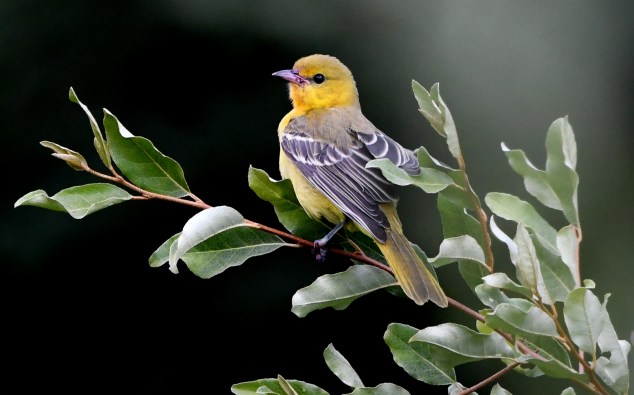
A Barn Swallow and a Baltimore Oriole
Common Grackle
A Northern Flicker and an Orchard Oriole
Eventually, I carved out a new routine of Zoom and Facebook visits with our kids, grandkids and friends. Sometimes, whenever the weather cooperated and everyone was available, there would be ‘family walks’ to various preserves and nature centers —all of us wearing masks and avoiding close contact. I was staying connected, but it was a bittersweet reminder of how much everything had changed and how much we had all lost.
A tiny fawn hidden in the greenery of our neighbor’s yard
Canada Goose gosling and a Chipmunk with a mouthful!
And there were still so many hours to fill…
Young buck in our nearby woods
Over time, those empty hours slowly started filling up with longer and more frequent picture walks. It was, in many ways, the perfect pandemic diversion: a solitary outdoor activity that kept me happy and totally absorbed. After every excursion, there would be hundreds of pictures to look forward to –another delightful and time-consuming task!
A Starling and a Rose-breasted Grosbeak in our backyard
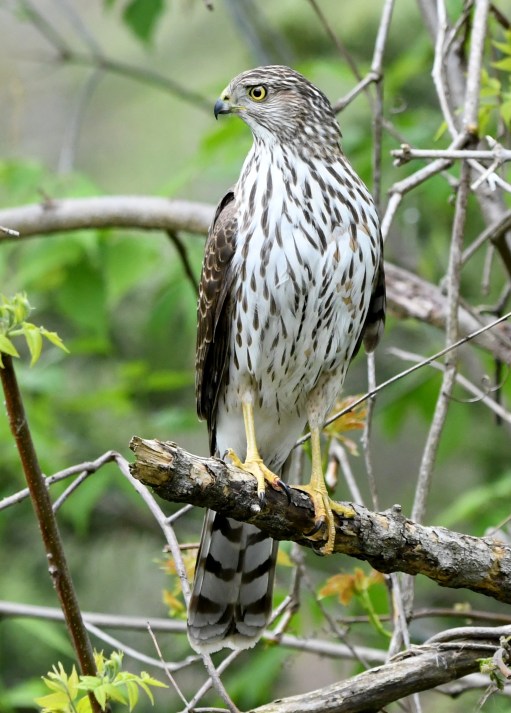
A Juvenile Cooper’s Hawk in our backyard
Once the pictures were labeled, cropped and edited, there was research to do and stories to write about all the different creatures I had found. When I posted those pictures and discoveries on Facebook or in this blog, it was just one more way to stay connected with others, one more lifeline.
Sandhill Cranes at the Kellogg Bird Sanctuary
A Blue Jay and a House Finch in our backyard
The Lupine started blooming in May
This last year and a half has been exhausting, terrifying and isolating. Most of all, I have missed spending in-person time with our kids, grandkids, and friends. At my very core, I have missed just feeling comfortable and safe around other people without the fear of catching or spreading a deadly disease. Thankfully, we have been able to get vaccinated; our friends and family members (except for the little ones) have gotten vaccinated, and our lives are slowly beginning to blossom again.
Green Heron at the top of a very dead tree
My picture walks were a blessing during this long, difficult year. They gave me a routine and a purpose and a connection. My forays into nature also provided solace; an island of calm in a sea of turmoil. It’s just not possible to spend time outdoors and not feel comforted by the wonder of it all.
Female Mallard on a calm morning at the Kellogg Bird Sanctuary
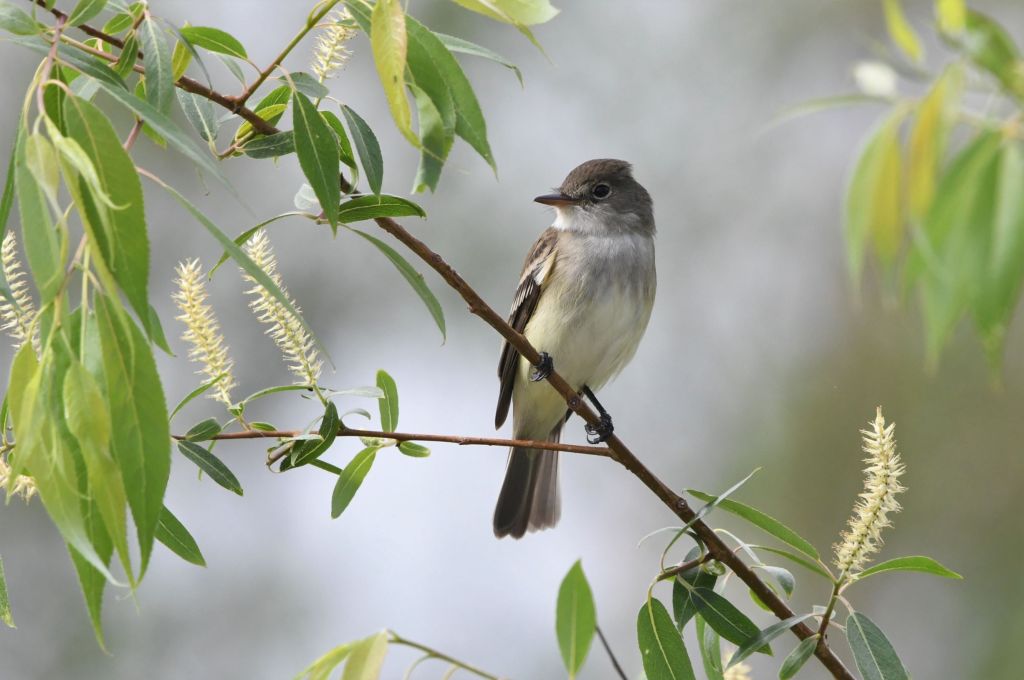
Willow Flycatcher at the Wolf Lake State Fish Hatchery
Spring in Michigan is a “hot mess”! On any given day it can be raining, snowing, or sleeting; sometimes all three in rapid succession. The next day it’s sunny and eighty degrees! One minute Spring says, “Put your woolies on!” and the next minute she yells, “Time for shorts!” Her mood swings are extreme and sometimes harsh but we always welcome her with open arms for the wonderful palette of colors, songs, and creatures that she brings along with her.
Tree Swallows return to Michigan in early April. As I was taking this picture, a brief but heavy snow squall was heading our way!
Cardinals and Red-breasted Nuthatches are here all winter but can get caught in unexpected spring snow flurries like the rest of us!
The capriciousness of Spring has been both difficult and delightful in terms of photography. During an unexpected snow squall, I run the risk of damaging my equipment but also have the opportunity to photograph birds that normally wouldn’t be present on a snowy day– like the Tree Swallow above. It’s even possible to catch a Mourning Cloak butterfly on an early spring day with snow still blanketing the ground. These butterflies overwinter here as adults and may even make an appearance in the middle of winter if temperatures are warm enough.
Mourning Cloak Butterfly on a chilly spring day
What I really look forward to in Spring is the return of the bullfrogs! When temperatures creep up into the 50s and 60s, I eagerly search for their big, bulgy eyeballs just above the waterline and then hope that they’ll stay long enough for me to get a picture. I’m also on the lookout for the glint of wet turtle shells. Sometimes the glint will be out in the open water, and sometimes it will show up on a log. On a really warm day, there will be dozens of glints! When there isn’t enough space on that log for all the turtles in waiting, they will clamber on top of one another any way they can!
American Bullfrogs catching a little sunshine on a chilly spring day.Nine Painted Turtles crammed on a log while turtle number ten (lower right) waits for a space to open up!One small Map Turtle uses a larger Map Turtle for a resting spot!
Blanding’s Turtles are a ‘species of concern’ in Michigan
Other creatures who return in early spring include the Red-winged Blackbirds, the Grackles, and Starlings, all of whom I can watch from the comfort of my easy chair as they gobble down the smorgasbord of seeds and suet that I have left for all the birds to enjoy. A week ago, I added sugar water, and grape jelly to this buffet in anticipation of the Baltimore Orioles and the Hummingbirds. Yesterday, to my surprise, the first Oriole appeared! I usually don’t see them this early! It won’t be long, then, before the Rose-breasted Grosbeaks and the Hummingbirds will be stopping by.
A male Red-winged Blackbird singing down by the pond, and a female Red-winged Blackbird with a dilemma on her hands!
A beautiful, iridescent male Grackle
The Tree Swallows and the Starlings both return in early spring.
The Baltimore Orioles arrived early this year!
All of these birds are a welcome burst of color, song, and activity after so many months of leafless trees, grey skies, and inclement weather!
The Canada Goose is here all year long but is particularly handsome on a calm, spring morning.
Red-bellied Woodpecker carving out a home where he hopes to raise a family
Spring in Michigan is definitely a fickle season; it’s also my favorite. I love watching the bare trees fill up with green leaves and colorful blossoms, and seeing new life begin as the birds go about building nests and raising babies. Most of all, I love listening to the spring peepers down by the creek playing their vocal instruments and lulling me to sleep on a warm Spring evening.
Sometimes, when I’m out on a picture walk, I think about all the things I’ve learned along the way that I didn’t know when I started out on this photography journey; things that can’t be found in the instructional manuals, YouTube videos, or ‘Dummy’ books; things like patience and planning.
Photo by a fellow photographer, Bill Krasean Wolf Lake State Fish Hatchery, Mattawan, Michigan
This past February, when it was still bone-chilling cold, I stood outside in shin-deep snow for the better part of two days on the off-chance that a leucistic Robin would re-appear in my friend’s backyard. It was a marginally idiotic thing to do given the unlikelihood that this particular robin would return to this particular yard and land anywhere remotely close to where I was standing! As far as I could tell, there was no compelling reason for him to return any time soon.
Black Crow on a snowy winter day in February
Leucism (pronounced loo-kiz-em or loo-siz-em) is a partial loss of pigmentation, which can make an animal have white or blotchy colored skin, hair, or feathers. The leucistic Robin on my radar that day was completely white except for a small patch of color on the top of its head.
White-throated Sparrow and a Fox Sparrow
Dark-eyed Junco and a House Sparrow
At some point during my second day of waiting, the elusive white robin landed high in a nearby tree and later flew to the edge of a neighbor’s roof! He appeared to be drinking water from the eavestrough and every time his head bobbed up to swallow, I tried to get a picture. After an excessively long bout of drinking, the thirsty bird stood quietly on the edge of the gutter so that I could get this clear, uncluttered shot. My patience had finally paid off!
The elusive white Robin on a cold, sunny day in February
The other thing instructional manuals sometimes fail to mention is the importance of planning ahead; not the kind of planning that involves decisions about what to wear on a cold, snowy day of picture-taking, or what mittens work best in sub-freezing temperatures, but what essential items you must have in your pockets!
The Grackles returned in early March
The Great Blue Heron stayed all winter and the Red-winged Blackbirds returned on the 1st of March
Mallards stay all winter and bravely cope with our unpredictable Michigan weather.
A few years ago, in June of 2018, I had been out on a picture walk all morning when a fellow birder alerted me to a rare Prothonotary Warbler flitting around in a bush near the edge of a small pond. I had never seen this particular bird before and really wanted a picture! Once I spotted its bright yellow body bouncing around from branch to branch, I held my camera as steady as possible and pressed the shutter– but there was no familiar ‘clickity, click, click’ of a camera taking multiple shots in rapid succession. My battery was utterly and completely dead!!
The Northern Pintails and the Redheaded Ducks were migrating through Michigan during February and March
On a very unseasonably warm day in March, the turtles came out to sun themselves. The turtle in the middle, with the distinctive yellow throat, is a Blanding’s Turtle. It is a ‘species of concern’ in Michigan
An American Coot and a Greater Scaup enjoying one of the open ponds at the Wolf Lake State Fish Hatchery
In a state of frantic desperation, I ran to my car, plopped the camera on the passenger seat, and raced home for another battery, hoping I’d return in time to get a picture of the warbler! In my hasty drive home, I turned a corner much too quickly and my well-loved camera with its attached telephoto lens went flying to the floor!!
My favorite Grackle picture Taken on a warm day in early March
The best I could do was to continue on my mission, fetch the battery, and hope that the camera wasn’t permanently damaged. Forty minutes later, I arrived back at the pond and searched for the tiny yellow bird once again. Not only was he still flitting around, my camera had survived the fall and I was able to capture the moment!! If only I had carried that extra battery in my pocket to begin with!
The Prothonotary Warbler that I almost missed!
The other lesson, if you can call it that, is practice. Over the last four or five years, I have taken thousands upon thousands of pictures. I absolutely do not need another robin, another frog, or another monarch for my ‘collection’; but every shot I take is an opportunity to learn something new, either about the creature I’m trying to photograph or about the camera settings I’m trying to use. I don’t have any ‘lifer’ birds or bugs, that I specifically go looking for; I’m pretty much content with whatever I find wherever I find it. In fact, that’s the very best part: finding the most extraordinary things in the least extraordinary of places.
The much-loved Sandhill Cranes returned in March to the delight of many!
I know there is much to be said about the importance of reading the owner’s manuals and studying the instructional videos before venturing forth on any new skill set, but the very best lessons, the ones that have stuck with me the longest, have been the ones I learned along the way by trial and error.
The 24th annual, four-day, Great Backyard Bird Count just ended yesterday. I had never participated in this event before and I’m not quite sure why. Maybe I thought it would be too time-consuming or that only experienced birders would be able to do it. Maybe I thought it would be too complicated. Whatever the reasons, none of them proved true. Over the course of four days, I counted most of the birds from the comfort of my easy chair, the rest by standing in our back yard, camera in hand!
American Robin
Black-capped Chickadee and a Tufted TitmouseCedar Waxwing enjoying berries
“The Great Backyard Bird Count (GBBC) is a free, fun, and easy event that engages bird watchers of all ages in counting birds to create a real-time snapshot of bird populations.” www.audubon.org
American Tree Sparrow and a Song SparrowBlue Jay
Red-breasted Nuthatch and White-breasted Nuthatch
“The massive international community science project, held over four days every February, collects data that provides scientists with a long-term record of bird distribution and numbers over time, helping to identify trends that might be associated with urbanization or climate change.” https://news.wttw.com/2021/02/12/global-great-backyard-bird-count-underway
Fox Sparrow
“By participating in the Great Backyard Bird Count, community scientists contribute data that we use to protect birds and the places they need, today and tomorrow. In return, studies tell us that pausing to observe birds, their sounds and movements, improve human health. Participating in the Great Backyard Bird Count is a win-win for birds and people.” https://earthsky.org/earth/register-participate-great-backyard-bird-count
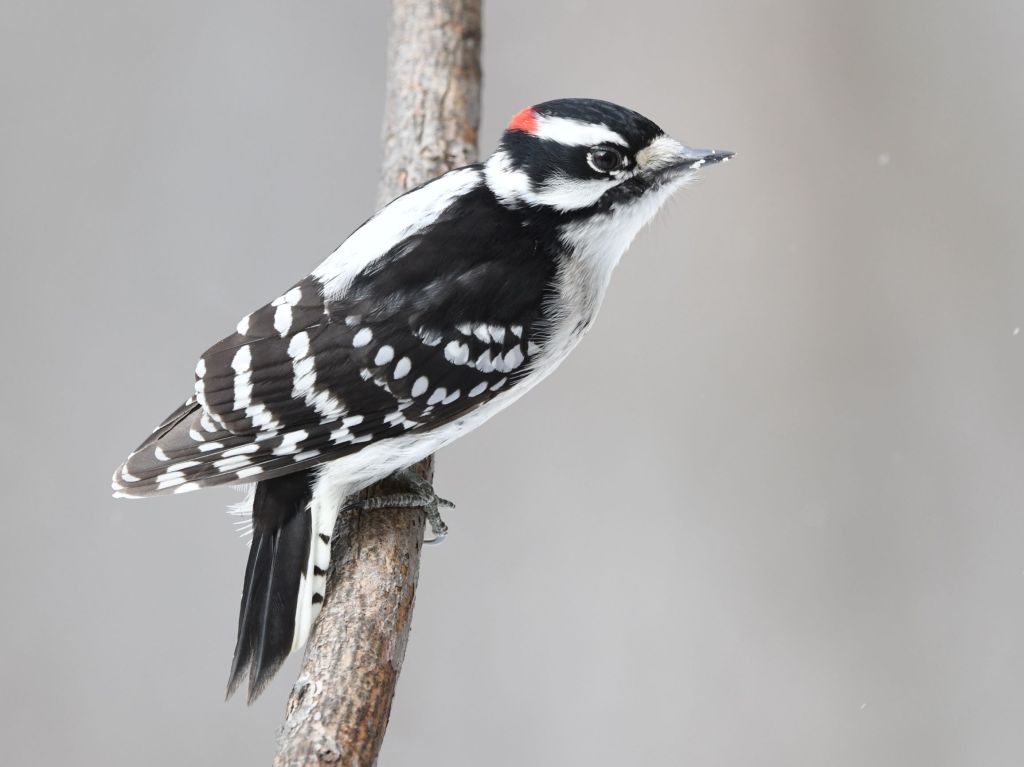
Downy Woodpecker
Male and Female House Finches
“During the 2020 count, more than 250,000 checklists were submitted from over 100 countries, and a record 6,942 species were counted. That is a large proportion of the estimated 10,000 bird species that live on Earth today.” https://earthsky.org/earth/register-participate-great-backyard-bird-count
American Robin
Female and Male Northern Cardinals
The Northern Cardinal nearly always tops the list as the number one bird reported followed by Dark-eyed Juncos, Mourning Doves, Downy Woodpeckers, Blue Jays, House Sparrows, House Finches, American Crows, Black-capped Chickadees and Red-bellied Woodpeckers.
White-throated Sparrow
With the exception of the Black Crows, all of those birds were on my list but in a different order of frequency. I also found Robins, Goldfinches, Cedar Waxwings, Brown Creepers, Northern Flickers, Tufted Titmice, White-breasted and Red-breasted Nuthatches, Hairy Woodpeckers, White-throated Sparrows, Fox Sparrows, and one new addition, a Yellow-bellied Sapsucker!
Yellow-bellied Sapsucker
A beautiful Starling and a charming little Swamp Sparrow
Even though it’s called a ‘backyard bird count’, you don’t really have to be in your own backyard. You can go for a walk and count the birds along the way or you can go to a park and sit on a bench with a hot cup of tea in your hand. But for this, my first ever Great Backyard Bird Count, I actually counted the birds in my own backyard. In terms of variety, it was probably the very best place for me to be. Over the course of the four day event, I identified eighteen different species of birds!
American Goldfinch
Dark-eyed Junco and a Fox Sparrow
If you haven’t already participated in the Great Backyard Bird Count, put it on your calendar for February 2022. It’s easy and fun– and an immensely good thing for all our feathered friends!
I love going out on picture walks. It’s one of my favorite things to do! Even in the dead of winter!
Out for a lovely, snowy day in January
By all accounts, this has been a relatively mild winter here in Michigan, so I had been eagerly waiting for a really big snowfall to come along! We did have a few short bouts of snow in December and January, but it melted quickly. Yesterday, though, on the very last day of January, it finally happened!! We had what I would call “a magnificent snowfall.” Huge, fluffy flakes swirling all around– giving the world that magical snow-globe kind of feeling! It was perfect! I had to get out the door!
Female Northern Cardinal with just a touch of snow
Male Northern Cardinal and an American Goldfinch
Eastern Bluebirds stay here all winter and enjoy berries like these
Getting out the door, though, was the easy part; trying to stay warm and take picturesat the same time, was not —especially when the wind chill was well below freezing. I can easily put on two or three layers of pants, sweaters, socks and hats, but I cannot do the same for my hands –not if I expect to be able to operate any of the tiny buttons and dials on my camera! Over the years, I have tried various combinations of mittens and gloves and hand warmers to solve the problem with varying degrees of success –or lack thereof!
Black-capped Chickadee enjoying the snow!
Female and Male House Finches
A beautiful Bluejay waiting for his turn at the peanuts
As the weather got progressively colder this winter, I tried yet another new idea. Instead of gloves, I tried two layers of very thin mittens (along with my usual rechargeable hand warmers). I picked mittens instead of gloves so that my fingers could keep each other warm; and I chose thin ones so that I could still feel the buttons on the camera! The inner mitten was a wool blend and the outer one a wind-proof, water-proof shell. So far, this combination has been working at least as well as most I have tried –but the jury is still out. When I’m not actively engaged in taking pictures, I stuff my hands deep into my pockets and hold on to those toasty hand-warmers.
This lovely, little Fox Sparrow was a new bird for me! He was right in my own back yard!
An American Tree Sparrow and a female House SparrowMale Downy Woodpecker
The problem is, most of the birds I encounter are not particularly interested in seeing me with my hands in my pockets standing around doing nothing! As soon as my hands go in the pockets, they start badgering me to take another picture!
“Pick me! Pick me!” they chirp insistently. “I’m the prettiest! Pick me!
How can I resist??
White-breasted Nuthatch with two tiny snowflakes on its beak!Red-breasted NuthatchContrary to popular belief, many Robins stay here all winter.
So I continue to traipse about for hours on end, encumbered by multiple layers of hats, scarves and sweaters in happy pursuit of the ‘prettiest one’– all the while wondering how these tiny little creatures manage to stay warm with their skinny bare feet and tiny feathered bodies, while I, on the other hand, am barely staying warm.
White-throated Sparrow– another little bird that hangs out in our backyard
A Dark-eyed Junco and a Tufted TitmouseAmerican Tree Sparrow on one of our snowiest days
It’s just one of the many fascinating mysteries of nature, I guess. Mysteries that keep drawing me in –and sending me back out for more!