For the Love of Dragonflies!

I love dragonflies! But I didn’t know this until I started taking pictures. Without my camera, and without the ability to bring up pictures on my computer, I had no idea that dragonflies were so beautiful, that they came in such a wide variety of sizes and colors, that their wings were such masterpieces of engineering, or that there were so many different kinds!

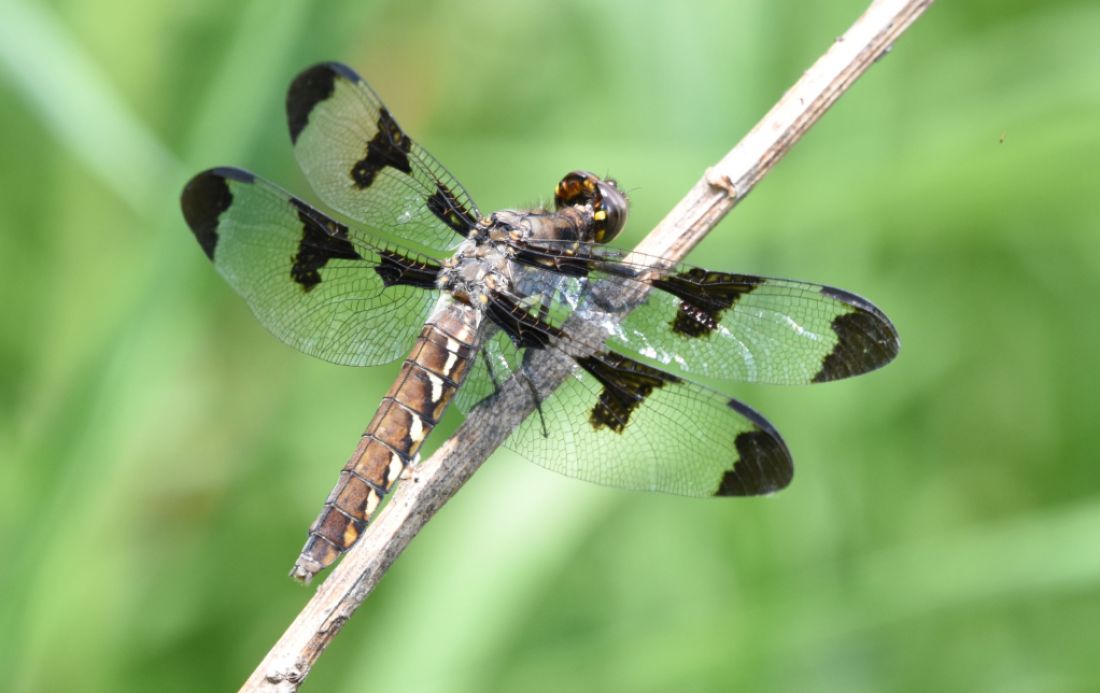
Black Saddlebags Dragonfly
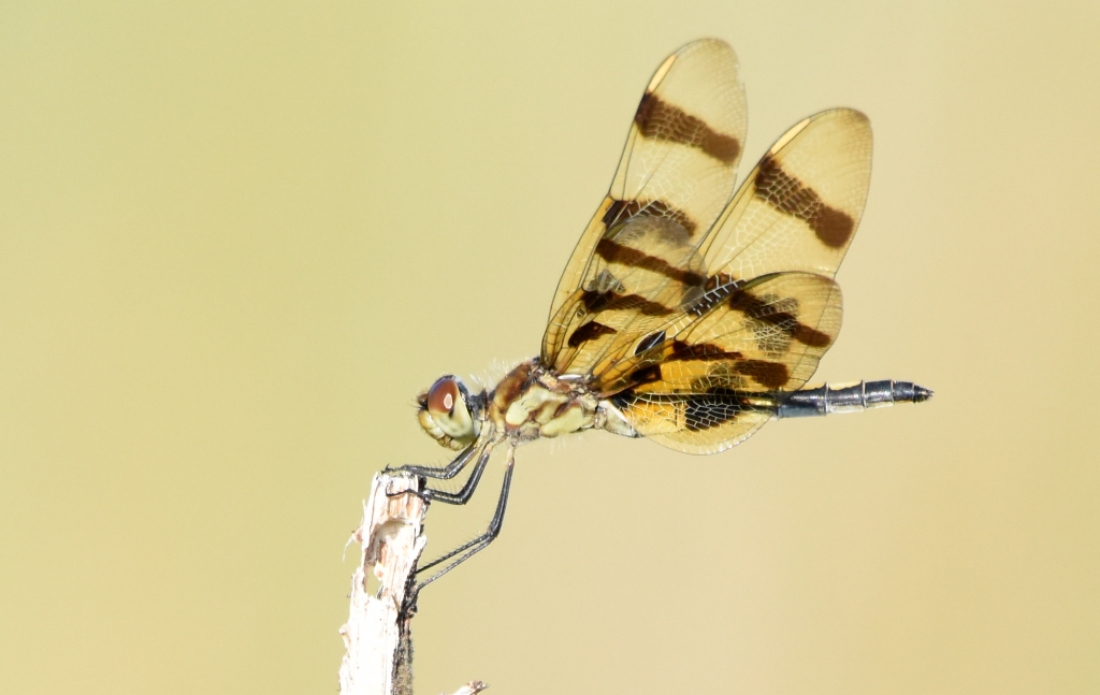
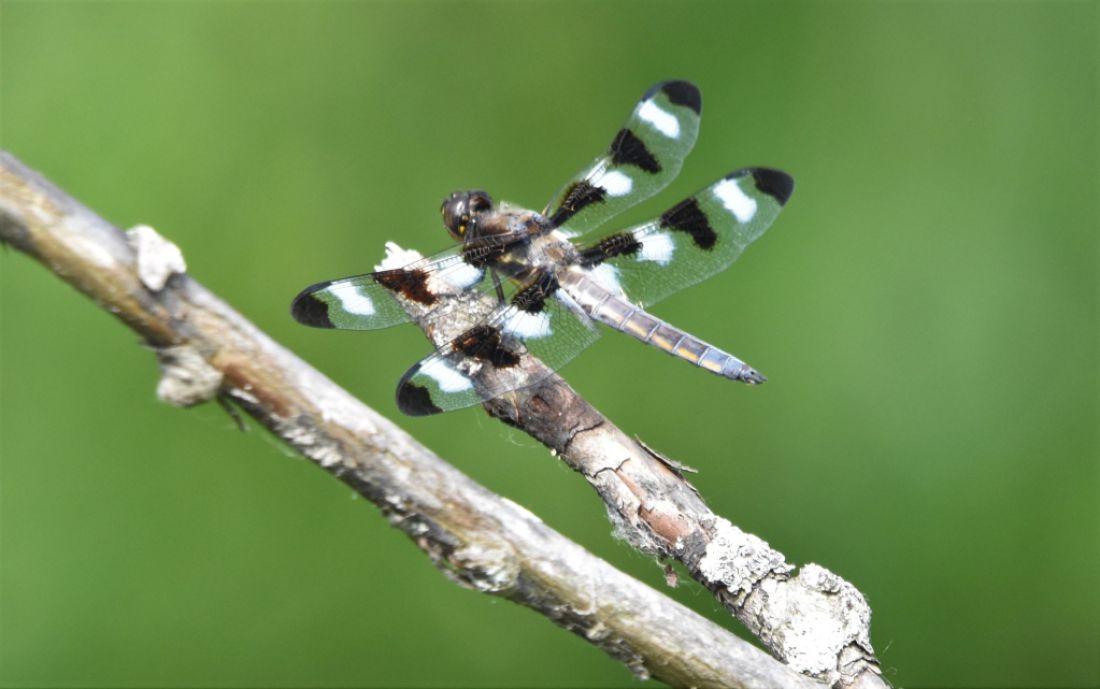
Twelve-spotted Skimmer Dragonfly

Over the course of my photography journey, I’ve found almost every color dragonfly imaginable including red, white, blue, green, purple, orange, black, brown, and pink!  These little creatures are not just candy for the eyes, they’re amazing acrobats as well; flying deftly in all directions like miniature helicopters!

Ruby Meadowhawk Dragonfly
Female Blue Dasher Dragonfly

For clarification, there are both dragonflies and damselflies. Collectively, they are known as Odonata. To the casual observer, dragonflies and damselflies probably look the same. They both have 6 legs, a head, and an abdomen; both have two pairs of transparent wings, bulgy eyes, and stick-like bodies. But there are a couple of features that help differentiate the two: body shape and wing position.

American Rubyspot Damselfly
Male Ebony Jewelwing Damselfly

Dragonflies have bodies that are much thicker and bulkier than damselflies and because of their heftier size, it’s more likely that you’ll notice a dragonfly long before you’ll ever see the tiny, delicate-looking damselflies. When dragonflies are at rest, they hold their wings perpendicular to their bodies like an airplane. Damselflies, on the other hand, fold their wings up and hold them together across the top of their backs.

Male Eastern Amberwing Dragonfly
Female Slaty Skimmer Dragonfly

I much prefer the dragonflies to the damselflies, mostly because they’re bigger and much easier to photograph, and because I can more readily capture the details in their wings. Had I been around 300 million years ago, when dragonflies were first evolving, it would have been even easier to get a picture! Those early insects had wingspans of two feet or more! Today’s dragonflies have wingspans of less than five inches!

Blue Dasher Dragonfly
Male Roseate Skimmer Dragonfly

Over the years, I’ve found so many different dragonflies that I’ve lost track of how many. Worldwide, there are at least 5000 different species, with dragonflies being much more common than damselflies. They are found on every continent except Antarctica. Here in the United States, there are about 450 different kinds of dragonflies and damselflies. In my home state of Michigan, we have about 165 different kinds, and I’m pretty sure I’ve found most of them!

Male Slaty Skimmer Dragonfly
Male Banded Pennant Dragonfly

What is most interesting to me is their life cycle, and their peculiar sex lives! Dragonflies have three life stages: egg, nymph, and adult. The female lays her eggs in the water throughout the summer where they hatch and grow into nymphs. Some of those nymphs will remain in the water over the winter and emerge as adults the following summer. Some will remain in the water for years! While underwater, the dragonfly nymph will eat just about anything it can grab —tadpoles, mosquitoes, fish, other insect larvae and even each other!

Female Common Whitetail Dragonfly depositing eggs in the water

When the nymph is ready to metamorphose into an adult, it stops eating and makes its way to the surface of the water where it climbs up a reed and crawls out of its larval skin or exoskeleton. Once it emerges from its exoskeleton, the dragonfly becomes a skillful and prolific predator. Nearly every minute of its day is spent devouring the insects that annoy us —like mosquitoes, gnats, cicadas, and flies! One dragonfly alone can eat hundreds of mosquitoes a day! Predators that like to eat dragonflies include birds, fish, frogs, bees, bats, spiders, and other dragonflies!

Eastern Kingbirds LOVE dragonflies
Eastern Kingbird feeding dragonflies to her babies

Dragonfly sex is a rough-and-tumble affair. Their sexual coupling requires the flexibility and acrobatic skill of a “Cirque de Soleil” performer. During mating, the male grasps the female at the back of the head, and the female curls her abdomen under her body to pick up sperm from the male’s secondary genitalia at the front of his abdomen, forming a “heart” or “wheel” shape. In the process, females get bitten, males get scratched, and sperm winds up all over the place! After the deed is done, mama dragonfly lays her eggs by tapping the surface of the water repeatedly with her abdomen, or by shaking the eggs out of her abdomen as she flies along, or by placing the eggs on vegetation.

Halloween Pennant Dragonflies mating (male at the top)
Female Shadow Darner Dragonfly depositing eggs

Unfortunately, loss of wetland habitat is a big threat to our dragonfly populations around the world. At least one in ten species of dragonfly are threatened with extinction, according to the first world survey of their numbers. The loss of a dragonfly population threatens the loss of other creatures in that food chain. Ultimately, the loss of any one species is a loss for all of us.

Dragonfly Eyes

Nearly all of the dragonfly’s head is eye, so they have incredible vision that encompasses almost every angle except right behind them. Their compound eyes have up to 50,000 individual lenses, and they can see a wider spectrum of colors than humans. (photo by Mel Church)

In Pursuit of Wonder

July 21, 2023

Every time I set out on a picture walk, I wonder what I’ll find. I wonder if I’ll see something new, or something interesting, or something particularly beautiful. It doesn’t need to be a bald eagle, or a rare insect, or a breathtaking sunrise —although those things are certainly welcome; I mostly enjoy the pursuit of wonder, and the challenge of capturing just the right photo at just the right moment. I am as easily excited about finding a tiny snail on a stalk of a dead plant as I am about finding an exquisite bird I rarely see. It’s the pursuit itself that never grows old, and pushes me out the door every day.

A small Eastern Heath Snail that could easily go unnoticed
A rare sighting of an Indigo Bunting

Not long ago, I was house-sitting for a friend in a part of our state that I rarely visit. She lives on a seldom-traveled, unpaved country road that quietly meanders into the beautiful and expansive Manistee National Forest. I ventured out on that road early one morning wondering what I might find. The deep shade along the forest road was a welcome relief from the heat, but I wasn’t sure that it would be a good place for pictures. There just wasn’t much light peeking through the trees, except for small patches here and there where the occasional butterfly would land, and the columbines struggled to find sunlight.

The narrow gravel road into the Manistee National Forest
Eastern Tiger Swallowtail
Columbine in the sunlight

I was captivated by the sound of all the birds singing throughout the forest; their voices echoing melodically through the giant cathedral of trees. One of those birds was louder and more insistent than all the others and I wondered who it might be. Fortunately, Merlin* came to my rescue and identified the mystery vocalist as an ovenbird!

The elusive little Ovenbird

I had never seen or heard an ovenbird before, so I stood quietly on the edge of the road, waiting for any movement in the trees, hoping to get a glimpse of one. It didn’t take long, but the setting was so dark, and the bird moved so quickly, that I didn’t think I’d get a decent shot. Eventually, though, my patience paid off.

When I did some research on this elusive little bird, I was fascinated to find out that ovenbirds are smaller than sparrows, and they will only breed where there are large, undisturbed expanses of mature trees and a closed canopy. The forest canopy needs to be so dense that it severely inhibits underbrush from developing on the forest floor, and allows for a deep layer of leaf litter to accumulate.  Ovenbirds spend most of their time foraging in that leaf litter looking for things to eat like crickets, caterpillars, ants, spiders, slugs, and snails. They also need leaf litter to build their nests. This task is left to the female ovenbird who creates a comfy home on the forest floor using dead leaves, grasses, stems, bark, and hair. The finished dome-shaped nest, at 9 inches wide and 5 inches deep, has a squat oval side entrance and resembles a primitive outdoor oven, which is how this bird got its name!

An Ovenbird in the leaf litter with a tasty snack

Halfway through my walk, I came to a wide-open field at the edge of the forest, where an odd-looking bird flew overhead and landed on the top of a utility pole! Even from a distance, it didn’t look like a bird that would normally land on a tall, skinny pole! With long legs, a long neck, and a thin, straight bill, it had the appearance of a fairly typical shorebird. Luckily, the bird on the pole was singing its heart out and Merlin* quickly identified it as an Upland Sandpiper. This particular shorebird, however, loves the prairies, pastures, and croplands rather than the wetlands where its cousins like to hang out! It is also a shorebird that loves to perch on fence posts and perform memorable flight songs over its territories! This bird was behaving true to form!

The long-legged, long-necked Upland Sandpiper on a utility pole!

On my return trip through the forest, I had one more surprise waiting for me– a barred owl! It landed on a branch not far from where I was walking and posed for a few pictures before flying off. Even though barred owls are plentiful in Michigan, this was my first!

Barred Owl in the deep, dark woods!

In between these discoveries, there were butterflies and wildflowers quietly going about their business in the random patches of sunlight, waiting patiently to be noticed, and I obliged.

A very tiny Hobomok Skipper

It was just another ordinary day of small but incredible wonders that, more often than not, go completely unnoticed.    

Patches of sunlight

*Merlin is a free bird identification app

Silver Linings

September 1, 2020

I love going out in the cool morning light for a picture walk, especially during these hot summer days when the afternoon temperatures have been well into the 90s! But our lovely summer days are quickly coming to an end, a bittersweet reminder that fall and winter are close at hand. I am looking forward to the cool, crisp days of fall, but am acutely aware that they will come at a price– all the colorful butterflies, dragonflies and frogs that I love to photograph will soon be gone.  Come winter, the world will be even more monochromatic.

Eastern Tiger Swallowtail
American Bullfrog

That said, my walk the other morning was a perfect blend of Summer and Fall. It was deliciously cool in the morning, sunny and warm by the afternoon; much too cold for the frogs and dragonflies as the day began, but plenty warm a few hours later for all my favorite creatures to be out sunning themselves!

Blue Dasher
Monarch Butterfly
Black Elderberry

Knowing full well that colder weather is nipping at my heels, I’ve been out nearly every day for at least a couple of hours trying to capture what’s left of summer. Because of the pandemic, we haven’t traveled far and I’ve been limited to visiting the same preserves and natural areas closest to home many times over. When I’m in the midst of taking my 700th picture of a monarch or a blue dasher or a bullfrog in the same preserve I’ve been to hundreds of times, I stave off the potential monotony of it all by telling myself “It’s all practice, Jeanne, It’s all practice”– It’s a different day and a different light, every shot I take is a new challenge!

Barn Swallow
Painted Turtles
Female Baltimore Oriole

The silver lining to going back to the same places over and over again is that I really get to know its inhabitants; a case in point is the Wolf Lake State Fish Hatchery. I’ve been going there at least twice a week for years—and even more so during this pandemic. It’s a wonderful place to explore with dozens of ponds and lots of wildflowers. I’ve been there so many times that I know the best places to look for frogs; the most likely places to find the swallows perched on limbs, and which ponds the kingfishers favor most. I thoroughly enjoy this knowledge and this familiarity —but I am still longing for a change of venue. 

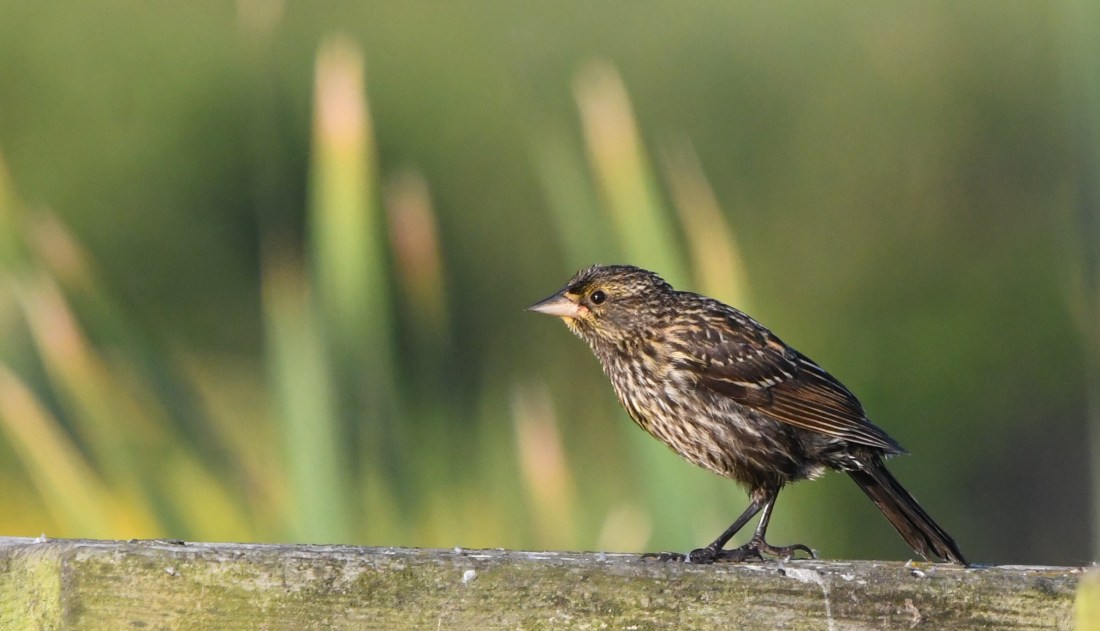
Female Red-winged Blackbird
Eastern Kingbird

Hopefully, by this time next year, the world will be open again and we can all feel safe in our travels—however small those travels may be.

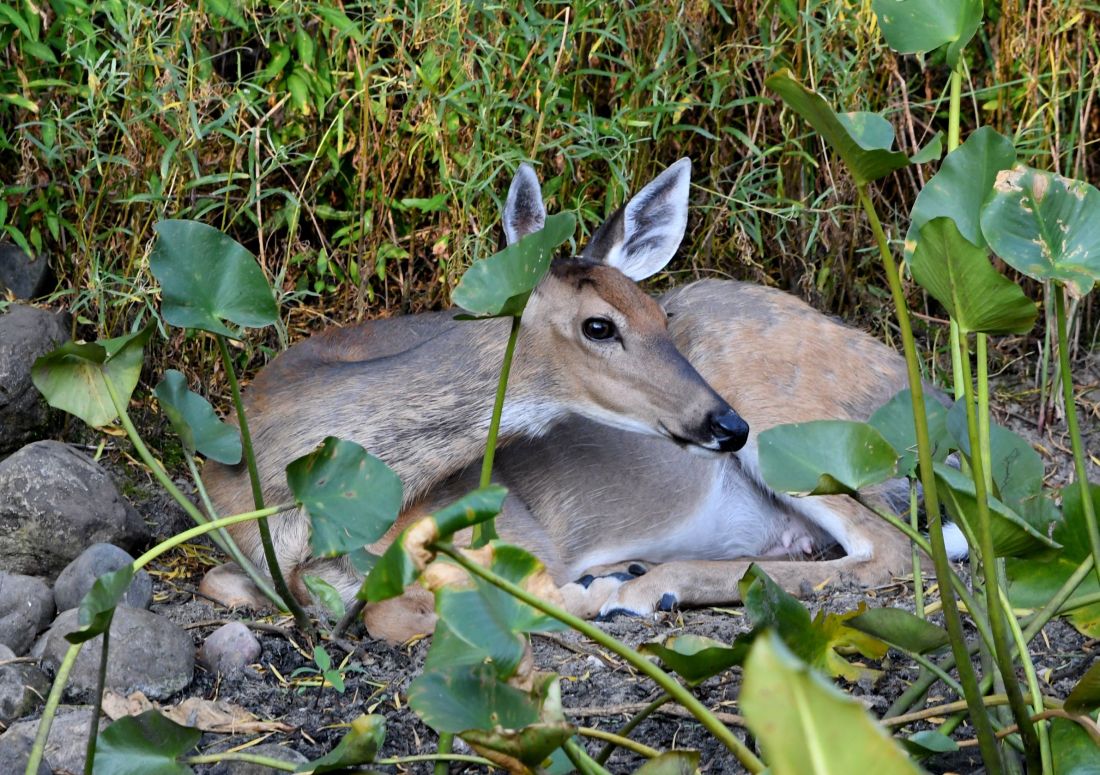
White-tailed Deer

A Photography Journey

August 4, 2020

As I pondered what to write today, I was thinking back on my short but immensely gratifying photography journey.

Juvenile Barn Swallow

It started innocently enough in the fall of 2016, when my husband asked me what I wanted for Christmas. I had no idea!  But, he likes finding things that surprise me, so I gave it some thought. What I came up with was “a better camera”. For many, many years, all I had was a very small, pocket-sized, Canon Powershot.

Willow Flycatcher

Once I told Mel about my ‘better camera’ idea, he went to work researching it. What he came up with was another model of the Canon Powershot –but a bigger, better version with a built-in zoom lens. I now refer to this camera as my ‘gateway drug’! As soon as I realized what was possible with a better camera, I was hooked!

Eastern Tiger Swallowtail on Butterfly Bush

It wasn’t long before I was outdoors nearly every day taking pictures of birds, butterflies, frogs, turtles– anything I could find that grabbed my attention. Eventually, though, I started musing about what I might be able to do with an even better camera—one that could capture the birds that were even farther away, and would also have a faster response time.

Slaty Skimmer

Male Eastern Pondhawk

Since Mel enjoys doing the research and I do not, he’s the one who went to work looking for another camera, one that would take a detachable telephoto lens. What he came up with was a Nikon D3400 and a 75-300mm lens. Once it arrived, I was out the door!

Painted Turtle

I think another year went by, maybe less, and I found myself wanting to capture creatures that were even farther away. Mel took off on another search and came up with a 150-600mm lens from Sigma that would probably do the trick. But it was much longer and much heavier than the one I currently had and I was hesitant. When it arrived, I was still hesitant. It just seemed too big and too heavy for me to handle comfortably. But I was eager to take close-ups and quickly overcame my reluctance. I have not put it down since!

Eventually, the constant lifting and focusing with a lens that size made my back ache and I reluctantly added a monopod to my set up.  It’s a bit of a bother sometimes to have the monopod attached, but I can now focus on a subject for an indefinite amount of time without having to give my back a break.

This insect was a huge surprise! It’s a female BOTFLY laying an egg on a blade of grass. I’ve never seen one before and didn’t know we even had them in the U.S.!

After the Nikon D3400, came a Nikon D5600, which is what I have been using for the last couple of years. This camera and I have gone on a picture walk together nearly every day and I have taken hundreds of pictures with it on each of those walks. Periodically, I have checked to see how much ‘shutter life’ it had left.

My D5600 had been given a shutter life of 100,000 shots. When I last checked, I had taken well over 151,000 pictures! I felt as if we were on borrowed time and decided to start looking for a new one.

Red-tailed Hawk

Once again, Mel returned to the drawing board to find a camera that was well suited for wildlife photography. What he found was a Nikon D500. It arrived a just a few days ago and we have already become fast friends!

With a shutter life of 200,000 shots, I’m looking forward to many years and many pleasant journeys with my newest walking companion!

Butterfly Weed

Who Knew?

July 2, 2020

Every time I’m out on a Picture Walk I learn something new– sometimes it’s a new bug or a new plant; sometimes it’s a new animal behavior; and sometimes it’s just a matter of looking at familiar things in a new and different way.

White Tail Deer looking as curious about me as I was about him!

Let’s start with the dragonflies. Before my picture taking hobby began a few years ago, I didn’t know that there were over 5,000 different species in the world or that they have been around for over 300 million years! Back in the ‘old days’, dragonflies were enormous– with wingspans of nearly 30 inches! By comparison, the largest dragonfly in the world today has a wingspan of less than 8 inches, and most of the dragonflies that I have found have wingspans of 3 inches or less.

Halloween Pennant Dragonfly

The other thing I didn’t know about dragonflies, beside the fact that there are so many of them, is that male and female dragonflies often look distinctly different—they can even be different colors! Dragonflies, in fact, come in a wide variety of colors including blue, green, red, yellow, orange, black, pink, and brown. I never knew that before taking my picture walks!

Dot-tailed Whiteface Dragonfly

I’ve also had lots of bird surprises—the biggest one coming just a couple of days ago when a Common Grackle landed right in front of me with a very large tadpole in its beak. The tadpole was so big that I thought, at first, it was a fully grown frog–and then I noticed the long tail! I had no idea that Grackles were meat eaters! This prompted me to do a little research…

“The Common Grackle eats mostly insects, berries, seeds, fruit, and bird eggs, although it is also known to eat frogs, fish and snakes. You could say it will eat whatever food it can find!”

Common Grackle with giant tadpole for breakfast!

Then there’s the Robins. Even though I have seen Robins around me all my life, I really didn’t know much about them.  For starters, I had no idea they liked grape jelly! The other day, though, I caught one gulping it down at our Oriole feeder! What was going on? When I looked for answers, I was surprised to find out that Robins not only like jelly, some of them have even been known to bring worms to the feeder and dunk them in the jelly before swallowing them!! Who knew?

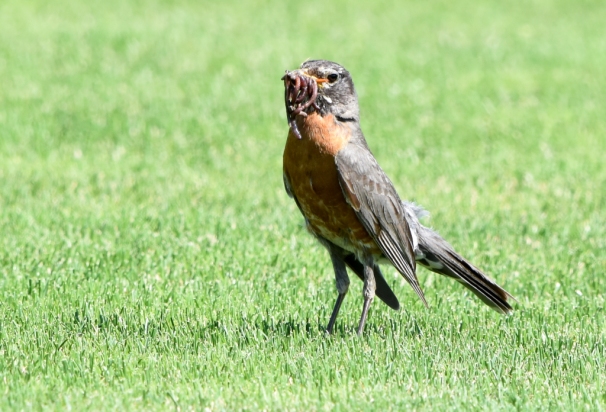
American Robin

Speaking of worms, I also learned that even with a beak-ful of them, a Robin can dig for more and not lose the ones he already has! Like this!

American Robin

Another bird I’m familiar with, and have photographed often, is the Green Heron– but I knew little about them! The most amazing thing I found out along the way is that this bird is a tool user!! While I have not observed this behavior myself, I hope someday to have that opportunity!

“The Green Heron is one of the world’s few tool-using bird species. It often creates fishing lures with bread crusts, insects, and feathers, dropping them on the surface of the water to entice small fish.”

Green Heron

Last but not least, one of my favorite creatures of the pond, is the very large and very noisy, American Bullfrog. I love hearing them ‘croak’ (which has been described as a “deep, booming, Jug-o’-rummm!” sound), and I love seeing their goofy, expressive faces. What I didn’t know about them, though, is that they have teeth! Really! It’s not a full set of teeth like we have but “North American bullfrogs have teeth in the roof of their mouth and a muscular tongue capable of flipping prey into their mouth.

American Bullfrog

Who knew??