Backyard Birding in Winter

January 24, 2026

Most of the country is now in the midst of a huge winter storm. When I got up this morning, the temperature was -12°F! The wind chill factor yesterday was a whopping 19 degrees below zero!! But, hey, when the sun is shining, it doesn’t seem that cold– especially when you’re inside looking out!

Male Northern Cardinal on a frigid winter day!

When it’s this cold, I do love the challenge of trying to stay warm and taking pictures at the same time! I wear multiple layers of clothing, heated socks, clunky over-boots, a warm hat and mittens, and two hand warmers stuffed into my pockets. I don’t venture far from the house on days like this, though. I like to duck inside every once in a while for a warm-up. Besides, everything I need to see is right outside my back door.

Dressed for success!!

To bring the birds in a little closer to where I’m taking pictures, I sprinkle a handful or two of sunflower seeds, mealworms, and peanuts on a nearby tree stump. It’s fun for me to watch how long it takes the birds to find this stash, and to see who finds it first; usually it’s the Dark-eyed Juncos, or the Blue Jays.

Female Dark-eyed Junco waiting patiently for her turn at the seeds
blue Jay quickly scarfing down peanuts from our backyard tree stump

A little later, the Northern Cardinals show up on the stump, and sometimes the Common Grackles or the Red-bellied Woodpeckers. The Starlings are nearby raiding the peanuts from our platform feeder rather than the stump!

Female Northern Cardinal
Common Grackle
Red-bellied Woodpecker
Common Starling waiting for a turn on our platform feeder

In the nearby trees, I might also have the joy of finding a Pileated Woodpecker, a Northern Flicker or, on rare occasions, a Red-tailed Hawk or a Sharp-shinned Hawk!

Pileated Woodpecker
Yellow-shafted Northern Flicker
Red-tailed Hawk
Sharp-shinned Hawk that landed briefly

I love standing under the shelter of our second story deck and surveying our backyard for hours on end capturing the rhythm of the day; making mental notes about which birds are most likely to visit, who’s the bravest, what treat they like the best, and who’s the hardest to photograph.

Female Dark-eyed Junco on an empty stump!

The most common winter visitor to my tree stump is the Dark-eyed Junco. There are plenty of them around and they are ground feeders. They’re used to looking for food down below rather than up in the feeders overhead where most of the other birds like to go. Juncos also hop around in the snow next to the stump looking for seeds that other birds have dropped or knocked off the edge.

Male Dark-eyed Junco looking for seeds in the snow

One of the bravest birds, I think, is the Black-capped Chickadee. It seems fearless to me. On the rare occasions where I’ve tried feeding our backyard birds by hand, only the chickadees have taken me up on the offer. Surprisingly, the bigger birds have been much too wary. When I feed the birds by hand at the Kensington MetroPark in Milford, Michigan, the Chickadees are often the first to take food from my hand as well. Perhaps the bigger birds, like the Cardinals and the Blue Jays see my skinny little hand as too precarious a perch for them even with an offer of food!

The Black-capped Chickadees love peanuts!

The favorite food for most of the birds is definitely peanuts. Those disappear quickly, especially when the Blue Jays take over! They’ll grab 7 or 8 peanuts in quick succession and return for more! When they take this many peanuts at a time, most will be stored in their crop, an expandable pouch in the Jay’s esophagus that temporarily holds food. The crop allows Blue Jays to transport a large number of seeds or nuts to other locations and store them for future use. Before taking flight, I often see the Blue Jays carrying two or three additional peanuts in their beaks!

Blue Jay taking more than his fair share!

One of the potential ‘stump feeders’ that I love to see but rarely capture is the Carolina Wren. Every winter, except this one, I’ve had one come to the feeders on our deck where I could easily watch it from the comfort of my living room chair. This cute little wren came so regularly that I assumed it was the same bird year after year and I referred to it fondly as my Carolina Wren. I can’t say it ever landed on the stump, but it did occasionally sit nearby.

Carolina Wren sitting nearby

The most difficult birds for me to photograph have been the Black-capped Chickadees and the Tufted Titmice. They fly in, grab a seed, and disappear! I can barely spot them through the lens of my camera before they’re gone! I have dozens of ‘bird-less’ pictures to show for it! Once they’ve grabbed a seed, off they go to peck it open. If they land on an open branch, one that’s not obstructed by a tangle of other branches, I can sometimes get a decent shot. But these birds are small and quick and blend in perfectly with the trees. It’s so much easier to photograph a cardinal!

Black-capped Chickadee sitting on a limb that we attached to our deck for photo-ops like this!
Tufted Titmouse momentarily resting!

Most of the time when I’m backyard birding, only the ‘regulars’ show up (sparrows, juncos, jays etc.), but every once in a while, there’s a surprise, like the Sharp-shinned hawk that landed briefly, or the Cedar Waxwing that sat for a while in a nearby honeysuckle bush, or the Yellow-bellied Sapsucker that paused momentarily on our aging dogwood tree less than 10 feet from where I was standing! He was so close that I was afraid any movement on my part would scare him away.

Cedar Waxwing in the Honeysuckle Bush
Yellow-bellied Sapsucker on the Dogwood Tree

I’ve stood outside my back door taking pictures many, many times over the last several years through every season and all kinds of weather. It never ceases to amaze me how many different birds there are right in our own backyard; birds I’d never even heard of before, like White-throated Sparrows, American Tree Sparrows, Fox Sparrows, and White-crowned Sparrows!

White-throated Sparrow
American Tree Sparrow
Fox Sparrow
White-crowned Sparrow (May 2021)

There are also birds that, early on in my photography life, I didn’t even know were here in the winter like the goldfinches, robins, and bluebirds.

American Goldfinch
American Robin
Eastern Bluebird

And there are the regular, everyday birds, like the House sparrows, House Finches and White-breasted Nuthatches that come to our yard, or the Downy and the Hairy Woodpeckers that regularly come to the feeders, or the occasional Red-breasted Nuthatch that I rarely ever see!

Female House Sparrow
Male House Finch
White-breasted Nuthatch
Male Downy Woodpecker
Male Hairy Woodpecker
Red-breasted Nuthatch

Once in a while, a few vagrants pass through our yard like this Oregon Junco I photographed in January of 2021, or this rare Orchard Oriole in May of 2021.

Oregon Dark-eyed Junco (January 2021)
Male Orchard Oriole (May 2021)

It never ceases to amaze me that so many different birds come to our backyard! It helps that we’re in a condo association where all of our yards are one big yard, where most of us have feeders hanging from our decks, where there are plenty of trees, and where a lovely little creek passes close by. In the warmer months, that creek is home to Wood Ducks, the occasional Northern Shoveler, and the usual mix of mallards and geese!

Enjoy!

Zero Degrees

November 2025

When the morning forecast says “sunny and calm,” I can’t get out the door fast enough to take pictures. ‘Sunny and calm’ means good reflection shots of birds on water. When the morning forecast also says “snow,” it feels like I’ve won the lottery! Even if the temperature drops to zero, I’m out the door!  Zero degrees just means more layers!

Female Gadwall December 2024
Canada Goose March 2022
Mute Swan March 2022

When layering up for cold weather, my husband Mel, who has hiked the Appalachian trail many, many times, through all kinds of weather, occasionally warns me that “cotton kills.”  The first layer of clothing should never be cotton! If you sweat, it won’t evaporate. If you stay wet, you’ll stay cold.  You can even die —well, not when you’re out taking pictures and your car is a stone’s throw away, but certainly if you’re a hundred miles from help and hypothermia sets in!  I don’t ever worry about hypothermia when I’m out taking pictures, but I do worry about being so cold I have to come home before I’m ready.

Belted Kingfisher January 2023
American Robins January 2022
Black-capped Chickadee November 2020

So, my first winter layer is always synthetic. After that, I throw on various layers of wool blends, more synthetics, and maybe fleece. If I think my feet will freeze, I wear toasty warm, re-chargeable socks that came as a gift from a very kind friend. On top of all those layers, I wear windproof or waterproof pants and a warm coat.

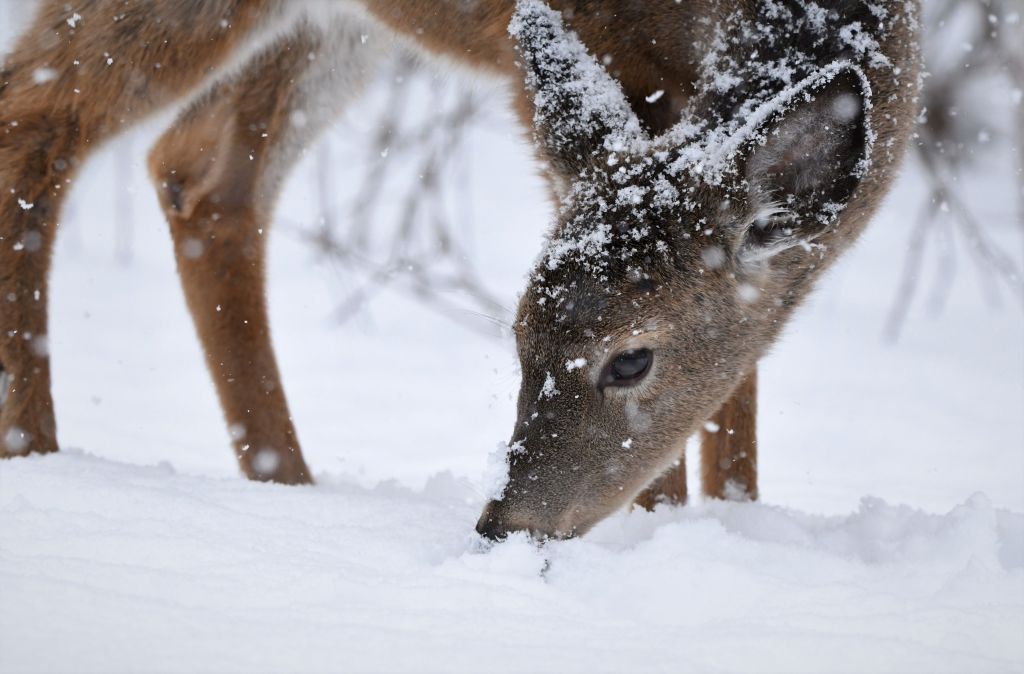
White-tailed Deer December 2024
Black Swan March 2022
Blue Jay November 8, 2025

Even with all those layers and a good pair of gloves, it has taken me years to figure out how to keep my hands warm and still operate the buttons on my camera. Eventually, I found a lightweight pair of down mittens which are thin enough to feel the buttons but warm enough to keep my fingers from freezing—sort of. I still put rechargeable hand warmers in each of my pockets to make sure.

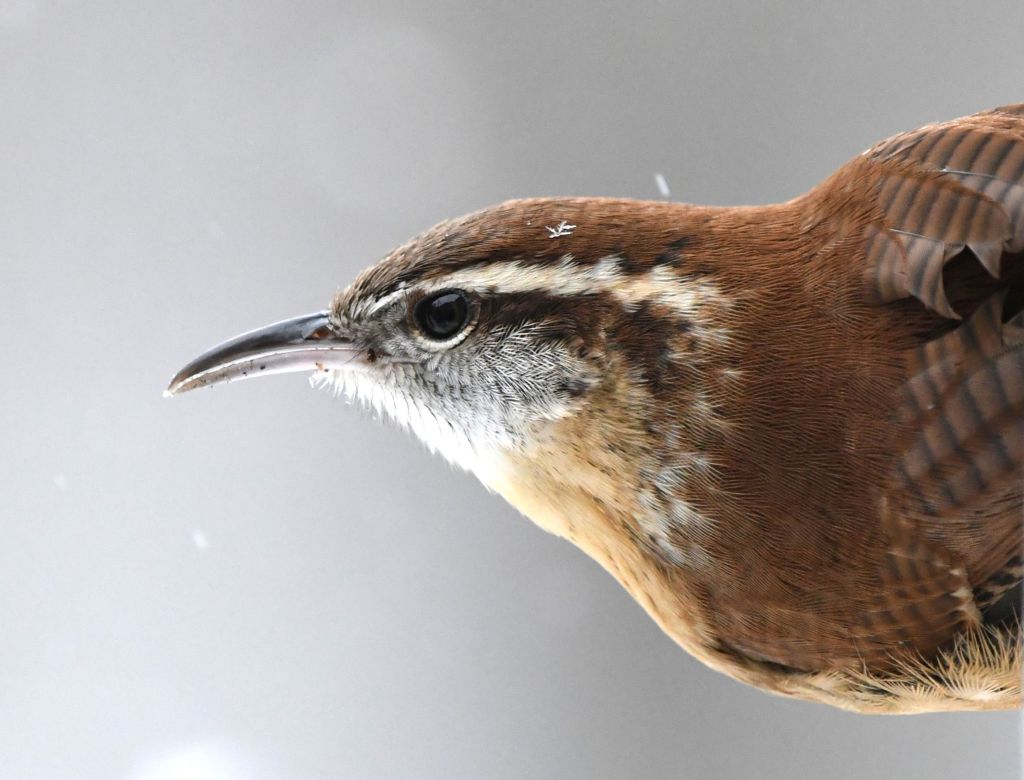
Carolina Wren January 2022
Horned Lark February 2022
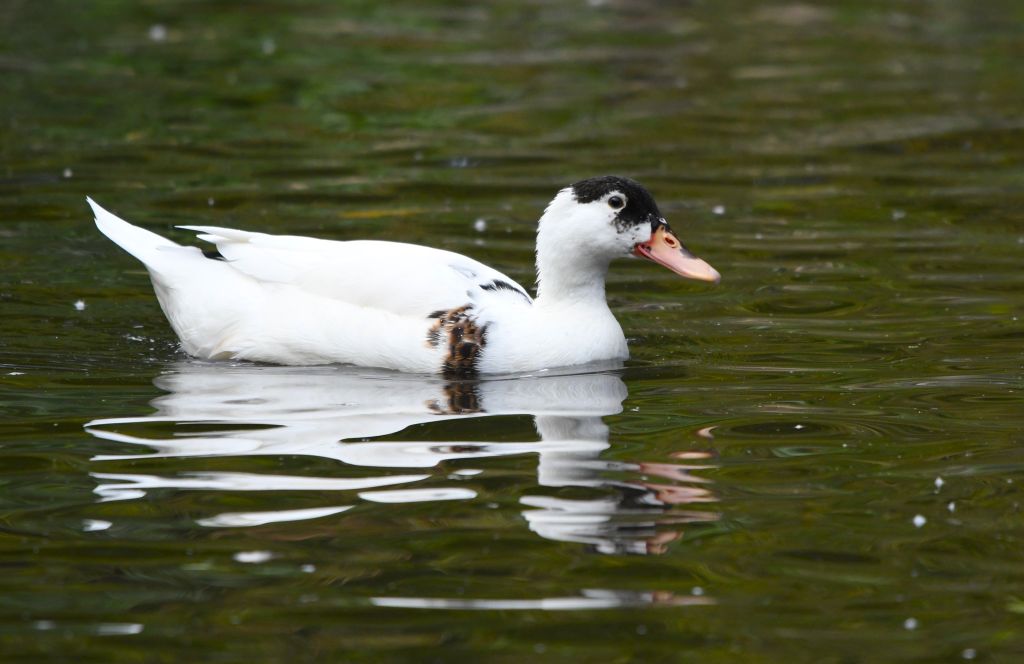
Female Mallard February 2022

Then there’s my head, neck, and feet to worry about. I start with a neck-warmer and sometimes a scarf; followed by a cozy warm hat, and sometimes the hood of my coat. Just before going out the door, I put on my hiking boots as well as a pair of waterproof over-boots if the snow is deep or it’s exceptionally cold. 

It took me a long time to work out this multi-layer system where I can stay reasonably warm—and still move!

It isn’t quite zero degrees yet, but it will be at some point. On November 8th of this year, we had our first snowfall. A few days later, it was 50 degrees.  This coming week, a snowstorm is expected. Such are the vagaries of a Michigan winter and the challenges of dressing for the occasion!

White-throated Sparrow November 2023
Red-bellied Woodpecker January 2022
Mute Swan January 2023

As much as I enjoy capturing a pretty picture of a bird in the snow, I am not a big fan of winter nor am I a glutton for punishment. I don’t like all the dreary, overcast days and the loss of color, I don’t like the freezing cold temperatures, and the lack of butterflies, dragonflies, or frogs.  And I absolutely hate wearing all those stupid layers of clothes just to go outside!

Male Redheads February 2022
Bald Eagle February 2023
Male Wood Duck January 2022

That said, I do love the challenge of taking pictures in the wintertime. I love how it feels to be dressed in all those layers on a really cold day with giant snowflakes stuck to my eyelashes and feeling invincible! I love being outdoors hoping for the best picture ever, then coming home after a long winter walk to stand in front of the fire and soak up its warmth.

Common Grackles April 2022
White-tailed Deer December 2024

Most of all, at age 78, I love that I still can!

A bird in hand

The Four Survivors

October 22, 2024

As I was walking through one of my favorite birding spots, the Wolf Lake State Fish Hatchery, I was thinking about the four survivors; birds I have photographed many, many times over the years who have overcome challenges of one sort or another. I’ve spent so much time photographing these four that I feel a particular kinship with them.

Betty, the Blue-winged Teal

One of those birds, a female Blue-winged Teal, is a year-round resident at the fish hatchery, but shouldn’t be.  I see her at the hatchery almost every time I visit and have pictures of her throughout the four seasons. She has become so familiar to me that I named her Betty.

Betty, the Blue-winged Teal

When I realized that I had pictures of her for every single month of the year, I wondered why she had never gone south for the winter. Blue-winged Teals aren’t supposed to stay in Michigan throughout the winter months. According to the U.S. Fish and Wildlife Service, they “…are not able to endure the cold weather and are some of the first to migrate south in the fall and the last to head back north in the spring.” When I posted my quandary about Betty on Facebook, a birding friend replied, “Betty has a wing injury that prevents her from doing long distance flights. She is willing to fly very short distances to relocate to a different pond now and then.” That explained everything! She had no choice. But, given the missive from the U.S. Fish and Wildlife Service about the inability of these birds to survive the cold, I had a whole new sense of admiration for Betty and her ability to make the best of a bad situation. She’s a true survivor!

Betty on a very cold February day in Michigan

The other bird I always look for at the fish hatchery is the Great Blue Heron. I haven’t named him and I don’t see him as often as I do Betty, but I think he’s the same blue heron I’ve been seeing for many years at the hatchery. When I first started taking his picture, it looked as if he had sustained an injury to his neck at some point in his life. Maybe a predator tried to catch him when he was young, or maybe he got tangled up in a fishing line. There’s no way to know, but he obviously survived ! Whenever I visit the fish hatchery, I look for him in all of his favorite places. Sometimes he’s standing on a log at the edge of one of the ponds. Sometimes he’s perched in a tree or scouting the edges of the water looking for a fish. In the wintertime, I’ve even found him out on the ice! Wherever I happen to find him, it feels like my lucky day, and I always take a picture!

My Great Blue Heron in one of his favorite spots at the Wolf Lake State Fish Hatchery
My Great Blue Heron in a contemplative moment
My Great Blue Heron in the dead of winter!

The WMU Business Technology and Research Park next door to where we live is another one of my favorite places to walk and take pictures. There are mowed trails meandering through acres of wildflowers, tall grasses, and trees. No matter what the season, I always find something to photograph:  songbirds, wild turkeys, butterflies, dragonflies, praying mantids, white-tailed deer, and an abundance of chipmunks, squirrels, and rabbits. In addition to all the inviting grassy trails, there are three small ponds that provide refuge for mallards, swans, geese, green herons, turtles, frogs, and a few migrating ducks.  

A Fall walk through WMU’s Business Technology and Research Park

It’s also the place where I look for my Red-tailed Hawk. I scan the skies looking for him, and I search the tops of lampposts and trees hoping to get a glimpse. It’s a fun game trying to find him, but I don’t always win. Sometimes, he finds me!!

My Red-tailed Hawk overhead at the Business Park
My Red-tailed Hawk high in a tree
My Red-tailed Hawk on one of the lampposts

On the one eventful day that he found me, I was standing on a small footbridge taking pictures of mallards swimming in the pond and keeping my eye out for the green heron that sometimes perches on a branch along the edge. All of a sudden, that hawk flew in out of nowhere and landed on the railing of the footbridge less than 20 feet from where I was standing! He took my breath away!! But I slowly turned my camera in his direction, hoping my movements wouldn’t scare him. At the same time, he turned his head in my direction and we locked eyes through the lens of my camera. Before that magical moment passed, I quickly snapped a few pictures, and a millisecond later he was gone!

A close encounter with my Red-tailed Hawk

What I’ve learned about Red-tailed Hawks over time is their amazing ability to not only survive but to thrive!  They have achieved this success due to their adaptability, especially when it comes to food. Red-tailed hawks will eat almost anything, including rats, mice, squirrels, voles, rabbits, snakes, birds, bats, frogs, toads, insects, and even carrion. They are considered ‘generalist predators,’ a trait that has significantly contributed to their overall success and their widespread distribution. They are survivors!

My little Carolina Wren who visits the platform feeder on our deck all winter long

The last of my four survivors is the Carolina Wren that has been visiting the feeders on our back deck for many winters. Like the other survivors, I feel a kinship to this bird and consider him to be my Carolina wren because he keeps coming back and I keep feeding him—or perhaps more accurately, he keeps coming back because I keep feeding him!

My Carolina Wren on a snowy day in January

He likes the black-oiled sunflower seeds I leave in our platform feeder and carefully picks them out one by one, flutters down to the nearby doormat, tucks the seed into a crevice of the mat to stabilize it, and then cracks it open. The mat is just the other side of our sliding glass door, a few feet away from where sit. It’s such a treasure to see him return every year when the cold weather sets in.

My little wren just outside our window on a snowy day

It never ceases to amaze me that this tiny bird, or any bird for that matter, can survive the harsh winter months with just a handful of feathers to keep them warm, while I have to bundle up in layers upon layers of warm clothes, stuff hand-warmers into my pockets, and sometimes wear heated socks just to go out and take pictures! How do those little birds manage??

All layered up for winter photography!

There are so many wild animals out there that we never see struggling to survive through all kinds of weather and all kinds of circumstances. They have the marvelous ability to adapt and sometimes even thrive. But I continue to worry about how many of them we will lose over time due to our carelessness as human beings in our role as stewards of planet earth.  We’ve already lost too many.

Winter birding at Kensington Metro Park, Milford, Michigan

“The greatest threat to our planet is the belief that someone else will save it.” ~ Robert Swan British explorer and environmental activist 

Down the Rabbit Hole

October 21, 2023

‘Down the rabbit hole’ is an English-language idiom which refers to getting deep into something, or ending up somewhere strange—or wonderful. Lewis Carroll introduced the phrase in 1865 as the title for Chapter One of Alice’s Adventures in Wonderland.

An adorable Eastern Cottontail Rabbit

I tumbled down the nature photography rabbit hole quite by accident and I fell in deep. It all started about seven years ago when my husband asked me what I wanted for Christmas. It took a while for me to come up with something I really wanted, but eventually I hit upon the idea of a camera. I wanted a better one than we had. My request came when we had two small grandchildren and I thought if I had a better camera, I could take better pictures of them. But that’s not what happened!

Male Mallard

We went to Florida for the first time that winter and visited some of the most amazing preserves with incredible wildlife. It gave me the opportunity to use my new camera for the very first time. It wasn’t a fancy camera, but it did have a built-in zoom lens and I could get much better shots of birds and other wildlife than I ever had before! I was hooked! (The pictures below were taken with more recent cameras.)

Limpkin in Florida
Roseate Spoonbill in Florida
Painted Bunting in Florida

Within a year or so, I was already yearning for a better camera and a longer lens; a camera with a quicker shutter response time, and a lens that could capture birds that were even farther away. Once I had the newer camera and the longer lens (thanks to my husband’s diligent research), I spent more and more time outdoors taking pictures, totally immersed in my own little world.

Fawn in the greenery near our house

It wasn’t long before I had exhausted the shutter life of that second camera, with well over 100,000 pictures, and started looking for yet another camera and an even longer lens!

Carolina Wren on our deck

To date, I’ve gone through four cameras in seven years, mostly because I exceed the recommended shutter life of each of them. My current camera is a Nikon D500 with a shutter life of 200,000 cycles; I’m well over 127,000 after only a couple of years! The lens I use most often is a Sigma 150-600mm.  The D500 camera and the Sigma lens have been the perfect combination for me and for the things I like to photograph.

Nikon camera with Sigma lens on a monopod

I go out almost every day in all kinds of weather, even if ‘going out’ means just standing on our deck or in our backyard. Some of my favorite shots have happened right outside our back door where I have a ‘designated tree stump,’ placed in the yard, and a ‘designated tree branch’ attached to the deck for bird and mammal ‘portraits’. Plus, we have a beautiful bank of trees nearby and a small creek behind the house, both of which are attractive to a variety birds and mammals.

Red-breasted Nuthatch on the ‘portrait branch’

I love going on picture walks! I love looking for interesting things to photograph, whether it’s a bald eagle or a green bottle fly! It’s all quite fascinating, especially when I bring up the pictures on my computer and can see so many amazing details—like the individual hairs on a fly, or the tiny red mites on a dragonfly!

American Bald Eagle
Male Monarch (males have two distinct black spots on the lower wings)

One of the things I also enjoy doing after taking all those pictures is finding interesting facts about the creatures I’ve photographed and then sharing what I’ve found on Facebook, our local newspaper, or this blog.

Two male grackles on my ‘designated stump’ engaging in ‘bill tilt’ behavior to establish dominance. Whichever bird can maintain this posture the longest wins!

The name ‘picture walks’ started years ago when I first fell down this rabbit hole and was heading out the front door for a walk. If I was leaving the house without my camera, I’d tell my husband I was going on a ‘regular walk’, which meant I’d be home in an hour. If I was leaving the house with my camera in hand, I’d say I was going on a ‘picture walk,’ which was code for “I won’t be home anytime soon!”

White-crowned Sparrow in our backyard
White-tailed Deer in our backyard only a few feet from where I was standing

Some of the rabbit holes we fall into can be disastrous.

This one has been quite delightful.

Childhood Memories

January 25, 2023

A friend of mine, Jen Herro, recently posted her first blog, A Carpenter’s Garden, and it struck a chord with me. She is a watercolor artist with a passion for the natural world.  Our lives first became entwined when Jen asked if she could use one of the photographs I had posted on The Naturalist’s Notebook Facebook page as a reference piece for one of her paintings. We have never met in person, but through our shared passion for nature and art, it feels as if we’ve been friends forever.

In her introductory post, Jen tells about how her love for the outdoors began in childhood while visiting her grandparents’ cabin in the big north woods of Minnesota. Her grandfather, a naturalist, taught her how to “appreciate the wildness of the land,” how to paddle a canoe, start a campfire and make baked beans in a pot buried in the ground. It sounded like an idyllic childhood, and it made me wonder where my own love for the outdoors had come from.

Mute Swan Cygnet during a recent snowstorm

I didn’t have a grandfather who taught me how to canoe or build campfires, but I did have a dad who took me fishing. He was also the person who gently told my mother to “let her be” when I wanted to climb trees, play baseball, and wear blue jeans. Her preference would have been to see me in dresses, playing with dolls, and not running amok through puddles!

Six year old me worried about holding a fish I recently caught

My parents did make one grand and loving attempt at giving my brother and I outdoor experiences, though, by taking us camping.

We left home on a hot and humid summer day during the biggest mosquito convention ever, and drove ‘up north’ to find a campsite, pitch a tent, and spend a fun weekend away from home! Mother Nature had other plans. She wanted rain, lots of rain–so much rain that our borrowed tent leaked like a sieve. We were miserable.

I don’t remember going on any nature hikes that weekend, roasting marshmallows, or fishing with my dad, but I do remember slogging through the rain and mud with my nature-weary mother at 2:00 in the morning hoping to find an outhouse! That’s what stayed with me all these years, the rain and the outhouse! It wasn’t the camping experience any of us had hoped for, but it was, nonetheless, memorable!

Carolina Wren in our backyard
A sweet white-tailed deer in our backyard

So, it’s probably safe to say that my love of the outdoors didn’t come from my parents or even my grandparents, at least not in the way that it did for Jen.

What I had was the joy of growing up during the 1950s, when we spent our summer days playing outside with friends, climbing trees, catching bugs, looking for snakes, and exploring the nearby woods. We didn’t have cell phones or iPads to keep us entertained; we barely had a television! What we did have was each other, and the wide-open spaces of our neighborhood, and the nearby parks.  The true origins of my interest in Mother Nature remains a mystery, but the freedom I had as a kid to spend all day exploring and interacting with her, kept the love alive.

Belted Kingfisher during a recent snowfall

As an adult, I’ve mostly chosen outdoor adventure vacations, rather than leisurely indoor ones.   My husband and I have hiked in Scotland, England and Wales, and have backpacked more than a thousand miles on the Appalachian Trail. We’ve also enjoyed a good deal of biking, canoeing, and kayaking along the way.  But it wasn’t until I took up photography a few years ago, that the natural world really opened up for me. I found birds I’d never seen before, took close-ups of butterflies I’d only known from a distance, and examined the details of a thousand little dragonflies that only a good camera and a long lens could afford me.

A bird I’d never seen before! (some sort of Mallard Hybrid)
Eastern Tiger Swallowtail on Butterfly Bush (taken last summer)

It doesn’t really matter where my love of nature ultimately came from, whether it was a father who took me fishing, or a mother who just let me be, I have reaped its benefits my entire life. The countless hours I have spent outdoors have always brought me joy; being able to photograph what I love has been an unexpected bonus!

That’s all, folks!

Find the Joy

November 21, 2022

“If you choose not to find joy in the snow, you will have less joy in your life but still the same amount of snow.” Anonymous

I love this quote– and the snow!

The Carolina Wren sings a very joyful song

It’s hard not to feel a certain child-like wonder when the first big flakes of snow fall from the sky and transform our world into a winter wonderland.  I love sitting by the fire with a hot cup of tea in my hands watching the snow pile up outside our window and marveling at the little songbirds as they fluff up their feathers to ward off the cold. I’d like to invite them in for a while to warm up. Instead, I put on three layers of pants, three shirts, a balaclava, a fuzzy hat, a down coat, a neck warmer, mittens, and boots, and join them, camera in hand.

American Robin on a snowy day enjoying a crabapple tree

For the last several days, the snow has been falling almost non-stop!  The birds don’t seem to mind, though, and are flitting about everywhere, enjoying the easy source of food in our feeders and occasionally taking sips of warm water from the birdbath. I’ve taken hundreds of pictures of them hoping to find among the mix, one of the ‘vagrants’ –birds who are part of a phenomenon known as an ‘irruption’ which is currently taking place across eastern North America.

Downy Woodpecker on a very snowy day!

An irruption is a sudden change in the population density of an organism. In the lives of our feathered friends, an irruption occurs when the birds who live farther north run out of food, and move farther south to find sustenance. Some of the irruptive species here in Michigan include purple finches, redpolls, evening grosbeaks, red-breasted nuthatches, pine grosbeaks, pine siskins, and bohemian waxwings.

These irruptions commonly occur every few years and mostly impact the finches and other species that winter in the boreal forests of Canada and further north. The primary food source for these birds comes from pine cones. When the pine cone crop is poor over the summer, it foreshadows a difficult winter for these birds. The shortage of seeds that the pine cones produce forces these birds to move beyond their normal range in search of food. If multiple types of trees fail to produce a seed crop during the same year, multiple species of birds will move further south.

Eastern Bluebird weathering the elements on a snowy winter’s day
Mourning Dove

Irruptions vary widely in size, frequency, and duration. Some birds will stay in an area for weeks at a time, while others might only stay for a day. Regardless of the size of the flock or the duration of their visit, it’s an exciting time for birders!

Dark-eyed Junco

I would love to see any one of these wayward birds on my picture walks, but I have been happy enough with my usual backyard visitors, as well as the interesting mix of migrating birds that visit Kalamazoo this time of year, like the fox sparrows, the white throated sparrows, the American wigeons and, the very peculiar, Wilson’s snipe.

Wilson’s Snipe, a migrating bird at the Wolf Lake State Fish Hatchery
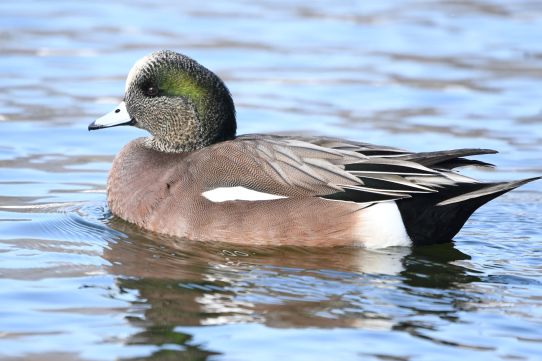
American Wigeon, a migrating bird that visits a nearby pond

I’ve been out in the snow several times recently looking for the evening grosbeaks, the red-breasted nuthatches, and the other ‘irrupters’ who might be passing through, but I have come up empty handed.  On any given picture walk, though, there is always the possibility that something new might come along, and ‘possibility‘ is always a great motivator!

Male Northern Cardinal

On these beautiful, winter days, I love the challenge of bundling up like a kid to stay warm and trudging through freshly fallen snow to photograph a bird, as I revel in the joy that, at age 75, I can still do this! 

Find the joy!

White-tailed deer, one of the other beautiful creatures I often see on my walks

Hungry for Spring

February 24, 2022

Young Trumpeter Swan flying through a snow squall

As I sit writing this piece, long before sunrise, on another cold and windy February day, I am contemplating the advisability of even attempting a picture walk. The weather forecast calls for 15 to 25 mile an hour winds with gusts over 40! On the other hand, temperatures might exceed 40 degrees —quite balmy compared to the below zero wind chill conditions I was faced with the other day! Usually, I can put on enough layers to stay warm, even on the coldest of days, but strong winds make for a much bigger challenge.

Blue Jay stirring up snow in a pine tree
Some Great Blue Herons will stay here throughout the winter, but many more will head south

Most days, I’m up for that challenge but, I must admit, I’m growing weary of it all. These long winter days, where I have to plan for so many weather contingencies, and have to wear so many layers, are weakening my resolve—especially during the past two years of this pandemic where we haven’t been able to venture far from home. The birds in my backyard are quite tired of me begging for a photo shoot.

Carolina Wren near my backyard feeder

For the next few days, though, my backyard birds can take a break while I babysit my grand-dog on the opposite side of the state. There are lots of new places to explore here and once the sun is up, I expect I’ll venture out in spite of the wind and in spite of the cold! I’d much rather be outside searching for the possibility of something new than sitting here on the couch.

Some people believe that the Robin is a “harbinger of spring”, but large numbers of them stay here all winter feasting on berries.

After writing those first few paragraphs, I did, indeed venture out– first to a nearby nature center and then to a nearby park.

Black-capped Chickadees are delightful little birds that can be found in Michigan all year round.

I found the usual assortment of birds at the nature center—chickadees, finches, cardinals, nuthatches and goldfinches, but it was a brand-new setting! When I arrived at my second destination, I really hit the jackpot! Beaudette Park in Pontiac, Michigan, had a very large pond of open water and it was teeming with a wide variety of waterfowl, some of which I’d never seen before!

Canada Goose coming in for a landing!
Some Sandhill Cranes stay here all year long

This time of year, it’s highly unusual to find open water in Michigan. Most lakes and ponds are frozen over.  This particular body of water had the ubiquitous array of mallards, swans and geese, but it also had mergansers, buffleheads, redheads, ring-necked ducks, goldeneyes and canvasbacks!! It was the canvasbacks I’d never seen before. I couldn’t stop taking pictures!

Male Canvasback at Beaudette Park in Pontiac, Michigan
Male Ring-necked Duck

Days later, I was still sorting through all the hundreds of pictures I took that day!

Male Wood Duck

Mallard Ducks are everywhere and they offer endless opportunities for interesting photographs!

In spite of all the inherent beauty to be found in a picture of freshly fallen snow and a colorful bird here and there, I am more than ready for the arrival of spring; ready to be free of these bulky winter clothes, grey skies, and frigid temperatures.  I’m beyond hungry for the colors to return, for the sweet smell of a newly mowed lawn, and for the sheer delight of a warm patch of sun on my bare skin!

I am more than ready to shed these bulky winter clothes and trade this colorless landscape for green leaves and spring flowers!

The Peace of Wild Things

September 19, 2020

This poem by Wendell Berry was posted recently by a friend and it really resonated with me, especially during these very stressful and troubling times. It speaks volumes about the peace we can find in nature and of the comfort it can provide.

There’s nothing more that I can add to this beautiful poem, so here are a few of my wild things to enjoy vicariously…

American Bullfrog
Carolina Wren
Male Monarch Butterfly
Praying Mantis
Eastern Giant Swallowtail
Woodland Sunflower

Riding Out the Storm

March 15, 2020

Osprey on the wing

In the ten days since I last posted, so much has happened here in the states (and all over the world) in terms of the Coronavirus. We are officially in a ‘state of emergency’. Schools, libraries, restaurants and churches have closed all across the country for an indefinite period of time. Broadway has closed, Disney World has closed, New York City’s St. Patrick’s Day Parade has been cancelled and the Boston Marathon has been postponed!  And this is only the beginning!

Osprey with his ‘catch of the day’

For many people, this emergency presents a severe economic hardship, for others, it is just an inconvenience, and for some, it will be a death sentence.  

Common Moorhen

In order to help mitigate the spread of COVID-19, to ‘flatten the curve’ as they say, we are being asked to limit our contacts with other people, to practice ‘social distancing’ as much as possible. For Mel and I, the changes will be minimal. We’re retired. We won’t have lost wages. We won’t have young ones at home who need childcare, and we won’t have elderly parents in our care. In fact, at ages 66 and 73, we ARE the elderly!!  

Bald Eagle

For our part, then, we’ve stopped going to the coffee shop, stopped going to restaurants and stopped going to any stores other than an occasional visit to the grocery store. What we haven’t stopped doing is going out for walks.  

Brown Pelican diving for dinner!

I am beyond thankful that we, as a nation, haven’t yet been  restricted from leaving our homes like other countries have had to do. If this becomes necessary, we would readily comply, but home confinement would, no doubt, stress the limits of my ability to stay sane– or even pleasant! 

Wood Stork

My picture walks are an antidote to all the upheaval. They keep me interested, excited and connected to the world around me—they keep me healthy. So, I am hoping I won’t have to give up my walks during this crisis, and that they will continue to do what they have always done, which is to save my sanity during these very troubled times.  

All done!

For those of you who are housebound or otherwise unable to spend time with Mother Nature, I hope the pictures here provide joy or, in some way, pique your interest in the wonders of the natural world, and that they will help you ride out this storm!

Swimming on the Wrong Side of the Sun

November 25, 2019

Male Northern Shoveler at the Muskegon County Wastewater site
I love their huge beaks!

Almost all the snow had melted from our big, unexpected snowfall on November 13th when my husband and I decided to take advantage of an unusually ‘balmy’ day for a picture walk. Temperatures were expected to be in the low 40’s– a relative heat wave compared to what we had been experiencing and it wasn’t supposed to rain or snow! So we headed up to the Muskegon County Wastewater Treatment Plant to see what we could find. With all of it’s man-made ponds, the wastewater site is a great place for birding!

A lovely pair of Mallards
A well-camouflaged Wilson’s Snipe at the Wolf Lake State Fish Hatchery

Until a few years ago, neither of us had any idea that a wastewater treatment site could be a great place to find birds. On our first visit there two years ago, we got to see an elusive Snowy Owl and were really hoping to see another one. What we found instead were tons of Northern Shovelers, a few Ruddy Ducks, the usual cluster of Mallards, lots of Buffleheads, a few Lesser Scaups, and a boatload of Geese and Gulls. Many of the birds we saw, however, were too far out in the water to get a decent shot, or they were swimming along the edges on the wrong side of the sun!

Killdeer at the Wolf Lake State Fish Hatchery
Juvenile Bald Eagle flying overhead at the Muskegon Wastewater site
Juvenile Bald Eagle and an adult Bald Eagle cavorting overhead
at the Muskegon Wastewater site

It’s a real challenge this time of year to even get out of the house and take pictures let alone find something interesting to photograph. The weather always plays a role in my decision making and it’s often too cold, too wet or too icy to go mucking about with expensive camera equipment. The upside, though, to winter photography is freshly fallen snow. It provides the perfect backdrop for all the birds who are out and about braving the elements along with you– and the bare trees make them infinitely more visible!

A beautiful Carolina Wren singing its heart out behind our house.
House Sparrow
Song Sparrow
Tufted Titmouse

In spite of the vagaries of winter weather, I usually manage to get out for a picture walk on most of our winter days. More often than not, though, I lug my camera around for hours without finding much of anything. Fortunately, I’m easily entertained and all it really takes to keep me going, is one good shot — whether it’s a tiny wren, a solitary eagle, a wild turkey or even a common duck (just as long as it’s not swimming around on the wrong side of the sun!).

Juvenile Mute Swan in the waning sun
I love all the different colors and textures of the feathers on this wild turkey! (Kensington Metropark, Milford MI)
Three Amigos heading out of town before Thanksgiving!