Backyard Birding in Winter

January 24, 2026

Most of the country is now in the midst of a huge winter storm. When I got up this morning, the temperature was -12°F! The wind chill factor yesterday was a whopping 19 degrees below zero!! But, hey, when the sun is shining, it doesn’t seem that cold– especially when you’re inside looking out!

Male Northern Cardinal on a frigid winter day!

When it’s this cold, I do love the challenge of trying to stay warm and taking pictures at the same time! I wear multiple layers of clothing, heated socks, clunky over-boots, a warm hat and mittens, and two hand warmers stuffed into my pockets. I don’t venture far from the house on days like this, though. I like to duck inside every once in a while for a warm-up. Besides, everything I need to see is right outside my back door.

Dressed for success!!

To bring the birds in a little closer to where I’m taking pictures, I sprinkle a handful or two of sunflower seeds, mealworms, and peanuts on a nearby tree stump. It’s fun for me to watch how long it takes the birds to find this stash, and to see who finds it first; usually it’s the Dark-eyed Juncos, or the Blue Jays.

Female Dark-eyed Junco waiting patiently for her turn at the seeds
blue Jay quickly scarfing down peanuts from our backyard tree stump

A little later, the Northern Cardinals show up on the stump, and sometimes the Common Grackles or the Red-bellied Woodpeckers. The Starlings are nearby raiding the peanuts from our platform feeder rather than the stump!

Female Northern Cardinal
Common Grackle
Red-bellied Woodpecker
Common Starling waiting for a turn on our platform feeder

In the nearby trees, I might also have the joy of finding a Pileated Woodpecker, a Northern Flicker or, on rare occasions, a Red-tailed Hawk or a Sharp-shinned Hawk!

Pileated Woodpecker
Yellow-shafted Northern Flicker
Red-tailed Hawk
Sharp-shinned Hawk that landed briefly

I love standing under the shelter of our second story deck and surveying our backyard for hours on end capturing the rhythm of the day; making mental notes about which birds are most likely to visit, who’s the bravest, what treat they like the best, and who’s the hardest to photograph.

Female Dark-eyed Junco on an empty stump!

The most common winter visitor to my tree stump is the Dark-eyed Junco. There are plenty of them around and they are ground feeders. They’re used to looking for food down below rather than up in the feeders overhead where most of the other birds like to go. Juncos also hop around in the snow next to the stump looking for seeds that other birds have dropped or knocked off the edge.

Male Dark-eyed Junco looking for seeds in the snow

One of the bravest birds, I think, is the Black-capped Chickadee. It seems fearless to me. On the rare occasions where I’ve tried feeding our backyard birds by hand, only the chickadees have taken me up on the offer. Surprisingly, the bigger birds have been much too wary. When I feed the birds by hand at the Kensington MetroPark in Milford, Michigan, the Chickadees are often the first to take food from my hand as well. Perhaps the bigger birds, like the Cardinals and the Blue Jays see my skinny little hand as too precarious a perch for them even with an offer of food!

The Black-capped Chickadees love peanuts!

The favorite food for most of the birds is definitely peanuts. Those disappear quickly, especially when the Blue Jays take over! They’ll grab 7 or 8 peanuts in quick succession and return for more! When they take this many peanuts at a time, most will be stored in their crop, an expandable pouch in the Jay’s esophagus that temporarily holds food. The crop allows Blue Jays to transport a large number of seeds or nuts to other locations and store them for future use. Before taking flight, I often see the Blue Jays carrying two or three additional peanuts in their beaks!

Blue Jay taking more than his fair share!

One of the potential ‘stump feeders’ that I love to see but rarely capture is the Carolina Wren. Every winter, except this one, I’ve had one come to the feeders on our deck where I could easily watch it from the comfort of my living room chair. This cute little wren came so regularly that I assumed it was the same bird year after year and I referred to it fondly as my Carolina Wren. I can’t say it ever landed on the stump, but it did occasionally sit nearby.

Carolina Wren sitting nearby

The most difficult birds for me to photograph have been the Black-capped Chickadees and the Tufted Titmice. They fly in, grab a seed, and disappear! I can barely spot them through the lens of my camera before they’re gone! I have dozens of ‘bird-less’ pictures to show for it! Once they’ve grabbed a seed, off they go to peck it open. If they land on an open branch, one that’s not obstructed by a tangle of other branches, I can sometimes get a decent shot. But these birds are small and quick and blend in perfectly with the trees. It’s so much easier to photograph a cardinal!

Black-capped Chickadee sitting on a limb that we attached to our deck for photo-ops like this!
Tufted Titmouse momentarily resting!

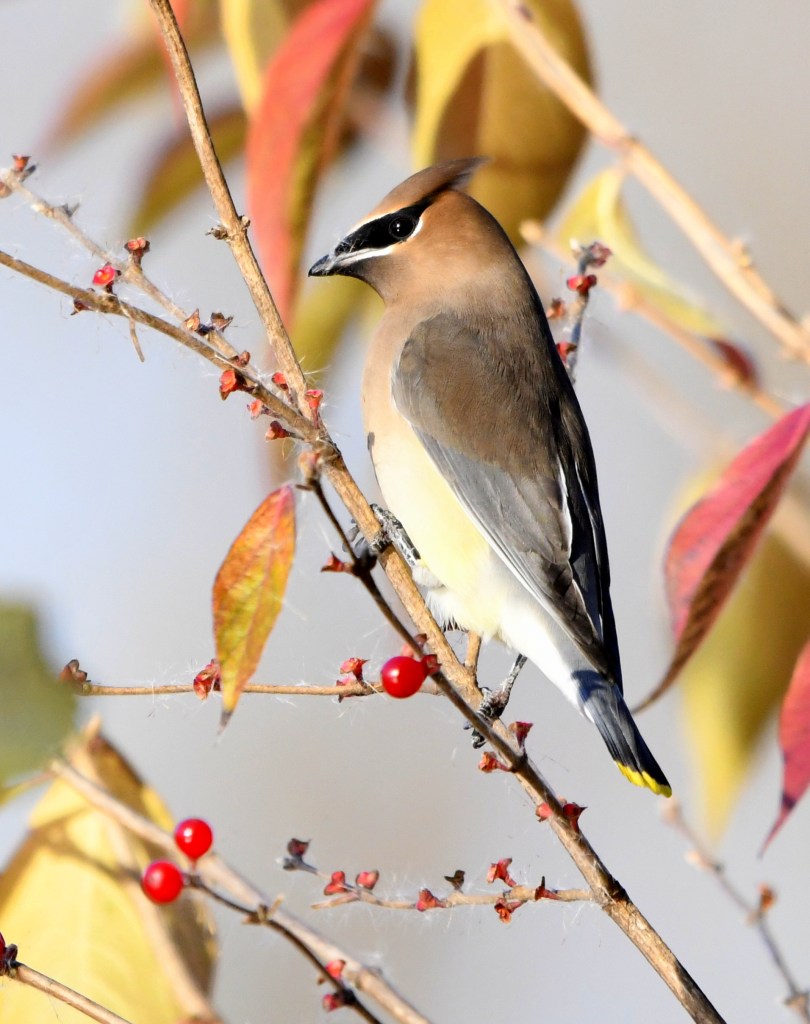
Most of the time when I’m backyard birding, only the ‘regulars’ show up (sparrows, juncos, jays etc.), but every once in a while, there’s a surprise, like the Sharp-shinned hawk that landed briefly, or the Cedar Waxwing that sat for a while in a nearby honeysuckle bush, or the Yellow-bellied Sapsucker that paused momentarily on our aging dogwood tree less than 10 feet from where I was standing! He was so close that I was afraid any movement on my part would scare him away.

Cedar Waxwing in the Honeysuckle Bush
Yellow-bellied Sapsucker on the Dogwood Tree

I’ve stood outside my back door taking pictures many, many times over the last several years through every season and all kinds of weather. It never ceases to amaze me how many different birds there are right in our own backyard; birds I’d never even heard of before, like White-throated Sparrows, American Tree Sparrows, Fox Sparrows, and White-crowned Sparrows!

White-throated Sparrow
American Tree Sparrow
Fox Sparrow
White-crowned Sparrow (May 2021)

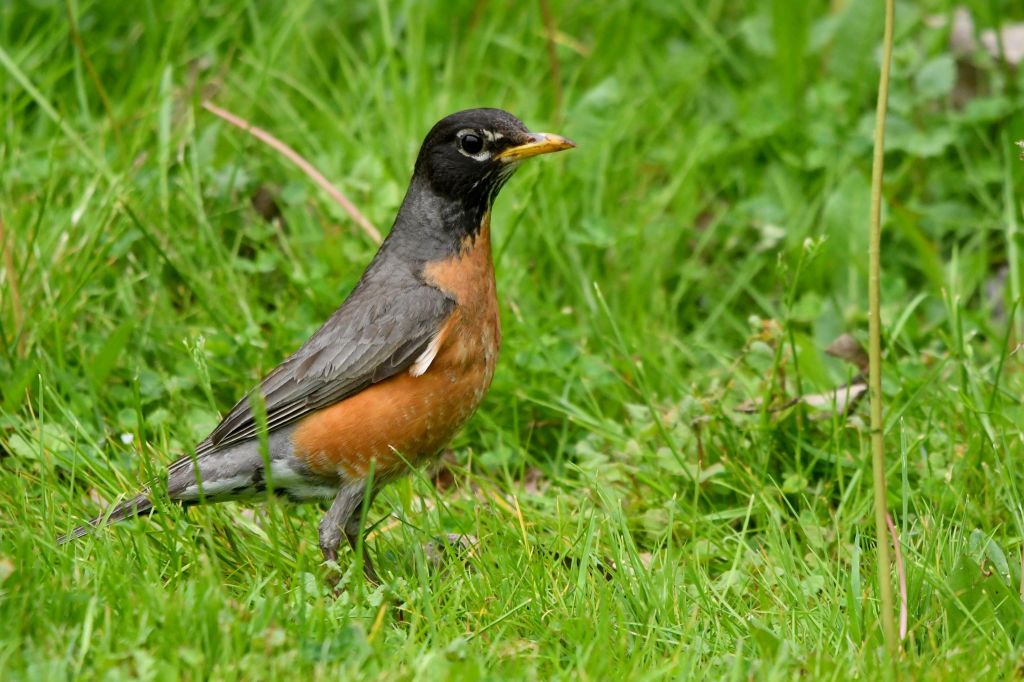
There are also birds that, early on in my photography life, I didn’t even know were here in the winter like the goldfinches, robins, and bluebirds.

American Goldfinch
American Robin
Eastern Bluebird

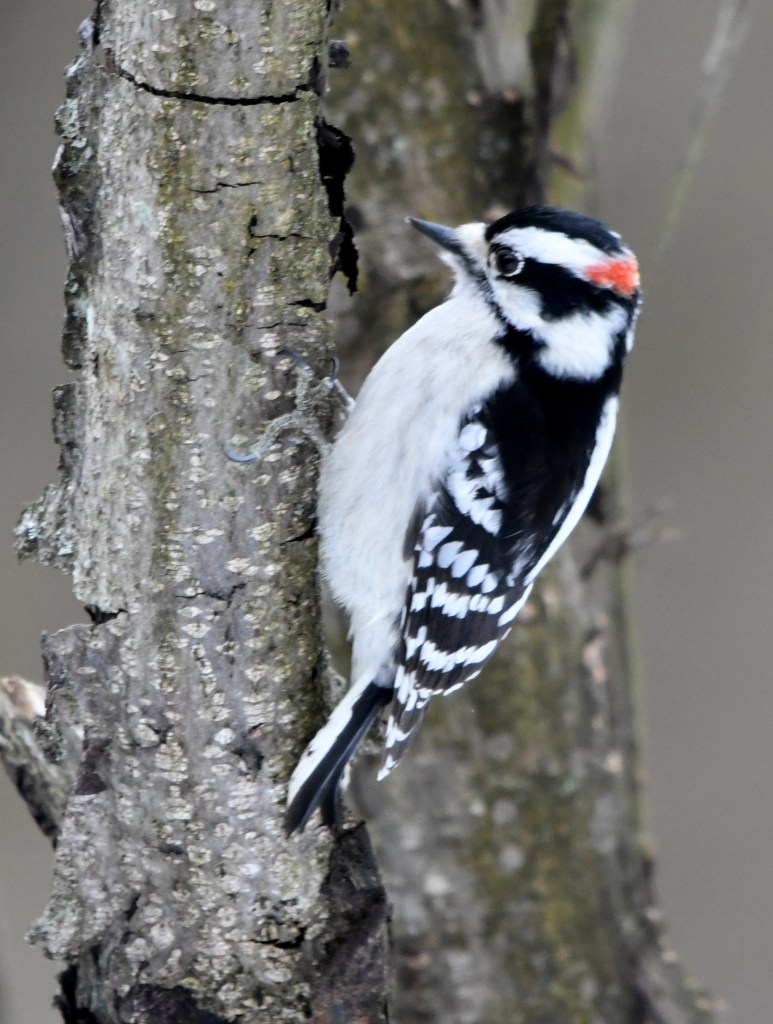
And there are the regular, everyday birds, like the House sparrows, House Finches and White-breasted Nuthatches that come to our yard, or the Downy and the Hairy Woodpeckers that regularly come to the feeders, or the occasional Red-breasted Nuthatch that I rarely ever see!

Female House Sparrow
Male House Finch
White-breasted Nuthatch
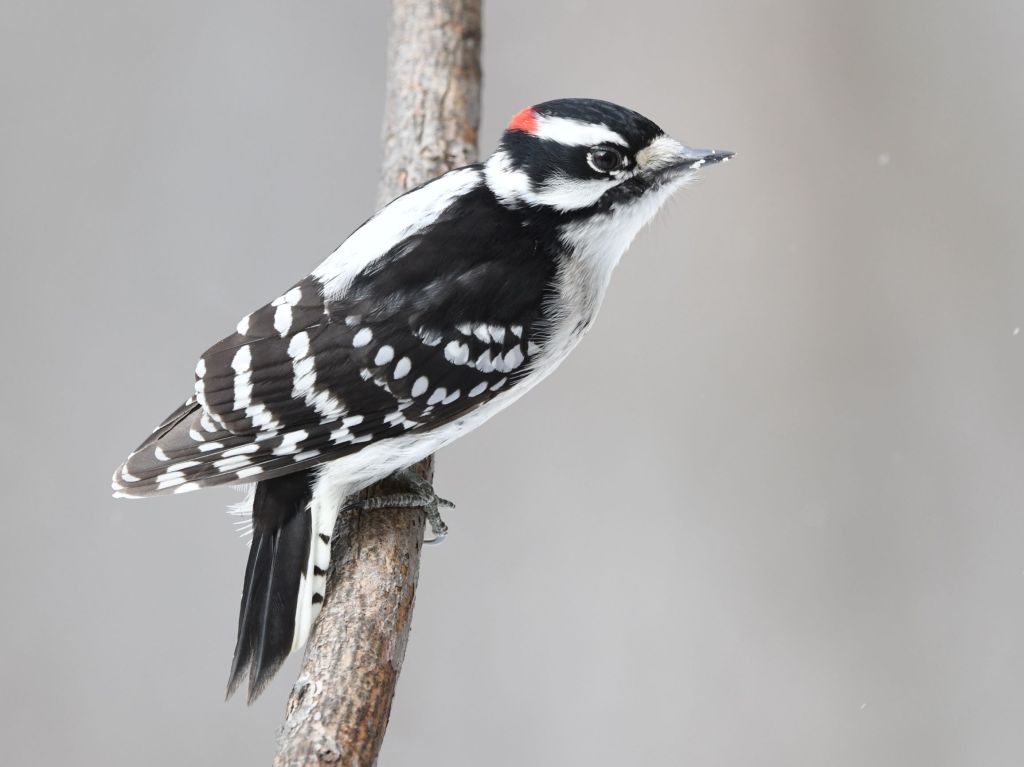
Male Downy Woodpecker
Male Hairy Woodpecker
Red-breasted Nuthatch

Once in a while, a few vagrants pass through our yard like this Oregon Junco I photographed in January of 2021, or this rare Orchard Oriole in May of 2021.

Oregon Dark-eyed Junco (January 2021)
Male Orchard Oriole (May 2021)

It never ceases to amaze me that so many different birds come to our backyard! It helps that we’re in a condo association where all of our yards are one big yard, where most of us have feeders hanging from our decks, where there are plenty of trees, and where a lovely little creek passes close by. In the warmer months, that creek is home to Wood Ducks, the occasional Northern Shoveler, and the usual mix of mallards and geese!

Enjoy!

Morning Light

November 19, 2023

Note: Most of the pictures in this post were taken on earlier picture walks

I was sitting in my favorite chair at 5 a.m. on this cold November morning, enjoying a toasty fire, drinking a hot cup of tea, and contemplating the day ahead. Every once in a while, I’d look out the window to see if the sun had come up.

By 7:45, I could see just a hint of light on the very top of the trees along the far side of the creek behind our house. I wrestled with my choices for the day– stay warm and cozy inside the house, or go out into the cold November air and take pictures. The conditions were perfect: early morning light, no wind, and clear skies. I thought maybe a northern shoveler would unexpectedly drop by, or that a few wood ducks might swim out from the reeds as they sometimes do, or that a great blue heron would be scouting for fish along the opposite bank.  I might even see a rare mink scurrying by. Anything was possible!

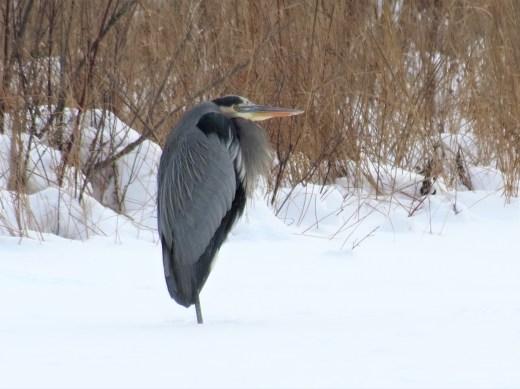
Great Blue Heron
American Mink

There was no choice, really; whether to stay inside or to go outdoors. The morning light beckoned. It would be impossible for me to stay home on such a beautiful day! There was such promise in the air! But, it was only 32 degrees! I wasn’t ready to face the cold! And getting dressed would be a challenge– because cold weather photography, where I might not move for hours on end, takes careful planning. Should I wear two layers or three? Do I need mittens or gloves? Boots or shoes? There were too many decisions to be made this early in the morning!

All bundled up for the cold on an earlier picture walk

By 8:15, though, I was out the door. The sun had risen a little higher in the sky, the water in the creek was perfectly still, and I planted myself in the very best spot I could find where the sun would be at my back.

Cherry Creek in the early morning light

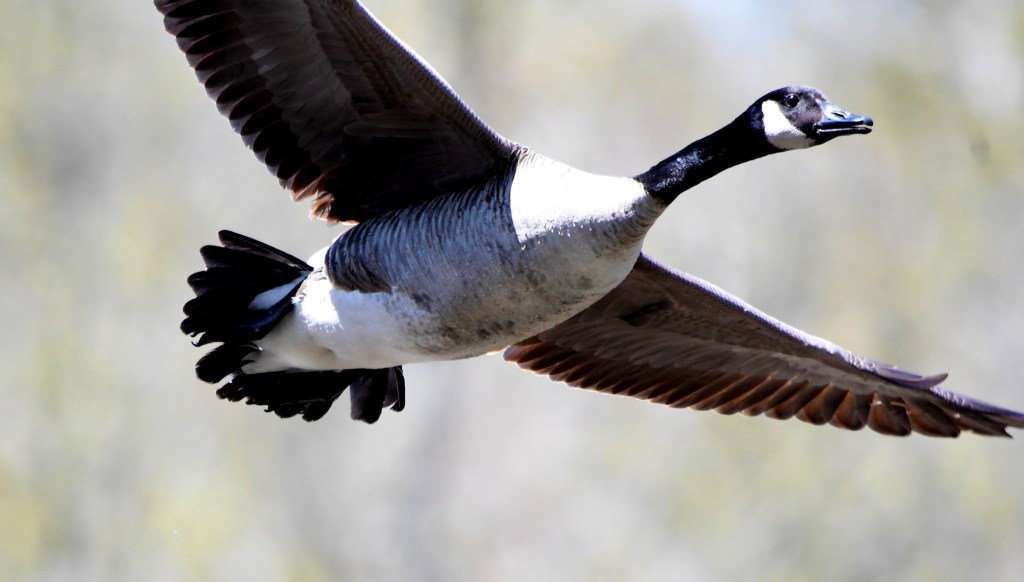
I stood quietly and waited. The squirrels were scampering through the leaves behind me and running across the branches overhead. Now and then, I’d hear a red-bellied woodpecker tapping on one of the nearby trees. A handful of birds were greeting the new day with their joyful song while a solitary goose flew by.

Canada Goose

Not far from where I was standing, I could hear the familiar sound of the male red-winged blackbirds as they flitted among the cattails. They have a short, one-second song that starts with an abrupt note and turns into a musical trill. The females usually respond to the singing males with a chit-chit-chit sound, but I never heard their replies. Perhaps, the females have already flown south for the winter.

Male Red-winged Blackbird in the reeds along Cherry Creek

After about an hour of standing and waiting, I took a seat on the bench next to me; my hopes slowly dwindling. There had been no signs of any shovelers, wood ducks, or herons. I would have been happy at that point if even a mallard had floated by!

Female Mallard from an earlier walk

Eventually, the cold air settled into my bones, and I had run out of things to talk to myself about. I tried, instead, to concentrate on all the different birds I could see or hear in the trees around me, like the chickadees, tufted titmice, cardinals, robins, cedar waxwings, woodpeckers, sparrows, and blue jays. They provided a symphony of songs and a bit of entertainment as I sat watching for the elusive ducks and herons to appear on the creek.

Downy Woodpecker

By 9:30, I was ready to throw in the towel and go for a walk in the sun so I could soak up some of its warmth. Before leaving my temporary roost, though, I moved closer to a nearby bush where I had been watching the cedar waxwings gobbling up berries, hoping I could maybe get a picture of them! With all the foliage obstructing my view, it was more of a challenge than I expected!

Cedar Waxwing enjoying the berries

After managing to get a few waxwing shots (and one fat robin), it was time to move on to more promising grounds. I headed over to the business park next door thinking I would find a red-tailed hawk, a migrating duck, or maybe even a bluebird. All I found were pigeons.

Three pigeons on a lamp post!

Where was everybody??

It was almost noon and the temperature had climbed from a chilly 32 degrees to a toasty 50. I was so HOT! I had taken off my hat, mittens, and scarf and stuffed them into the pockets of my coat; the pockets that were already jammed full with two rechargeable hand-warmers, one cell phone, and a set of keys. Eventually I had to take off the coat as well and tie it around my waist or I would totally disintegrate from the heat! It was time to head home.

A big fat Robin enjoying the same berry bush as the Cedar Waxwings

In the end, I didn’t have much to show for all my efforts: no wood ducks, no hawks, no shovelers, no mallards. It’s always disappointing when this happens, but I just can’t force the birds to show up when I want them to– or to get them to sit still in the right light while I adjust my settings.

On a particularly slow picture day, like this one, I have to remind myself that the most important thing is the walk itself, not the pictures. At my age (76), spending the day outdoors traipsing about is a gift; one that I treasure. Having my camera along, just makes all that exercise more interesting.

And that’s what keeps me going out the door–even on the least promising of days.

Cedar Waxwing

Arcadia Marsh Nature Preserve

September 27, 2023

A few weeks ago, my husband and I made our first trip to the Arcadia Marsh Nature Preserve in Arcadia, Michigan. What a wonderful place to walk and see a wide variety of birds, plants, and butterflies at relatively close range! Over 250 species of birds have been identified at the marsh (17 of which are considered endangered or threatened) and at least 200 different species of plants have been recorded. Best of all, there is a wide, well-maintained ¾ mile boardwalk through the middle of the preserve that makes it easily accessible for everyone.

Arcadia Marsh Nature Preserve Boardwalk

Arcadia Preserve is one of only a few remaining coastal marshes along Lake Michigan’s Lower Peninsula shoreline. Sadly, most of all the original Great Lakes marshes have been destroyed, making restored marshes like this one extremely important ecologically. Thanks to the extensive restoration efforts by the Grand Traverse Regional Land Conservancy (GTRLC), countless volunteers and dedicated partners, this beautiful nature preserve is healthier than it has been in decades. As a result, Arcadia Marsh Nature Preserve has become known as one of the best birding locations in the entire state of Michigan!

Arcadia Marsh Nature Preserve Boardwalk

In my short, two-hour visit on September 15th, I was able to photograph eleven different birds, two of which I rarely ever see, one of which I have never seen in Michigan, one I’ve never seen anywhere, and one that’s usually so elusive that I rarely get to photograph it at all!

Rusty Blackbird

Up until about two years ago, I’d never even heard of a Rusty Blackbird and had no idea what they looked like.  A fellow-birder/photographer had seen a few of them at one of our local birding spots, the Wolf Lake State Fish Hatchery. Not long afterwards, I went searching for them. When I happened upon a small group of birds I’d never seen before, I thought, this must be my mystery bird! It was the last time I’d see a Rusty Blackbird– until this visit to Arcadia Marsh.

Female Rusty Blackbird

According to the Cornell Lab’s website, All About Birds, “The Rusty Blackbird has undergone one of the sharpest and most mystifying recent declines of any North American songbird.”  Some researches speculate that the severe hunting of beavers across hundreds of years has contributed to the reduction of suitable habitats for Rusty Blackbirds. Fewer beaver ponds mean fewer Rusty Blackbirds. Some attribute their decline to the loss of habitat caused by human ignorance or indifference. Others report that Rusty Blackbirds, particularly from the northeastern areas of North America, have been found with unusually high levels of mercury contamination; a contributing factor in all likelihood.

Savannah Sparrow

Not far from where the Rusty Blackbirds were perched, I watched a much smaller bird dart back and forth across my field of vision. It looked like a fairly nondescript bird from where I was standing on the boardwalk, but when I zoomed in, I could see a tiny bit of yellow above its eye. That got my attention! But it wasn’t until I returned home that I was able identify it as a Savannah Sparrow, a bird I’d never seen before!

Savannah Sparrow

Surprisingly, Savannah Sparrows are one of the most numerous songbirds in North America! They don’t visit backyard feeders, but they may come to your yard if you have open fields nearby. Or, if you keep a brush pile on your property, you might be lucky enough to see a small flock of them swoop down and take cover in the pile during migration or over the winter depending on where you live.

Cedar Waxwing

Also flitting about in the same trees as the Rusty Blackbirds and the Savannah Sparrows, were the Cedar Waxwings. These are such beautiful birds! Cornell Lab’s website All About Birds came up with one of the best descriptions I’ve found so far, “…the Cedar Waxwing is a silky, shiny collection of brown, gray, and lemon-yellow, accented with a subdued crest, rakish black mask, and brilliant-red wax droplets on the wing feathers.”

Cedar Waxwing

The one I found at the marsh was doing what waxwings do best, catching dragonflies out of the air and bringing them back to a nearby tree to eat.

Cedar Waxwing with a tasty dragonfly

Northern Harrier

Not far beyond the trees where I had been enjoying the Rusty Blackbirds, the Savannah Sparrows and the Cedar Waxwings, there was a large bird of prey flying low over the marsh, periodically diving into the vegetation and then reappearing. I wasn’t sure what it was, but it looked a lot like a Northern Harrier I had once seen in Florida a few years ago. I had never seen one in Michigan, but the Northern Harrier is a distinctive looking bird even from far away. It’s a slim, long-tailed hawk that likes to glide low over marshes and grasslands, holding its wings in a wide V-shape. Northern Harriers are mostly looking for small mammals and small birds, but they can also capture larger prey like rabbits and ducks!

Northern Harrier cruising low over the marsh

Great Egret and Great Blue Heron

Wading through the shallow marsh waters on the opposite side of the boardwalk as the Northern Harrier, I could see a Great Egret and a Great Blue Heron in search of their next meal. I have way too many pictures of Great Blue Herons, but very few of the Great Egret, especially here in Michigan. The Great Blue Herons can be found all over Michigan throughout the year, but the Great Egrets only pass through during migration.

Great Egret

The Great Egrets and the Great Blue Herons are both impressive looking birds, but the Egret is slightly smaller and more graceful looking. These two herons hunt by standing motionless or by wading ever so slowly through shallow water to capture a fish using a deadly jab with their large bills.

Great Blue Heron

Great Egrets were hunted nearly to extinction for their feathers in the late nineteenth century, sparking some of the first laws to protect birds. The National Audubon Society, one of the oldest environmental organizations in North America, uses the Great Egret as its logo.

Green Heron

Just below the boardwalk where I was standing, there was a beautiful, little Green Heron who was also waiting patiently, like his much bigger cousins, to catch a quick lunch. All three of these birds are masters in the art of patience. They can stand motionless seemingly forever waiting to stab or grab an unsuspecting fish, frog or tadpole with their dagger-like bills.

Green Heron

Most interesting is the fact that the Green Heron is one of the world’s few tool-using bird species! It often creates fishing lures with things like bread crusts, insects, or feathers, dropping them on the surface of the water hoping something tasty will take the bait!

Belted Kingfisher

Most of the time, this is the bird that’s hardest for me to ‘capture.’ It is very skittish, and I swear it knows that I’m on my way to take its picture long before I even leave the house!  At the Arcadia Marsh, though, the Belted Kingfishers seemed oblivious to humans. I’m guessing these kingfishers are acclimated to all the foot traffic on the boardwalk and have learned to just ignore the movement. As a result, I was able to take a dozen or more pictures before this particular bird decided she wanted to go elsewhere to fish.

Female Belted Kingfisher

Belted kingfishers are one of the few bird species where the female is more colorful than the male, sporting a chestnut or rust-colored band across her chest. Males are all blue-gray and white. In the pictures below, the kingfisher on the left is female and the one on the right is male.

Red-winged Blackbirds

Red-winged blackbirds are one of the most abundant birds across North America. Wherever there’s standing water and vegetation, you’ll most likely see or hear a Red-winged Blackbird! In late February or early March, it’s the familiar sound of the returning Red-winged Blackbirds that warms my heart and foreshadows Spring’s impending arrival.

Female Red-winged Blackbird
Male Red-winged Blackbird

Song Sparrow

The Song Sparrow is a relatively plain looking, little bird that can be easily overlooked and underappreciated, but every time I see one belting out a song from the top of a tree or a nearby bush, I can’t help but call them endearing. Song Sparrows seem so earnest in their attempts to sing a beautiful song, that they can make any ordinary day feel happier!

Song Sparrow belting out a song!

Black-capped Chickadee

Last, but certainly not least, is the affable little chickadee. I never grow tired of trying to capture them. They are almost universally considered “cute” thanks to their oversized heads, tiny bodies, and insatiable curiosity about everything– including humans. Black-capped Chickadees are one of the easiest birds to attract to your feeders and one of the first birds to come to your outstretched hand for seeds.

Black-capped Chickadee
Feeding a Black-capped Chickadee by hand (taken at a different preserve)

Even if you’re not a birder or a photographer, the Arcadia Marsh Nature Preserve is worth putting on your bucket list if you just want a nice place to enjoy a little slice of nature with an easily accessible trail.  Before your visit, check out this website for directions, rules, maps, and more detailed information:

Waning Days of Color

September 2023

A few days ago, I visited the Paw Paw Prairie Fen Preserve in Mattawan, Michigan, one of our local nature areas. It’s a beautiful preserve with a well-maintained 1.5 mile trail that meanders through wild flowers, trees, ponds, and tall prairie grasses. The land is owned and maintained by The Nature Conservancy, a global environmental nonprofit organization.

BOTTLEBRUSH GRASS
Bottlebrush grass is a perennial grass native to the eastern United States and Canada. Bottlebrush Grass gets its name from the spiky seed heads that look just like the brush used to clean bottles,

“In 2004, this site was slated for a housing development. Topsoil had been removed, road routes had been laid out and neighborhood landscaping was being installed. The Nature Conservancy was alerted to rare wetland communities here and began negotiations to acquire the land. Today The Nature Conservancy owns 106 acres along the east branch of the Paw Paw River, including rare prairie fens, and a beautiful array of prairie plants and wildlife.” (from the descriptive sign at the entrance of the preserve)

JOE PYE WEED
This plant was likely named for Joseph Shauquethqueat, a highly-respected Mohican sachem or paramount chief, also known to white neighbors as Joe Pye, who lived in the Mohican community in Stockbridge, Massachusetts in the late 1700’s to early 1800’s. Joe Pye weed has a long history of medicinal use, including as a diuretic, for easing urinary tract issues, joint stiffness, and gout. It is also used to treat reproductive issues and diabetes.

I started my picture walk at 2:30 in the afternoon hoping to eventually catch the late afternoon sun. For the first hour and a half, I saw virtually nothing to photograph, except for a few random plants, and an untold number of autumn meadowhawk dragonflies. I had been hoping for butterflies and birds, and a much wider variety of dragonflies. I had even hoped to find a praying mantis or two. But there were only the meadowhawks, and a few interesting plants to entertain me.

AUTUMN MEADOWHAWK
The autumn meadowhawk is a bright red or yellow dragonfly that has yellow legs. It lingers longer through the summer season than most dragonflies.
AUTUMN MEADOWHAWK

Autumn meadowhawks, as the name implies, are most active from late summer through fall, and are abundant in open meadows or prairies like the one I was in. They are often the last dragonflies you will see as the colder weather sets in. If there hasn’t been a hard freeze, it’s even possible to find them in November!

AMERICAN GOLDFINCH
Goldfinches are among the strictest vegetarians in the bird world, selecting an entirely vegetable diet and only inadvertently swallowing an occasional insect.

At the ninety minute mark, I finally spotted something other than a meadowhawk– a praying mantis! There were probably hundreds of them hidden in the grasses all around me, but praying mantids are particularly well-camouflaged and extremely hard to find! I was thrilled that this one was out in the open and clinging to the underside of a stalk of goldenrod. The most fascinating thing about this insect is its ability to rotate its heads 180 degrees! No other insect can do this, and it’s particularly creepy to zoom in on one and find it staring back at you from over its shoulder!

PRAYING MANTIS
The praying mantis is so named because when waiting for prey, it holds its
front legs in an upright position as if they are folded in prayer. Don’t be fooled
by its angelic pose, however, because the mantid is a deadly predator!

While I was watching the praying mantis, a small bird flew across my peripheral field and landed in a distant tree.  It wasn’t close enough for a good picture, but I took a few quick shots anyway so that I could identify it later.  The bird turned out to be an Eastern Wood-Peewee; an olive-gray bird with dark wings and an off-white belly. It’s bigger than a Black-capped Chickadee but smaller than an Eastern Bluebird.

EASTERN WOOD PEEWEE
The Eastern Wood-Pewee’s plaintive song of three sliding notes (pee-a-weeeee) is distinctive and easy to learn. (This photo was taken on a different walk.)

Thirty minutes later, I came across my best surprise of the day, a ruby-throated hummingbird! They are usually on the move and hard to capture, but this one landed on a branch and sat for a spell.

RUBY-THROATED HUMMINGBIRD
The extremely short legs of the ruby-throated hummingbird prevent it from walking or hopping. The best it can do is shuffle along a perch.

Once the hummingbird flew off, I continued down the path and found my first and only monarch for the day perched on a lovely stand of deep purple ironweed—the perfect plant for a monarch photo! Later, a great spangled fritillary came along and landed on the very same plant! Ironweed is an absolute butterfly magnet! The clusters of hairy purple to pink flowers are irresistible to pollinators, especially swallowtails and monarchs.

MONARCH BUTTERFLY ON IRONWEED
White spots on monarch butterfly wings may help them fly better during long migration from Canada to Mexico, new research shows. These spots are believed to alter the airflow patterns around the monarch’s wings, enhancing their flight efficiency. Remarkably, monarchs are the only insects known to embark on such an extensive journey.
GREAT SPANGLED FRITILLARY ON IRONWEED
Great spangled fritillaries are relatively large butterflies with a wingspan of 2 to 4 inches and a length of 3.5 to almost 4 inches!

I had a hard time pulling myself away from the butterflies, but there was a small pond nearby and I had noticed cedar waxwings there earlier in my walk. They had been flying back and forth across the pond catching insects. This time of year, cedar waxwings supplement their fruity diet with protein-rich insects like mayflies, dragonflies, and stoneflies, which they often catch on the wing.

CEDAR WAXWING
The name “waxwing” comes from the waxy red secretions found on the tips of the secondaries of some birds. The exact function of these tips is not known, but they may help attract mates.

Three hours into my slow, rambling walk, I was ready to head back to my car, but there was one more surprise waiting for me– a very, very tiny American copper butterfly that only flies about two feet above the ground. The upperside of its forewings are a bright copper color with black spots and a gray border. The hindwings are grayish-brown with a copper border. It’s quite a pretty little butterfly when you can see it close-up.

AMERICAN COPPER BUTTERFLY

All through the fen, I kept thinking about the changes that were taking place around me; all the beautiful flowers that were already fading away, all the colorful birds and insects that had already left or would soon be leaving, and all the green, leafy trees that would soon be barren.

FEMALE EASTERN TIGER SWALLOWTAIL
There was one eastern tiger swallowtail that flew by but it didn’t stop for a picture. This one was taken on a previous picture walk.

It’s not that I dread the changing of the seasons or the coming of winter; I’ll still be traipsing about in the snow looking for a another pretty picture. But I’ll miss the rich variety of birds and insects, and the huge palette of colors that spring and summer throw across the landscape. I always have.

GRAY CATBIRD
The catbirds were chattering in the trees around me but never came out for a picture. This picture is from a previous walk.

On the Road Again

June 5, 2023

We just returned from our first real get-away adventure in almost three years. For the better part of the last three years, we had stayed close to home waiting for the pandemic to end. When it was mostly over, and we were ready to travel, our aging dog could no longer go with us or stay in a kennel. She needed a great deal of care. On April 18th of this year, we had to say our final goodbyes. It was a bittersweet moment in time. After a stressful, isolating pandemic and a heart-wrenching year of doggie hospice, we needed to cut loose.

Our dear, little dog, Brandy who had a long, slow decline.

We headed out to the Driftless Area of Wisconsin. My husband, Mel, had registered to attend a Tenkara fishing get-together/campout near Westby, Wisconsin and I tagged along to take pictures. After three years of home-grown subject matter, I was eager to explore a new environment.

A beautiful columbine growing along the roadside

The Driftless area is approximately 8500 square miles of land, mostly in Southwest Wisconsin, that was untouched by glaciers during the last ice age. The term “driftless” indicates a lack of glacial drift, the deposits of silt, gravel, and rock that retreating glaciers leave behind. As a result, the landscape is characterized by steep, limestone-based hills, spring fed waterfalls, deeply carved river valleys, and the largest concentration of cold-water trout streams in the world! It was a perfect place for Mel to go Tenkara fishing.

Viceroy Butterfly
Monarch Butterfly

Tenkara is a method of fly fishing that originated in the mountains of Japan. It uses very long rods with fixed lengths of casting line attached to the rod-tip, and simple, wet flies as lures. This method of fishing was developed to catch trout in free-flowing rivers like the ones found in the Driftless Areas of Wisconsin. I don’t fish, but I was happy enough to go wandering down the back roads near where Mel was fishing to look for birds, butterflies, dragonflies, and flowers; but not GNATS!

Male Eastern Bluebird

Those little buggers came at me with a vengeance! They were in my eyes, ears, nose, and mouth. They were on my sweaty skin. They landed wherever they could find moisture! Gnats are drawn to the carbon dioxide we exhale, as well as the sweet, fruity smells of our shampoos and lotions. There’s no way to get away from them! I was just one giant, sweet-smelling moisture buffet!

Deer on the edge of the road who was curious about my presence
American Toad looking grim!

I hustled back to the car as fast as I could to see if my insect repellent Buff would help. (https://www.buff.com/us/insect-shieldr-neckwear) A Buff is a long tube of thin material that you can pull over your head to cover everything but your eyes. My eyes were protected, at least somewhat, by my glasses. The Buff was a tremendous help; it allowed me take pictures, but it didn’t stop all the gnats who really wanted to get me from crawling into my Buff or going behind my glasses! I did have bug repellent on, but it was no match for these guys! Later, we went to a store and found a repellent that was recommended for gnats and it seemed to work for about an hour before needing to be replenished. It was a welcome relief!

Me and my Buff fending off the gnats!!

In spite of the gnats, and the unseasonably hot temperatures, it was good to be on the road again; to engage in our favorite hobbies in a new environment, to sleep outside in our tent and hear the barred owls calling, “Who cooks for you? Who cooks for you?” and to wake up in the morning to the sound of birds filling the air with their joyful noise. It was a welcome respite from the unwelcome ‘noise’ in our everyday lives.

Dot-tailed White-faced dragonfly in the obelisk position to cool off

In just a few days, we’ll be on the road again; to the Boundary Waters of northern Minnesota for a five-day canoe trip with friends.

Can’t wait!

Great Blue Heron overhead (note the shadow of its head on the lower wing!)
A teeny tiny Ruby-throated Hummingbird high up on a utility wire!
Snapping Turtle feasting on the tadpoles
Red-spotted Admiral butterfly

Strange Blessings

September 25, 2022

There are many things I am thankful for in this life; the love of family, our good health, food on the table, a roof over our heads, and a multitude of other blessings. Near the very bottom of that list, but certainly not last, I am thankful that flowers don’t fly! It may seem like a very strange thing to be thankful for, but I am a nature photographer, and things that don’t fly are so much easier to photograph than things that do!

A beautiful Purple Coneflower with a crown of jewels!
Great Willowherb– which happens to be a very tiny flower!

I’m always a bit anxious when I photograph things that fly because there is just the tiniest window of opportunity to get things right before the winged creature disappears! Once I spot the bird, butterfly, or dragonfly, there’s rarely enough time to adjust the focus, let alone change the ISO, the f-stop and the shutter speed before they disappear!

Female Mallard who was gracious enough to let me take her picture and not fly away!
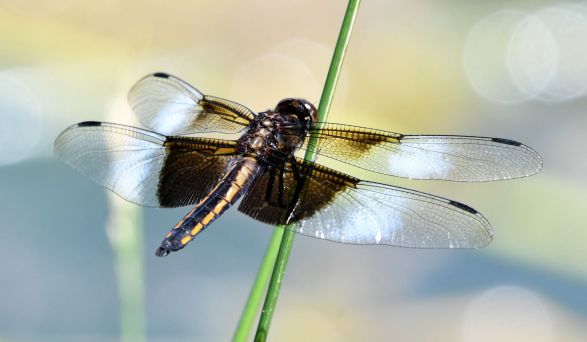
Male Widow Skimmer dragonfly

The other difficult thing about winged creatures is, they never let you know when they’re leaving! I remember the first time I was trying to take a picture of a butterfly. It was years ago, but it still comes back to me every time something flies away without a sound. For some reason, I kept thinking that the creatures I was taking pictures of would make some kind of noise when they left, like people do when they shuffle their feet, shut the door, or say goodbye. You definitely know when humans have left. Most of the time, you even know exactly where to find them! But not so much with birds and butterflies! They just silently flutter away without a sound and, most of the time, I have absolutely no idea where they’ve gone. I wish they all wore bells!

Pearl Crescent butterfly
Eastern Carpenter Bee that can also be difficult to capture!

A few bigger birds, like the great blue heron and the little green heron will, on occasion, let you know they’re leaving by blurting out a raspy squawk or two. Sometimes, I can even get a decent picture as they depart. Or, consider the lowly bullfrog, who doesn’t exactly have wings, but will at least let me know when it’s leaving by yelling, “YEEP!” as it jumps into the water.  Unfortunately, by the time I hear the “YEEP”, it’s too late for a picture!

Great Blue Heron
American Bullfrog that will leap in fright if he notices me coming!
If turtles hear or feel my footfalls, or if they see me coming, they will dive under water as fast as they can!

That’s why I’m thankful for flowers. They don’t fly off and they don’t leap in fright when they hear me coming. I can walk right up and take a picture! I can take a hundred pictures if I like. I can change my settings a million times, take a break for lunch, make a phone call, and come back later. They never fly away!

Giant Sunflowers
Male Monarch Butterfly

In a world where everything else disappears without so much as a polite goodbye, it’s a total luxury to photograph flowers –as well as anything else that doesn’t leap, fly, dive, or run away in fright!

Common Sneezeweed

Before Pictures: A Photography Journey

July 4, 2022

Before I started taking pictures, there was so much I didn’t know about the world outside my own front door. I didn’t know that dragonflies came in a rainbow of colors, that turtles shed parts of their shells, or that we had cuckoos in Michigan! I didn’t know that cedar waxwings could get drunk eating fermented berries, or that great blue herons would stay here throughout our cold Michigan winters. My enlightenment all started with a Christmas wish.

A brown, white and yellow Widow Skimmer dragonfly

In the Fall of 2013, my husband, Mel, started asking me what I wanted for Christmas. I gave his question a good deal of thought and came up with the idea that I’d like to have a better camera. All I had was a pocket-sized Canon PowerShot– a lightweight and easy to carry camera with very limited capabilities.

Michigan’s Black-billed Cuckoo
A Great Blue Heron that decided to stay in Michigan for the winter!

Once I told Mel what I wanted, he went to work doing the research and came up with a bigger, better version of the Canon PowerShot that he thought might work. I loved it– and ultimately, dubbed it my “gateway drug”.

Eastern Kingbird babies hoping for lunch!
A giant snapping turtle taking a break on a very hot day!

I happily used that camera on and off for the next three and a half years; taking the usual family photos and typical vacation shots. It wasn’t until we went to Florida in 2016 for our first extended stay that my addiction to nature photography really kicked in. There were so many rookeries, sanctuaries and preserves with new and unusual birds, mammals, and reptiles that I had absolutely no trouble feeding my ‘habit’!

Florida alligator taking a siesta

Eventually though, I started wanting more. I wanted a camera with a faster response time so that the bird on the limb would still be there once I pressed down the shutter button. I wanted to get pictures of the birds and butterflies that were farther and farther away, and I wanted sharper images. Mel went back to work looking for a camera that would do all those things—without causing us to re-finance our home! By July of 2017, I had my new camera, a Nikon D3400 and a detachable 70-300mm zoom lens. I was back in business!

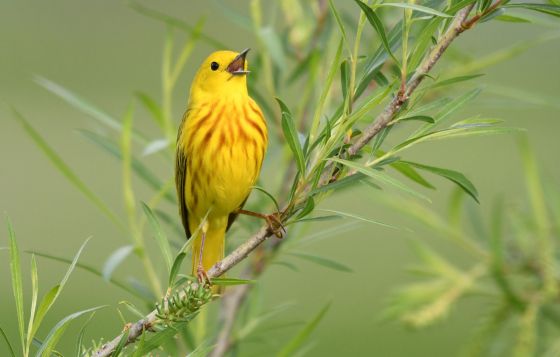
A bright-eyed Yellow Warbler
Common Yellowthroat

At some point along the way, Mel decided to take up his photography hobby again and assumed ownership of my D3400 after finding me a Nikon D5600 to take its place. We were both hooked!

Spiny Softshell Turtle

I loved all the beautiful pictures I could get with my D5600 and the 70-300mm lens, but there were birds and butterflies still out of reach that I wanted to capture! After a bit of research, Mel thought that a Sigma 150-600mm lens might do the trick. I was well aware of the size and weight of this lens based on what I had read, but when it actually arrived, I thought “What on earth have I done??” It looked huge! It felt heavier than I expected and I had serious reservations about my ability to carry it around for hours on end. But, I really, really wanted to take ‘far away pictures’ so off I went, camera and lens in hand.

The BIG lens!

I used that set up for a year or so before my back started telling me that it might be better to add a monopod to my camera in order to support all that weight when I stood for hours taking pictures. Adding a monopod would mean I’d have a little more weight to carry as I walked along, but I wouldn’t have to hold the camera up to my eye unsupported as I patiently waited for the ‘perfect shot’ or tried to pan the movement of a bird in flight. My back has thanked me many, many times over.

Taking pictures using the camera mounted on a monopod– a good back-saver

I used the Nikon D5600 for two or three years along with the 150-600mm lens before totally exceeding the picture expectancy of my camera with over 100,000 shots!! I decided to trade it in for a Nikon D500, a camera that was highly rated for nature photography and has totally lived up to that assessment!

Blanding’s Turtle
Barn Swallow

Before taking pictures, I had already loved going on nature walks– but there was so much I didn’t see! With my camera in hand the world suddenly opened up!! I paid more attention.  I noticed things I had never noticed before– like the subtle movement of a blade of grass that might mean a dragonfly had landed, or the tiny ‘bump’ at the top of a long-dead tree that might mean a hummingbird was resting; or the infinitesimal speck of blue on a shiny green leaf that might mean a damselfly was nearby.

Hagen’s Bluet Damselfy

All of those creatures had been there all along, but I never saw them —until I started taking pictures!

Three Gifts

June 4, 2022

I have a mental checklist that I review every time I leave the house for a picture walk: Is my camera battery fully charged? Is my memory card inserted? Do I have an extra card and an extra battery?  Do I have my phone and is it fully charged? Do I have my monopod? But, after what happened yesterday, I should probably switch my mental list to an real list!

Yellow Warbler
Cedar Waxwing

I was off on another picture adventure and eager to see what surprises awaited me.  My destination was a favorite nature center about an hour away from home. Whenever I go on a picture adventure, I feel an immediate sense of calm wash over me once I arrive. Yesterday was no exception. I drove into the parking lot, took a deep, relaxing breath, and prepared for my three-hour escape into nature’s arms– until I realized there was no memory card in my camera!!

Canada Goose Gosling

I had made this mistake before and had come prepared with an emergency back-up card! Perfect! Once the card was inserted, I happily set off into the ‘wild’ hoping for a day filled with beautiful little creatures and colorful flowers. My joy was short-lived.

Trumpeter Swan
American Toad singing!

Forty-five minutes into my walk, after taking only three measly pictures, my memory card said ‘full’!! What??? How could that be?? I tried every ‘high tech’ solution I could think of to remedy the situation: pull the card out and put it back in; turn off the camera, turn it back on, and re-format the memory card–repeatedly. Nothing worked! It was time for plan B!  Look for the nearest store!

American Bullfrog
Great Blue Heron shaking the water off

I hustled back to my car as fast as a marginally nimble 75 year-old can hustle on an uneven boardwalk with an expensive camera, a 600mm lens, and a 5 foot monopod! Once in my car, I drove as quickly as was legally possible to the nearest store to find another memory card– and hope that it worked. It didn’t. But I had already driven back to the nature center before I found out!

Field Sparrow

At that point, I could have just thrown in the towel. I could have just gone for a ‘regular’ walk and not taken pictures. But it was completely impossible for me to do that! This particular nature center had a butterfly house. It was the perfect place for close-up shots of stunning and unusual butterflies. I had to stay!

White Peacock Butterfly in the Butterfly House at the Nature Center
Garden White Butterfly in the Butterfly House at the Nature Center
Monarch Butterfly in the Butterfly House at the Nature Center

So, I went back into town to a different store and looked for a different memory card. While standing in the aisle reading the descriptions on each of the various cards, I suddenly realized why the first card hadn’t work and dashed out of the store. Back to the nature center for my third and final attempt at trying to salvage what was left of an otherwise lovely day!

Pipevine Swallowtail Butterfly in the Butterfly House at the Nature Center
Zebra Longwing Butterfly in the Butterfly House at the Nature Center

I had first arrived at the nature center at 9:00 a.m. It was now noon. The soft morning light was long gone, as was the cool morning air. It had been a frustrating start to what was supposed to have been a calm and relaxing day. I was totally frazzled.

Rose-breasted Grosbeak

But, keeping things in perspective is everything. The day was still young. The weather was still great and, most of all, I was very much alive and well, doing something I dearly loved— three priceless gifts that not everyone gets to enjoy. It was all I really needed to remember and off I went…

Trumpeter Swan coming in for a landing

Hungry for Spring

February 24, 2022

Young Trumpeter Swan flying through a snow squall

As I sit writing this piece, long before sunrise, on another cold and windy February day, I am contemplating the advisability of even attempting a picture walk. The weather forecast calls for 15 to 25 mile an hour winds with gusts over 40! On the other hand, temperatures might exceed 40 degrees —quite balmy compared to the below zero wind chill conditions I was faced with the other day! Usually, I can put on enough layers to stay warm, even on the coldest of days, but strong winds make for a much bigger challenge.

Blue Jay stirring up snow in a pine tree
Some Great Blue Herons will stay here throughout the winter, but many more will head south

Most days, I’m up for that challenge but, I must admit, I’m growing weary of it all. These long winter days, where I have to plan for so many weather contingencies, and have to wear so many layers, are weakening my resolve—especially during the past two years of this pandemic where we haven’t been able to venture far from home. The birds in my backyard are quite tired of me begging for a photo shoot.

Carolina Wren near my backyard feeder

For the next few days, though, my backyard birds can take a break while I babysit my grand-dog on the opposite side of the state. There are lots of new places to explore here and once the sun is up, I expect I’ll venture out in spite of the wind and in spite of the cold! I’d much rather be outside searching for the possibility of something new than sitting here on the couch.

Some people believe that the Robin is a “harbinger of spring”, but large numbers of them stay here all winter feasting on berries.

After writing those first few paragraphs, I did, indeed venture out– first to a nearby nature center and then to a nearby park.

Black-capped Chickadees are delightful little birds that can be found in Michigan all year round.

I found the usual assortment of birds at the nature center—chickadees, finches, cardinals, nuthatches and goldfinches, but it was a brand-new setting! When I arrived at my second destination, I really hit the jackpot! Beaudette Park in Pontiac, Michigan, had a very large pond of open water and it was teeming with a wide variety of waterfowl, some of which I’d never seen before!

Canada Goose coming in for a landing!
Some Sandhill Cranes stay here all year long

This time of year, it’s highly unusual to find open water in Michigan. Most lakes and ponds are frozen over.  This particular body of water had the ubiquitous array of mallards, swans and geese, but it also had mergansers, buffleheads, redheads, ring-necked ducks, goldeneyes and canvasbacks!! It was the canvasbacks I’d never seen before. I couldn’t stop taking pictures!

Male Canvasback at Beaudette Park in Pontiac, Michigan
Male Ring-necked Duck

Days later, I was still sorting through all the hundreds of pictures I took that day!

Male Wood Duck

Mallard Ducks are everywhere and they offer endless opportunities for interesting photographs!

In spite of all the inherent beauty to be found in a picture of freshly fallen snow and a colorful bird here and there, I am more than ready for the arrival of spring; ready to be free of these bulky winter clothes, grey skies, and frigid temperatures.  I’m beyond hungry for the colors to return, for the sweet smell of a newly mowed lawn, and for the sheer delight of a warm patch of sun on my bare skin!

I am more than ready to shed these bulky winter clothes and trade this colorless landscape for green leaves and spring flowers!

Great Backyard Bird Count

February 16, 2021

The 24th annual, four-day, Great Backyard Bird Count just ended yesterday. I had never participated in this event before and I’m not quite sure why. Maybe I thought it would be too time-consuming or that only experienced birders would be able to do it. Maybe I thought it would be too complicated. Whatever the reasons, none of them proved true. Over the course of four days, I counted most of the birds from the comfort of my easy chair, the rest by standing in our back yard, camera in hand!

American Robin
Cedar Waxwing enjoying berries

“The Great Backyard Bird Count (GBBC) is a free, fun, and easy event that engages bird watchers of all ages in counting birds to create a real-time snapshot of bird populations.” www.audubon.org

Blue Jay

“The massive international community science project, held over four days every February, collects data that provides scientists with a long-term record of bird distribution and numbers over time, helping to identify trends that might be associated with urbanization or climate change.” https://news.wttw.com/2021/02/12/global-great-backyard-bird-count-underway

Fox Sparrow

“By participating in the Great Backyard Bird Count, community scientists contribute data that we use to protect birds and the places they need, today and tomorrow. In return, studies tell us that pausing to observe birds, their sounds and movements, improve human health. Participating in the Great Backyard Bird Count is a win-win for birds and people.” https://earthsky.org/earth/register-participate-great-backyard-bird-count

Downy Woodpecker

“During the 2020 count, more than 250,000 checklists were submitted from over 100 countries, and a record 6,942 species were counted. That is a large proportion of the estimated 10,000 bird species that live on Earth today.” https://earthsky.org/earth/register-participate-great-backyard-bird-count

American Robin

The Northern Cardinal nearly always tops the list as the number one bird reported followed by Dark-eyed Juncos, Mourning Doves, Downy Woodpeckers, Blue Jays, House Sparrows, House Finches, American Crows, Black-capped Chickadees and Red-bellied Woodpeckers.

White-throated Sparrow

With the exception of the Black Crows, all of those birds were on my list but in a different order of frequency. I also found Robins, Goldfinches, Cedar Waxwings, Brown Creepers, Northern Flickers, Tufted Titmice, White-breasted and Red-breasted Nuthatches, Hairy Woodpeckers, White-throated Sparrows, Fox Sparrows, and one new addition, a Yellow-bellied Sapsucker!

Yellow-bellied Sapsucker

Even though it’s called a ‘backyard bird count’, you don’t really have to be in your own backyard. You can go for a walk and count the birds along the way or you can go to a park and sit on a bench with a hot cup of tea in your hand. But for this, my first ever Great Backyard Bird Count, I actually counted the birds in my own backyard. In terms of variety, it was probably the very best place for me to be. Over the course of the four day event, I identified eighteen different species of birds!

American Goldfinch

If you haven’t already participated in the Great Backyard Bird Count, put it on your calendar for February 2022. It’s easy and fun– and an immensely good thing for all our feathered friends!

American Robin

Happy birding!