During these long winter months in Michigan, it isn’t the snow or the cold or the relatively short hours of daylight that make ‘surviving’ winter a challenging endeavor, it’s the endless days of overcast skies. It’s just hard to stay upbeat and pleasant with so many dreary days in a row! When the sun finally does come out, though, everything seems happier, even the birds are smiling!! All seems right with the world… until it isn’t.
A happy looking Female Mallard hybrid on a sunny day at the Kellogg Bird Sanctuary, January 6, 2021
On Wednesday, January 6, 2021, the sun was expected to shine all day. I absolutely couldn’t wait to get outside and take pictures! And even though it was going to be the coldest day ever, I had to get out of the house with my camera to see what I could find.
Adult Trumpeter Swan, Kellogg Bird Sanctuary January 6, 2021
Trumpeter Swan feet (juvenile swan on the left, adult swan on the right)
Juvenile Trumpeter Swan, Kellogg Bird Sanctuary, January 6, 2021
In order to insulate myself against the frigid temperatures, though, I wore three long-sleeved shirts, one fleece jacket, one wind-breaker, one winter coat, two pairs of gloves, one scarf, two hats, and a pair of over-boots to keep my feet from freezing. Inside each pocket of my coat were rechargeable hand-warmers! I was well insulated against the cold, but not well insulated against the breaking news on the radio as I drove home from my blissful day of picture taking.
Cedar Waxwing enjoying juicy red berries on a cold winter day
Female and Male Northern Cardinals
American Robin enjoying a tasty snack on a winter’s day
The Capitol building of our beloved country was under siege by armed insurgents who were hell bent on overthrowing our election and doing as much damage as possible along the way—smashing windows, breaking down doors, destroying historic property, threatening the lawmakers and beating one Capitol police officer to death. It wasn’t until I got home and turned on the TV that I saw the full extent of the mayhem, hate and carnage that was still taking place.
Dark-eyed Junco in the snow
Female and Male Mallard
Northern Pintail
In the span of just a few short minutes, my peaceful day among the birds had been totally upended and set on fire.
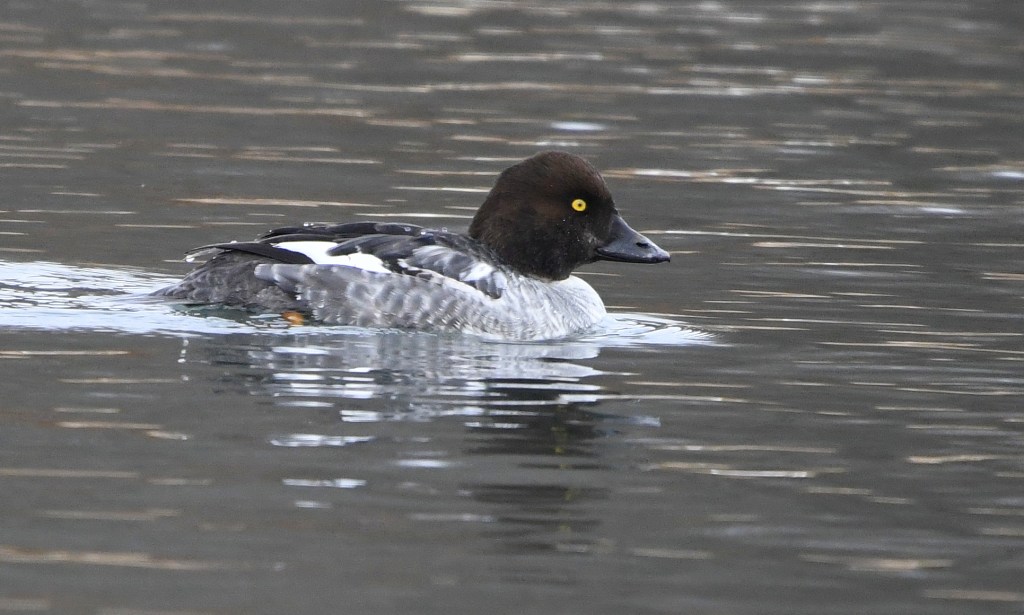
Female Common Goldeneye
Pine Siskin and a House Finch Three Canada Geese and a Male Gadwall
Today, as I look back through the pictures I took on January 6th, I am reminded of all the beauty that still exists in the world. And, I am reminded as well that beauty is not always easy to find or even easy to hang on to once you do find it, but it’s always worth looking for.
Trumpeter Swan, Kellogg Bird Sanctuary, January 6, 2021
The other day, I was talking with a friend about this hobby of mine that I love–nature photography; about picture walks, about writing a blog, about being outdoors every day. After listening to me ramble on enthusiastically, she said, “It really checks off all the boxes for you, doesn’t it?”
“Well, yes, I guess it does,” I replied. And then proceeded to get lost in my head visualizing all of those tiny boxes…
Red-eyed Vireo
Eastern-tailed Blue and a Monarch
Box Number One is the ‘exercise box’. I get out and go for a picture walk almost every day. I may not walk fast and I may not walk far, but I do get up and out the door for three or four hours at a crack–sometimes more. At age 73, that might be considered an accomplishment!
Autumn Meadowhawk and an Eastern Phantom Cranefly
Eastern Bluebird
Cardinal and Cedar Waxwing
Box Number Two is ‘connecting with nature’. As soon as I arrive at the woods or fields where I’ll be taking pictures, a sense of calm washes over me as I get ready to explore all the possibilities that lay ahead. I am so focused on looking for things to photograph, that I totally forget about anything that might have worried me before I left the house. A picture walk feels so much like a form of meditation that I decided to Google the words “photography as meditation” to see if anything came up. I was quite surprised to find that not only had articles been written on this topic, there was actually a book with the same title, ‘Photography as Meditation’!!
Backlit Plant and a Brown Creeper
Bog Walk
Fall Leaves and a Red-legged Grasshopper
Box Number Three is ‘making connections with others’. One of the things I really like to do after taking my pictures, is to share them with others. There are so many interesting things to see out there! When I share what I’ve found with others, it starts a conversation. Those pictures and those conversations lead to writing a story, such as this blog, which then leads to Box Number Four.
Eastern Phoebe
Great Blue Heron
Solitary Sandpiper and a Pectoral Sandpiper
Palm Warbler and a White-breasted Nuthatch
I love to write. I love pulling my thoughts together and putting them down on ‘paper’. Writing things out forces me to clarify what I’ve seen and what I’ve learned. My hope is that those stories prove interesting or educational or somehow beneficial to someone else. If nothing else, though, the stories I write serve as ‘memory keepers’ for me when, years from now (or maybe next week!) the details of a particular walk will have eluded me!
Fox Squirrel
Small Copper Butterfly and a Swamp Milkweed Leaf Beetle
There are certainly other boxes that could be checked off, such as ‘picture walks vacation destinations’ and ‘picture walks creative projects’, but the four I’ve described are at the very top of my list and are all the motivation I need to get out the door for another day of exploration.
As I pondered what to write today, I was thinking back on my short but immensely gratifying photography journey.
Barn Swallow and a Belted Kingfisher
Juvenile Barn Swallow
Eastern Kingbird and Willow Flycatcher
It started innocently enough in the fall of 2016, when my husband asked me what I wanted for Christmas. I had no idea! But, he likes finding things that surprise me, so I gave it some thought. What I came up with was “a better camera”. For many, many years, all I had was a very small, pocket-sized, Canon Powershot.
Brown Thrasher and Female Red-winged Blackbird
Willow Flycatcher
Gray Catbird and a Cedar Waxwing
Once I told Mel about my ‘better camera’ idea, he went to work researching it. What he came up with was another model of the Canon Powershot –but a bigger, better version with a built-in zoom lens. I now refer to this camera as my ‘gateway drug’! As soon as I realized what was possible with a better camera, I was hooked!
Eastern Giant Swallowtail on Bull Thistle and a Great Spangled Fritillaryon Coneflower
Eastern Tiger Swallowtailon Butterfly Bush
Monarch on Butterfly Weed and a Red-spotted Admiral on Queen Anne’s Lace
It wasn’t long before I was outdoors nearly every day taking pictures of birds, butterflies, frogs, turtles– anything I could find that grabbed my attention. Eventually, though, I started musing about what I might be able to do with an even better camera—one that could capture the birds that were even farther away, and would also have a faster response time.
Blue Dasher and a Twelve-spotted Skimmer
Slaty Skimmer
Male Eastern Pondhawk
Since Mel enjoys doing the research and I do not, he’s the one who went to work looking for another camera, one that would take a detachable telephoto lens. What he came up with was a Nikon D3400 and a 75-300mm lens. Once it arrived, I was out the door!
Snowberry Clearwing Moth (aka hummingbird moth)on Spotted Knapweed and BeeBalm
Painted Turtle
American Bullfrog and Pokeweed
I think another year went by, maybe less, and I found myself wanting to capture creatures that were even farther away. Mel took off on another search and came up with a 150-600mm lens from Sigma that would probably do the trick. But it was much longer and much heavier than the one I currently had and I was hesitant. When it arrived, I was still hesitant. It just seemed too big and too heavy for me to handle comfortably. But I was eager to take close-ups and quickly overcame my reluctance. I have not put it down since!
Spicebush Swallowtail on Butterfly Weed and a Viceroyon Button Bush
Eventually, the constant lifting and focusing with a lens that size made my back ache and I reluctantly added a monopod to my set up. It’s a bit of a bother sometimes to have the monopod attached, but I can now focus on a subject for an indefinite amount of time without having to give my back a break.
This insect was a huge surprise! It’s a female BOTFLY laying an egg on a blade of grass. I’ve never seen one before and didn’t know we even had them in the U.S.!
After the Nikon D3400, came a Nikon D5600, which is what I have been using for the last couple of years. This camera and I have gone on a picture walk together nearly every day and I have taken hundreds of pictures with it on each of those walks. Periodically, I have checked to see how much ‘shutter life’ it had left.
Juvenile Great Blue Heron and Halloween Pennant Dragonflies mating
My D5600 had been given a shutter life of 100,000 shots. When I last checked, I had taken well over 151,000 pictures! I felt as if we were on borrowed time and decided to start looking for a new one.
Eastern Tiger Swallowtail (dark morph) and a Pearl Crescent Butterfly
Red-tailed Hawk
Once again, Mel returned to the drawing board to find a camera that was well suited for wildlife photography. What he found was a Nikon D500. It arrived a just a few days ago and we have already become fast friends!
Red-spotted Admiral and a Silver-spotted Skipper
With a shutter life of 200,000 shots, I’m looking forward to many years and many pleasant journeys with my newest walking companion!
I’m sitting here in front of a warm fire looking out at the falling snow and the hungry birds flying into our feeders for a bite to eat, and trying to decide how many layers I would have to wear to stay warm on a picture walk today. It’s been snowing (or sleeting) on and off for the past two days and my weather app says the wind chill is below zero. I ultimately decided that the number of layers I would have to wear would probably exceed the number of steps I could take trying to walk– kind of like Ralphie in the movie A Christmas Story.
While contemplating the saneness of leaving my warm fire and my comfortable chair to go for a picture walk, I decided to sort through the pictures I’ve already taken in the last three weeks and then re-evaluate!
I’ll start with New Year’s Eve. The weather was relatively mild then and I was surprised to find so many robins out and about looking for something good to eat. I didn’t expect to even see robins because I had grown up believing that they left for the winter and returned in the spring; that they were, in fact, the ‘harbingers of spring’.
Robin eating berries
Robin rooting around for grubs
What I found out, though, was that most of our robins just stay put; that we don’t often see them in winter because they spend more time roosting in trees and less time rooting around in our yards. The robins I saw were doing both– roosting in the trees and rooting around on the ground. They had found berries up high and grubs down below.
It seemed like spring when I saw the robins out and about, but it was still the middle of winter!
The berries that had attracted so many robins had also attracted Cedar Waxwings and Starlings. Interestingly enough, both Robins and Cedar Waxwings have been known to become intoxicated from eating too much fruit that has already become fermented!
This Cedar Waxwing looked a bit ‘tipsy’ as he grabbed for something good to eat!
A few days later, I decided to take advantage of an unusually sunny morning and headed over to the Wolf Lake State Fish Hatchery to catch what I could of the ‘golden hour’. It was a good thing I did because, for the next several days, the weather was gloomy, gray and wet.
Common Goldeneye
Male Gadwall
Belted Kingfisher– a particularly hard bird to catch!
Trumpeter Swan flying over the Wolf Lake State Fish Hatchery
After enduring several days of dismal weather, I was eager to get out and take pictures again– but it was still raining! I couldn’t take pictures in the rain (my camera would suffer), so I settled for a ‘picture stand’ instead of a ‘picture walk’ by positioning myself under our second story deck and shooting the birds that were perched in the nearby trees.
Mr and Mrs Cardinal braving a dark and dreary day
For the next few days after that, the weather was fairly cooperative and I managed to visit several familiar places plus one new one, the Paw Paw Prairie Fen. My biggest surprise was finding a Great White Egret fishing in a pond near the fen! I rarely see them in the summer, let alone the middle of winter. I also found a Great Blue Heron, but he decided to fly away before I could get a close-up!
Great White Egret
Great Blue Heron
On my visit to the Kellogg Bird sanctuary, I was saddened to learn that two of the birds I loved to photograph had died the previous year– a beautiful Mandarin Duck and a rare Red-breasted Goose. Both birds were one-of-a-kind at the sanctuary, so it was particularly sad to lose them.
Mandarin Duck
Red-breasted Goose
A lovely American Goldfinch at the Kellogg Bird Sanctuary
Once a month, I like to stop in at the Kensington Metropark Nature Center on my way across the state to babysit my grandson. The birds at Kensington are abundant and fearless. They eagerly anticipate all the visitors who come by and ply them with birdseed. If you stand still and hold out a handful of seeds or peanuts, the birds will land on your hand within a matter of seconds– chickadees, nuthatches, titmice, downies, and sometimes, even the bigger birds will land– like the red-bellied woodpeckers. It’s always delightful!
Nuthatch
Downy Woodpecker
Red-bellied Woodpecker enjoying my stash of seeds at Kensington Nature Center
American Tree Sparrow
Black-capped Chickadee
Bluejay scooping up the last peanut
In the time it’s taken to write this blog, the temperature outside has gone up one whole degree— time to bundle up and see what’s waiting for me out there!
Mel and I have just returned from a vacation in Colorado
where we both enjoyed pursuing our passions—fly fishing for him, nature
photography for me.
August 28-29
Hitchcock Nature Center, Honey Creek, Iowa
Our four day, twelve hundred mile car journey from Michigan to Colorado took us through the states of Indiana, Illinois, Iowa and Nebraska. According to Google Maps, it’s only a 16 hour journey— that is if you don’t stop to sleep or eat or go to the bathroom! We did all of the aforementioned, plus took a side trip to Honey Creek Iowa where we spent two days in a cozy little cabin on the grounds of the Hitchcock Nature Center. While at the nature center, we took pictures walks along the Fox Ridge Run Trail and the Boardwalk Trail.
Yelllow-billed Cuckoo (Mel’s shot)
Dickcissel
Great Spangled Fritillary on Field Thistle
Baltimore Oriole
Red-headed Woodpecker (Mel’s pic)
August 30- September 2
Ft. Collins, Colorado
From Honey Creek, Iowa we headed through Nebraska to Fort
Collins, our first Colorado destination.
Fort Collins is well known for its excellent fly fishing opportunities and a multitude of natural areas to explore. Over the course of our stay in Fort Collins, Mel went fishing several places along the Cache La Poudre River, while I took picture walks along the Hewlett Gulch Trail, the Fossil Creek Reservoir (twice) and at the Colorado State University Annual Trial Flower Garden. Mel joined me for picture walks on one of my visits to the reservoir and at the university flower garden.
Cache La Poudre River where Mel was fishing (He took this picture while he was fishing and you can see the tip of his rod in the lower right corner.)
Bumble Flower Beetle (something I’d never heard of!)
Rock cairn on the Cache La Poudre River
I was surprised to find White Pelicans in Colorado! This one, as well as hundreds of others were hanging out at the Fossil Creek Reservoir in Fort Collins
Pied-billed Grebe
Western Grebe
Red-legged Grasshopper– one of hundreds at the Fossil Creek Reservoir
Barn Swallows waiting to be fed!
Musk Thistle
Swainson’s Hawk
Fossil Creek Reservoir is a huge tract of land! That’s me in the lower left corner!
Beautiful flowers and butterflies from the Colorado State Annual Trial Garden…
Painted Lady butterfly
Aphrodite Fritillary (I think)
September 3-5
Estes Park, Colorado
As soon as we arrived in Estes Park, Mel headed to the fishing shops and I headed out looking for pictures to take. Surprisingly, the Knoll-Willows Nature Preserve is right in town and only a stone’s throw from where we parked! Within a minute or so of commencing my walk, I spotted a huge bull elk lounging in the underbrush along the edge of the preserve! A little farther down the sidewalk, were several of his girlfriends. Apparently, elk are a very common sight right in Estes Park!
Bull Elk lounging around right in downtown Estes Park!
The Girlfriends
Looking around for a snack
Hmmm. No dogs allowed. What’s up with that??
“Hey, good lookin’, what’s cookin’?”
Teenage boy in Estes Park
Bull Daddy in Estes Park
In front of the Visitor’s Center at Estes Park, the Hummingbird Moths and the Hummingbirds were a delight to watch…
White-lined Sphinx Moth or Hummingbird Moth
Broad-tailed Hummingbird
Sunset in the Rocky Mountains
Osprey with his catch of the day
Red-tailed Hawk
California Poppy
Barn Swallow
Pygmy Nuthatch
Least Chipmunk (look at the length of that tail!!)
Mountain Cottontail
September 5, 2019
Rocky Mountain National Park
to Steamboat Springs
We spent the day driving through the scenic, breathtaking Rocky Mountain National Park to reach our second Colorado destination, Steamboat Springs. Mel and I stopped several times through the mountain route to take in all the spectacular views– but I never took any scenery pictures (they tend to be disappointing compared to the real thing), preferring instead to look for the smaller things like birds and butterflies and mammals.
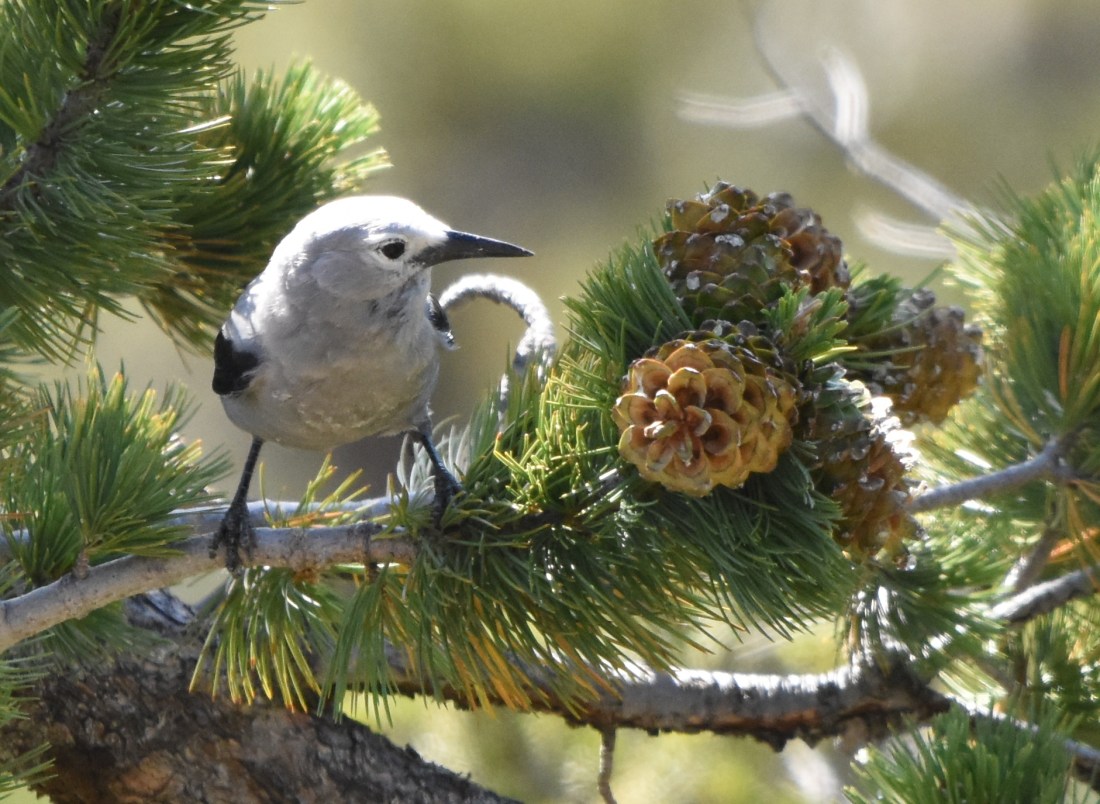
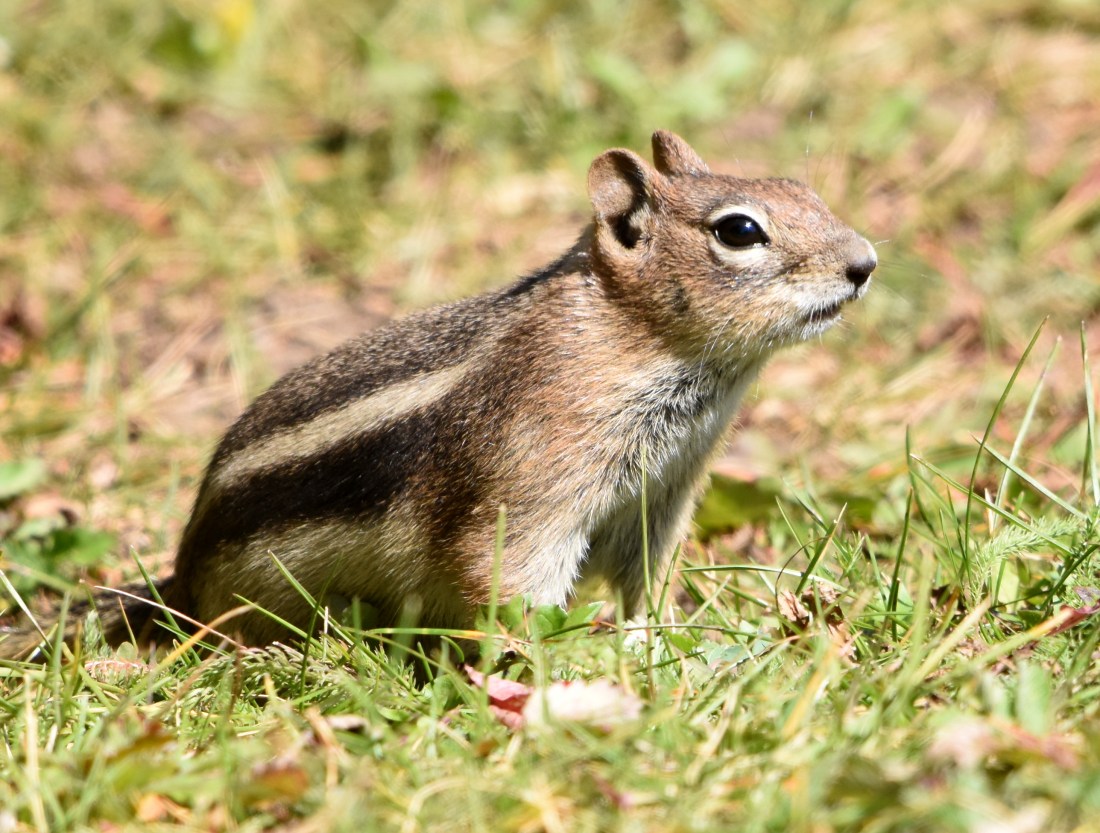
Clark’s Nutcracker (Clark’s Nutcrackers are mainly found in mountains at altitudes of 3,000–12,900 ft in conifer forests.)Gold-mantled Ground Squirrel in the Rocky Mountains This little critter looks a lot like a chipmunk but is much bigger– kind of like a chipmunk on steroids!
September 5-9
Steamboat Springs, Colorado
While Mel went fishing in the Yampa River, I went walking along the Yampa River Trail, a 7.5 mile multi-use trail that runs through the heart of Steamboat Springs and along the Yampa River. Along that trail, I found other points of interest like the Rotary Park Boardwalk and the Yampa Botanic Park, both of which were wonderful places for a quiet retreat as well as multiple picture opportunities.
Yampa River
Swift Moth
Two-striped Grasshopper
Black-billed Magpie along the Yampa River Trail
Cedar Waxwing
Osprey
Coronis Fritillary (I think) on coneflower
Yellow-rumped Warbler
bedraggled Robin
European Starling
Hollyhock
Yellow Warbler
Mourning Cloak butterfly
On one of the days that Mel didn’t go fishing,
we took a drive up to Fish Creek Falls
together for a picture walk and later spent hours at the Yampa Botanic Garden taking pictures of all the beautiful flowers,
birds and visiting insects.
White-lined Sphinx Moth (or Hummingbird Moth) in the Yampa Botanic Garden
Townsend’s Warbler up near Fish Creek Falls
Stunning flowers from the Yampa Botanic Garden…
Mel fishing the Yampa River
September 9-12
Colorado Springs, Colorado
Colorado
Springs was our last destination in Colorado and we made the best of the time
we had. As soon as we arrived on the afternoon of the 9th, we went for a
picture walk in Palmer Park on a
trail that turned out to be rockier and slipperier than we expected. Not many
pictures got taken—we were too busy watching our footing!
Cassin’s Vireo (I think) One of the few pictures I took at Palmer Park because I was too busy watching my footing!
The following morning we headed out to the Garden of the Gods, which is known for its enormous, awe-inspiring geologic
formations, including tall rock spires or hoodoos, and steep cliffs. It’s a
major tourist attraction and well worth the visit.
Garden of the Gods, Colorado Springs Garden of the Gods, Colorado Springs Garden of the Gods, Colorado Springs
After our visit to Garden of the Gods, Mel dropped me off at the Bear CreekNature Center to take pictures all afternoon while he explored the fishing shops, bookstores and coffee shops around Colorado Springs.
Vesper Sparrow
Woodhouse’s Scrub Jay
Rock Wren at Bear Creek Nature Center
Spotted Towhee
White-breasted Nuthatch
Scrub Jay
Lesser Goldfinch and Pine Siskin
On Wednesday, our last full day in Colorado, Mel dropped me off at the Cheyenne Mountain Zoo where I spent a delightful five and a half hours taking almost 800 pictures of the zoo animals and of the native birds that were flitting about in the nearby trees!
Baby Wallaby in his mama’s pouch– one of my favorite pictures from the zoo This baby wallaby is around 7 months old and barely fits in the pouch anymore! Here you see his head and legs sticking out!Mom and baby wallaby hanging out togetherThe Wallaby baby hopped around for a few minutes before scurrying back to the safety of his mother’s pouch.
Emu
Giraffe
The meerkats were great fun to watch. They are both curious and comical!
“What’s up, buttercup??”The meerkat on the right walked into the scene, laid down and decided to strike this rather suggestive pose! Their antics were so much fun to watch!Moose I had been hoping to see a moose in the wild in Colorado, but this is the closest I got!
Peacock wandering around in the zoo
Steller’s Jay at the zoo
Parakeets in the Budgie House at the zoo.Okapi Also known as the forest giraffe, Congolese giraffe, or zebra giraffe, native to Africa.
Male Wood Duck
Female Wood Duck
A young warthog (native of Africa)
Porcupine taking a nap
White-backed Vulture (Africa)
Red River Hog– native of Africa
The best part of going on vacation, besides getting away from every day routines, is finding things I’ve never seen before (and taking pictures!), eating things I’ve never tried before and meeting new people I’ve never met before.
Every time I sling my camera over my shoulder to go on a picture walk, I’m excited by the possibilities of what I might find. In the back of my mind, I’m always hoping that I’ll find something new. More often than not, I find something I’ve already seen before. The joy in that, though, is learning something new every time I watch a creature in its natural environment.
Viceroy Butterfly Viceroy and Monarch Butterflies look very similar but the Viceroy has a black line across the hind wings and the Monarch does not. The Viceroy is also a bit smaller than the Monarch. Also, the caterpillars of these two butterflies are significantly different in appearance.
Mallard
Mallard
Canada Geese I just liked the way these geese looked lined up along the shore with such a clear reflection.
Today, for instance. I was standing on the shoreline of one of the ponds at the Wolf Lake State Fish Hatchery observing dozens of swallows swooping through the air catching bugs. As I was watching, I noticed that some of the birds were taking breaks in a nearby tree—so I zoomed in. To my surprise none of the birds in the tree were swallows! They were cedar waxwings! I had never seen cedar waxwings swooping and diving over a body of water like that—or maybe I had always assumed the birds I was looking at were swallows! It was nearly impossible for me to tell the difference between the swallows and the waxwings as they quickly flew through the air snatching insects.
A beautiful Cedar Waxwing
While I was standing on the shore observing the swallows and waxwings, I noticed a small yellow bird flitting around sporadically in the underbrush below me. My heart skipped a beat! I thought for sure it was a Prothonotary Warbler like the one I had seen in the exact same spot last year. Back then, I had been so excited to find a bird I had never seen before– and then profoundly disappointed to find the battery on my camera was dead! In my naiveté, I thought if I rushed home for a new battery and then rushed back (40 minutes minimum), the bird would still be there. It was a huge long shot for sure, but I had nothing to lose. Surprisingly, though, I made it back in time to get the shot! Today’s bird, however, was not a Prothonotary Warbler, but a Yellow Warbler—equally cute but not particularly rare.
A lovely Yellow Warbler
After a million or so pictures of the Yellow Warbler and the Cedar Waxwings, I decided I needed to get a little exercise –it was, after all, a picture walk, and I had been standing in the same place for over an hour! Within 100 yards, though, I had to stop again because I spotted even more swallows swooping over an adjacent pond– with dozens more perched in a nearby tree along the bank. When I zoomed in on them individually, I could identify Bank Swallows, Northern Rough-Winged Swallows, Barn Swallows and Tree Swallows! I didn’t even know they all hung out together!
Barn Swallow
Northern Rough-winged Swallow
Swallow Squabble
Northern Rough-winged Swallow
Northern Rough-winged Swallow
Bank Swallow
Eastern Kingbird
Willow Flycatcher
As it turns out, I got very little exercise today, but tons of pictures! To make up for the walking shortfall, Mel and I went for a stroll in our neighborhood later in the day. As part of our itinerary, we stopped at our local Prairie Garden– and immediately spotted two Hummingbird Moths! They are such beautiful insects and I hardly ever see them– so I couldn’t wait to finish our walk and grab my camera! Not only were the two moths still there when I returned almost an hour later, they positioned themselves in just the right spot for pictures—plus they stayed around long enough for me to experiment with different settings so that I could freeze the wing action and get the right exposure. I was quite happy with the results.
Hummingbird MothHummingbird MothHummingbird Moth
In spite of all the pictures I took today, I didn’t find anything new– but I certainly had a great time looking!