Early Morning Wonders

October 26, 2026

Yesterday morning was cool, crisp and still with the promise of sunshine waiting in the wings–perfect conditions for a picture walk at the Wolf Lake State Fish Hatchery, where several large ponds and an abundance of trees attract a wide variety of birds, both large and small.

Great Blue Heron on the mud flats
Female Gadwall on one of the ponds

I love these early morning walks! The anticipation of what I might find feels a bit like Christmas morning as a child. Will I see something new? Will there be birds migrating through? Will the Wilson’s Snipes be back? I dress quickly, pack up my camera, and contemplate all the surprises I might encounter.

Male Mallard on one of the mud flats

I arrived at the fish hatchery shortly after sunrise, hoping to capture a variety of birds in the warm glow of the early morning light. It wasn’t long before a flurry of activity in one of the nearby trees caught my eye. The birds were close enough to photograph, but were flitting about so quickly that it was impossible for me to identify them or get a decent shot.

Was the mystery bird a Yellow-rumped Warbler?

The dilemma I often face, when the ambient lighting is wonderful, but quickly fleeting, is whether to stay and wait for a bird to cooperate, or move on and hope something better comes along. In today’s scenario, I took a few ‘Hail Mary’ shots of the elusive birds and moved on, hoping I could identify them later on my computer. The frenetic little birds turned out to be Ruby-crowned Kinglets! If I had stayed in one place, I might have eventually gotten a good shot, but would have missed all the other birds I saw later in my walk–bird photography tradeoffs!

The mystery bird(s) was a Ruby-crowned Kinglet (photo from one year ago to the day at the Wolf Lake State Fish Hatchery)

Every year around this time, the Wolf Lake State Fish Hatchery drains some of its ponds. The drained ponds, which I call mud flats, draw in both shore birds and songbirds. The birds I was hoping to see again this year were the Wilson’s Snipes. They shows up every autumn, but are always so well-camouflaged that finding them can be a significant challenge.

There’s a Wilson’s Snipe in front of that big, dead tree. That’s the closest shot I could get with my 600mm lens!

Wilson’s Snipes are medium-sized, pudgy shorebirds with short, stocky legs and a long, straight bill. Thanks to their cryptic brown and buff coloration and secretive nature, they can be very hard to see. Snipes favor muddy pond edges, damp fields, and other wet, open habitats where they forage by methodically probing in the mud for earthworms and other invertebrates. As they feed, their heads move up and down like a sewing machine running at slow speed. Wilson’s Snipes are migrating through Michigan right now and the fish hatchery seems to be a regular stopping point for them.

Wilson’s Snipe at the Wolf Lake State Fish Hatchery from October of 2024

There were dozens of Killdeer out in the middle of the mud flats, which were much easier to find and photograph than the shy, reclusive Snipes. With their bright white neck and belly, contrasting black bands, and noisy chatter, Killdeer are impossible to miss and beautiful to capture.

Killdeer on the mud flats

Other visitors on the mud flats yesterday include Rusty Blackbirds and American Pipits. The Rusty Blackbirds are such darkly colored birds that they blended in perfectly with the mucky remains of the pond. Later in my walk, I was able to get a few shots of them up in a tree, where they could show off their beautiful rust-colored feathers against a much more forgiving background. Sadly, these birds are one of the fastest declining North American land birds; climate change, habitat loss, and the poisoning of blackbird flocks are listed as contributing factors.

Rusty Blackbird

The American Pipit– which I probably would have missed entirely if another birder hadn’t pointed it out–was a bird I’ve never seen before. It’s a small, slender, ground-dwelling songbird with grayish-brown plumage, a thin bill, long legs, and a habit of constantly bobbing its tail. For a few brief minutes, there were two Pipits on the mud flats, and then they were gone. They’ll be headed south soon along with the Kinglets, Snipes, and Rusty Blackbirds.

American Pipit on the mud flats

After a relatively long photo shoot at the first mud flat, I wandered over to a second one to see who else might be visiting. Within a very short time, I was totally distracted by a flutter of bird activity along the far edges of the muck. When I zoomed in to check it out, I discovered they were Eastern Bluebirds. Slowly and cautiously, I moved in closer, trying to get a better angle and hoping not to scare them away. Once I found a good spot, I started noticing dozens of Cedar Waxwings darting about overhead and plucking berries from the branches.

Eastern Bluebird perched on a limb over the mud flats

Cedar Waxwings and Bluebirds are migratory birds, but if Michigan has an abundance of persistent winter fruits and berries like crabapples, cedar berries, and hackberries, both birds will stay in our area for the winter. Bluebirds may also visit backyard feeders if you put out mealworms, suet, sunflower chips, or bark butter–a soft, spreadable high-energy bird food designed to be smeared directly onto tree bark, branches, or specialized feeders.

Cedar Waxwing from November of 2023

It was a quintessential fall day and I was totally immersed in the wonder of it all: crisp, colorful fall leaves, cool morning air, sunny skies, flocks of geese honking overhead, and the heartwarming sound of the Sandhill Cranes in the distance.

Canada Geese overhead

It doesn’t get much better than that!

Sandhill Cranes from November of 2023

Down the Rabbit Hole

October 21, 2023

‘Down the rabbit hole’ is an English-language idiom which refers to getting deep into something, or ending up somewhere strange—or wonderful. Lewis Carroll introduced the phrase in 1865 as the title for Chapter One of Alice’s Adventures in Wonderland.

An adorable Eastern Cottontail Rabbit

I tumbled down the nature photography rabbit hole quite by accident and I fell in deep. It all started about seven years ago when my husband asked me what I wanted for Christmas. It took a while for me to come up with something I really wanted, but eventually I hit upon the idea of a camera. I wanted a better one than we had. My request came when we had two small grandchildren and I thought if I had a better camera, I could take better pictures of them. But that’s not what happened!

Male Mallard

We went to Florida for the first time that winter and visited some of the most amazing preserves with incredible wildlife. It gave me the opportunity to use my new camera for the very first time. It wasn’t a fancy camera, but it did have a built-in zoom lens and I could get much better shots of birds and other wildlife than I ever had before! I was hooked! (The pictures below were taken with more recent cameras.)

Limpkin in Florida
Roseate Spoonbill in Florida
Painted Bunting in Florida

Within a year or so, I was already yearning for a better camera and a longer lens; a camera with a quicker shutter response time, and a lens that could capture birds that were even farther away. Once I had the newer camera and the longer lens (thanks to my husband’s diligent research), I spent more and more time outdoors taking pictures, totally immersed in my own little world.

Fawn in the greenery near our house

It wasn’t long before I had exhausted the shutter life of that second camera, with well over 100,000 pictures, and started looking for yet another camera and an even longer lens!

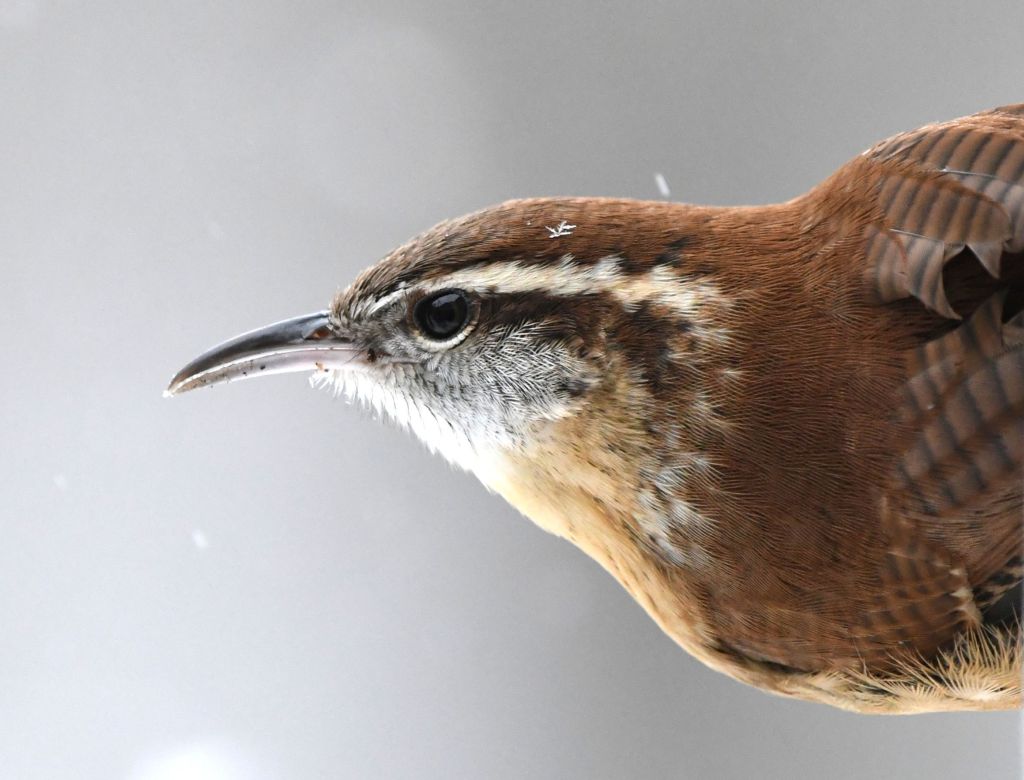
Carolina Wren on our deck

To date, I’ve gone through four cameras in seven years, mostly because I exceed the recommended shutter life of each of them. My current camera is a Nikon D500 with a shutter life of 200,000 cycles; I’m well over 127,000 after only a couple of years! The lens I use most often is a Sigma 150-600mm.  The D500 camera and the Sigma lens have been the perfect combination for me and for the things I like to photograph.

Nikon camera with Sigma lens on a monopod

I go out almost every day in all kinds of weather, even if ‘going out’ means just standing on our deck or in our backyard. Some of my favorite shots have happened right outside our back door where I have a ‘designated tree stump,’ placed in the yard, and a ‘designated tree branch’ attached to the deck for bird and mammal ‘portraits’. Plus, we have a beautiful bank of trees nearby and a small creek behind the house, both of which are attractive to a variety birds and mammals.

Red-breasted Nuthatch on the ‘portrait branch’

I love going on picture walks! I love looking for interesting things to photograph, whether it’s a bald eagle or a green bottle fly! It’s all quite fascinating, especially when I bring up the pictures on my computer and can see so many amazing details—like the individual hairs on a fly, or the tiny red mites on a dragonfly!

American Bald Eagle
Male Monarch (males have two distinct black spots on the lower wings)

One of the things I also enjoy doing after taking all those pictures is finding interesting facts about the creatures I’ve photographed and then sharing what I’ve found on Facebook, our local newspaper, or this blog.

Two male grackles on my ‘designated stump’ engaging in ‘bill tilt’ behavior to establish dominance. Whichever bird can maintain this posture the longest wins!

The name ‘picture walks’ started years ago when I first fell down this rabbit hole and was heading out the front door for a walk. If I was leaving the house without my camera, I’d tell my husband I was going on a ‘regular walk’, which meant I’d be home in an hour. If I was leaving the house with my camera in hand, I’d say I was going on a ‘picture walk,’ which was code for “I won’t be home anytime soon!”

White-crowned Sparrow in our backyard
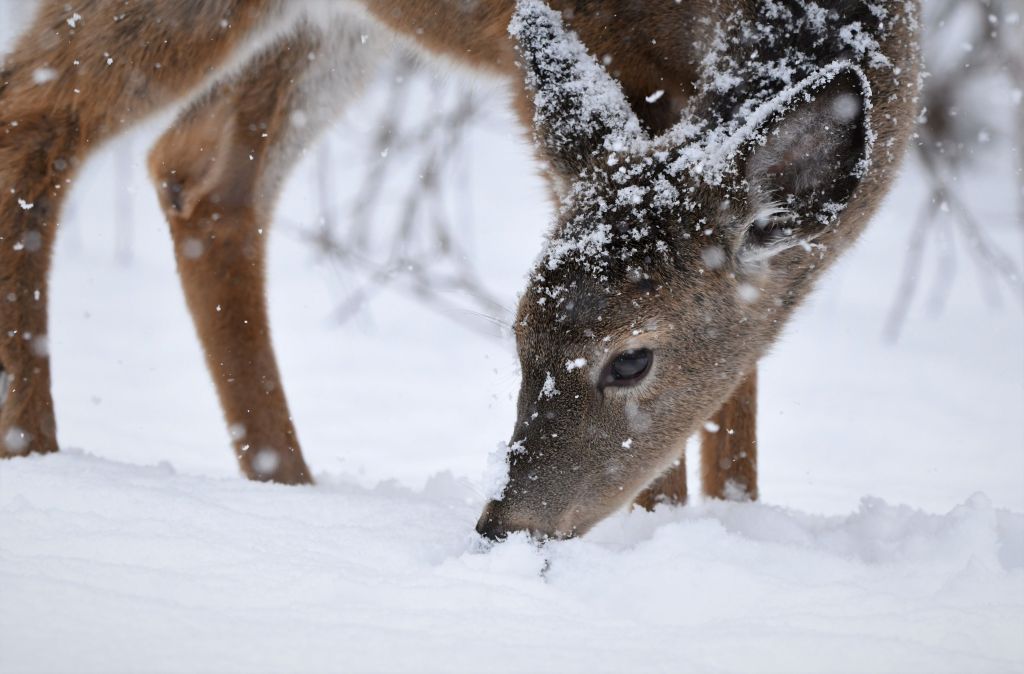
White-tailed Deer in our backyard only a few feet from where I was standing

Some of the rabbit holes we fall into can be disastrous.

This one has been quite delightful.

Worth Looking For

January 14, 2021

During these long winter months in Michigan, it isn’t the snow or the cold or the relatively short hours of daylight that make ‘surviving’ winter a challenging endeavor, it’s the endless days of overcast skies. It’s just hard to stay upbeat and pleasant with so many dreary days in a row! When the sun finally does come out, though, everything seems happier, even the birds are smiling!! All seems right with the world… until it isn’t.

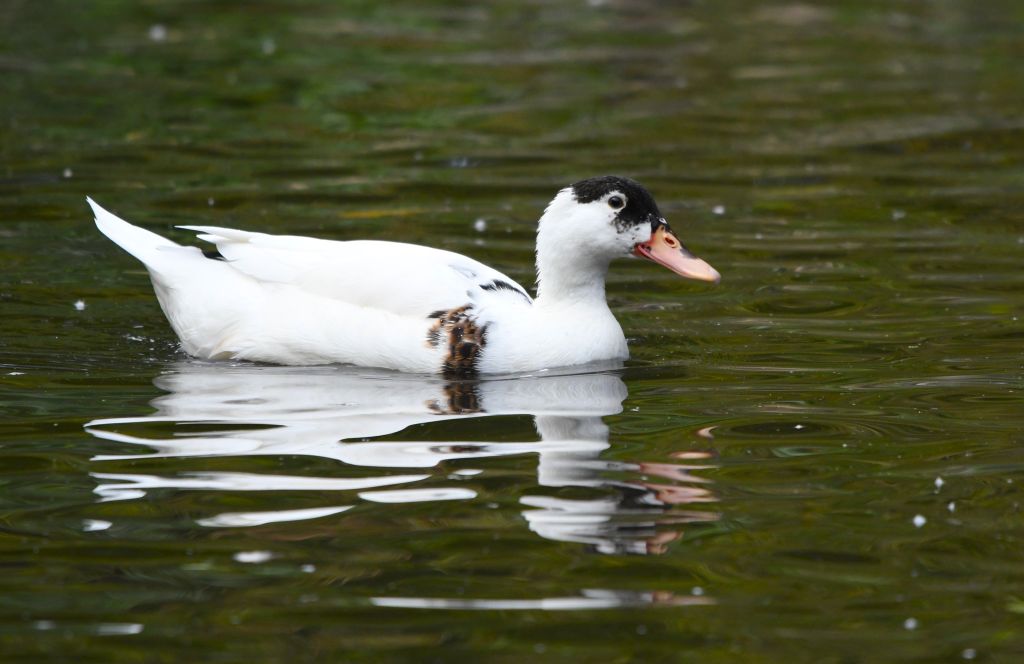
A happy looking Female Mallard hybrid on a sunny day at the Kellogg Bird Sanctuary, January 6, 2021

On Wednesday, January 6, 2021, the sun was expected to shine all day. I absolutely couldn’t wait to get outside and take pictures! And even though it was going to be the coldest day ever, I had to get out of the house with my camera to see what I could find.

Adult Trumpeter Swan, Kellogg Bird Sanctuary January 6, 2021
Juvenile Trumpeter Swan, Kellogg Bird Sanctuary, January 6, 2021

In order to insulate myself against the frigid temperatures, though, I wore three long-sleeved shirts, one fleece jacket, one wind-breaker, one winter coat, two pairs of gloves, one scarf, two hats, and a pair of over-boots to keep my feet from freezing. Inside each pocket of my coat were rechargeable hand-warmers! I was well insulated against the cold, but not well insulated against the breaking news on the radio as I drove home from my blissful day of picture taking.

Cedar Waxwing enjoying juicy red berries on a cold winter day
American Robin enjoying a tasty snack on a winter’s day

The Capitol building of our beloved country was under siege by armed insurgents who were hell bent on overthrowing our election and doing as much damage as possible along the way—smashing windows, breaking down doors, destroying historic property, threatening the lawmakers and beating one Capitol police officer to death. It wasn’t until I got home and turned on the TV that I saw the full extent of the mayhem, hate and carnage that was still taking place.

Dark-eyed Junco in the snow
Northern Pintail

In the span of just a few short minutes, my peaceful day among the birds had been totally upended and set on fire.

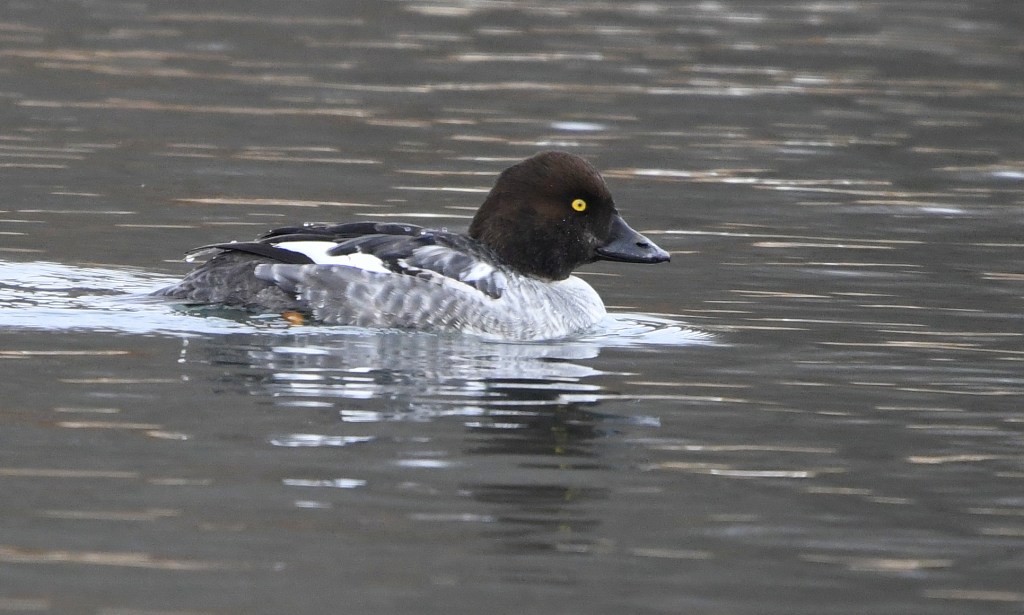
Female Common Goldeneye
Three Canada Geese and a Male Gadwall

Today, as I look back through the pictures I took on January 6th, I am reminded of all the beauty that still exists in the world. And, I am reminded as well that beauty is not always easy to find or even easy to hang on to once you do find it, but it’s always worth looking for.

Trumpeter Swan, Kellogg Bird Sanctuary, January 6, 2021