Driving into Spring

February 12, 2025

When I was a child, I thought winter was everywhere; that everybody had snow and ice and gloomy, overcast days. I didn’t know that you could get in your car and drive for a thousand miles and spring would magically appear! It wasn’t until I retired that I fully appreciated the phenomena of packing up your bags and driving into spring!

My granddaughter, Emmy, enjoying winter like I once did

It’s not that I disliked winter as a child, I just didn’t know anything different. It’s not that I dislike winter as an adult. I love a sunny 30 degree day, with five or six inches of pristine snow, and a wide variety of birds to photograph right outside my back door. What I don’t like are the endless days of gray skies and slushy snow with the repeated bouts of freezing rain. It isn’t pretty, and it isn’t fun.

Winter as an adult!

So, several years ago, my husband and I decided to spend a few of those gloomy months away from Michigan and rent a house in Florida, choosing a different city each year: Del Ray Beach, Venice, St. Augustine, St. Petersburg, Panama City Beach, and Port Charlotte.

A beautiful Florida Limpkin in the Red Bug Slough near Sarasota, Florida
A Great Blue Heron in the late afternoon Florida sun
Red-breasted Merganser near St. Petersburg, Florida

For most of those years, our long drive into spring included two hapless dogs, Brandy and Corky; the four of us all crammed together in a small Toyota Prius for a 10 week stay in the sunshine state. The two dogs with their two cages, and all the other paraphernalia that dogs need, took up the entire back seat of our car! They barely had room to move. Sadly, both dogs are now gone but, somehow, we haven’t found any additional space in the car!

Brandy and Corky
The ‘hapless’ dogs stuffed into our back seat

We were in Port Charlotte in March of 2020 when news of the pandemic started to spread. It was a frightening time and we didn’t know what to do. As older adults, we were considered particularly vulnerable. What if one of us became seriously ill? What if we both became incapacitated? Who would take care of the dogs? Who would take care of us? Should we finish out our rental agreement or head home where we could be close to family and friends? Ultimately, we stayed in Florida, but we kept to ourselves.

A very colorful Painted Bunting at the Audubon Corkscrew Swamp Sanctuary near Naples, Florida
Purple Gallinule in Ollie’s Pond, Port Charlotte, Florida
Tri-colored Heron, St. Augustine, Florida

We wore the masks that our niece, Holly, had made for us, and avoided mingling with other people unless we had to buy groceries. Back then, we even wiped down all the boxes, bags, and cans that came into our house. We just didn’t know what we were up against. Our life-saving vaccines were still months away. Fortunately, Mel and I could still continue our solitary pursuits of walking, picture taking, and fishing. They were our lifelines.

Barred Owl, Circle B Bar Reserve, Lakeland, Florida
Sandhill Crane and offspring on the campus of the State College of Florida near Venice
Reddish Egret, St. Petersburg, Florida

When it was time to head home, we never stopped– except for gas and a few bathroom breaks. For more than twenty hours, we took turns driving, sleeping, and snacking. And for the next two years, while the pandemic raged on, we stayed home. We stayed home the following year as well because Brandy, our last remaining dog, was becoming more and more debilitated.

A Willet along the shore near St. Petersburg, Florida
A lovely pink Roseate Spoonbill in Ollie’s Pond, Port Charlotte, Florida
Glossy Ibis, Venice Rookery

Last year was our first time back to Florida after the pandemic, and we returned again this year. It’s wonderful to see the sun every day, and to soak up its warmth; to not have to wear masks or avoid other people, and to not have to wear seventeen layers of protective clothing just to go outside for a picture walk! I know I’ll be missing all sorts of  beautiful, snow-covered birds back in Michigan but…

I think I’ll manage!

White Pelicans in Ollie’s Pond, Port Charlotte, Florida

Birding Days in the Sunshine State

March 22, 2024

Most of the year I’m out taking pictures in my home state of Michigan, but I always look forward to our change-of-pace visits to Florida during the winter months where I can go looking for all the beautiful birds that I rarely, if ever, find in Michigan. This was our first trip back in three years; a welcome change after more than two years of COVID, and the deaths of our two very old dogs.

Brown Pelicans on the pier waiting for a handout from the fisherman

One of my favorite Florida birds to photograph is the brown pelican. It is both charmingly elegant and absurdly acrobatic. I have found them posing stoically on a pier waiting for a tasty handout from the fishermen, and I have watched in amazement as they soar into the air, contorting their bodies like pretzels, and then plunging head first into the water. What a fun bird to watch and photograph!

By comparison, Florida also has the American white pelican; an equally fun bird to photograph, but without the acrobatic skills of its cousins, the Browns.  White pelicans are scoopers not divers. They glide gracefully along the water and scoop up fish, often working cooperatively with their peers to herd a school of fish into a dense ball or toward shallow waters where it’s more difficult for the fish to escape. Cooperative herding catches more fish!

American White Pelicans sharing a funny joke in the early morning hours

A much smaller, less obvious shorebird that scurries about on the Florida coastlines is the willet. I’ve found at least one willet, usually more, on every one of my beach walks. They skitter tirelessly in and out of the waves searching for crabs, crustaceans, and mollusks in the water-soaked sands, and provide endless entertainment for me as I amble along the shore.

Willet hoping for a tasty snack to show up in the receding waves

Running around with the willets at an even faster pace, are the tiny, two-ounce sanderlings. It doesn’t seem possible that these little birds can run as fast as they do! Their little black legs are a blur as they race back and forth along the beach like cartoon characters, stopping only for a millisecond to probe the wet sand for crabs and other invertebrates left by the receding waters. Rachel Carlson, in her book Under the Sea Wind, poetically described the sanderling’s breakneck run as a “twinkle of black feet.” What a perfect description!

Sanderling on the run!

Mixed in with the willets and the sanderlings, I might also find the ruddy turnstone; a smaller bird than the willet but bigger than the sanderling. Its name aptly describes both its appearance and what it does! This is a stocky, reddish-brown shorebird that flips over stones, shells, and seaweed looking for food. Sometimes there are dunlins in the mix as well; a little shorebird that looks similar to the sanderling but is slightly bigger and has a longer bill.

Ruddy Turnstone
Dunlins

Then there are all the gulls, terns, and skimmers either flying overhead or taking a break along the shore!  I took hundreds of pictures the other day of the Forster’s terns soaring above the ocean waves, then plunging into the water to catch a fish; and hundreds more shots of the black skimmers gliding just above the surface of the water with their lower beak barely touching the water as they scooped up fish! It’s always a fun challenge trying to catch these birds in flight!

Forster’s Tern getting ready to dive
Black Skimmer

Another bird in flight that’s fun to catch is the Osprey. We have osprey in Michigan, but I rarely find them. In Florida, you can find them everywhere, hovering over both large and small bodies of water, preparing to plunge feet first into the water and grab a fish with their sharp talons!  I like to catch them as they emerge from the water, a good-sized fish in tow, lifting into the air with a thousand beads of water spinning off their feathers in all directions.

Osprey with his catch of the day!
Osprey with an even better catch!

When I’m not walking along the ocean beaches looking for birds, I’m stalking the smaller bodies of water in search of herons, egrets, ibises, storks, and the mostly elusive roseate spoonbills. On this particular visit to Florida, my first wood stork and spoonbill were standing at the edge of a retention pond, behind a locked fence along a busy roadway near a strip mall! It was not an easy picture to get!  The herons, ibises and egrets, on the other hand, have been much more cooperative!

Roseate Spoonbill at the retention pond
Snowy Egret
Great Blue Heron

Then there are birds that I’ve seen on previous trips to Florida, but have yet to find here in St. Augustine; birds like the black-bellied whistling ducks, black-necked stilts, crested caracaras, glossy Ibis, gallinules, painted buntings, and sandhill cranes with their babies. To find some of those birds, Mel and I took road trip to the Merritt Island National Wildlife Refuge in Titusville, Florida.

Black-bellied Whistling Duck
Painted Bunting
Crested Caracara

Merritt Island is one hundred miles south of where we are now and is billed as “one of Florida’s premier birding sites.”  It was established in 1963 for the protection of migratory birds and provides a wide variety of habitats including coastal dunes, saltwater marshes, scrub, pine flatwoods, and hardwood hammocks. It is home to more than 1,500 species of plants and animals! 

Black-necked Stilt at Merritt Island National Wildlife Refuge

To get to Merritt Island, we left before dawn and arrived by 8:00 a.m. Mel and I wanted to have the entire day to wander around the refuge –and take a ridiculous number of pictures! We found black-necked stilts, common gallinules, reddish egrets, glossy ibises, roseate spoonbills, and a variety of other delightful birds. It was a day well spent!

Common Gallinule
Glosssy Ibis
Reddish Egret

In less than two weeks we’ll be heading back to Michigan; just in time for the daisies and the daffodils, the chatty red-winged blackbirds, the rose-breasted grosbeaks, and the comforting sounds of the spring peepers drifting through the screens on a warm April evening; all the sights and sounds I love to welcome me home!

Sandhill Crane and colt from our last trip to Florida in 2020

Down the Rabbit Hole

October 21, 2023

‘Down the rabbit hole’ is an English-language idiom which refers to getting deep into something, or ending up somewhere strange—or wonderful. Lewis Carroll introduced the phrase in 1865 as the title for Chapter One of Alice’s Adventures in Wonderland.

An adorable Eastern Cottontail Rabbit

I tumbled down the nature photography rabbit hole quite by accident and I fell in deep. It all started about seven years ago when my husband asked me what I wanted for Christmas. It took a while for me to come up with something I really wanted, but eventually I hit upon the idea of a camera. I wanted a better one than we had. My request came when we had two small grandchildren and I thought if I had a better camera, I could take better pictures of them. But that’s not what happened!

Male Mallard

We went to Florida for the first time that winter and visited some of the most amazing preserves with incredible wildlife. It gave me the opportunity to use my new camera for the very first time. It wasn’t a fancy camera, but it did have a built-in zoom lens and I could get much better shots of birds and other wildlife than I ever had before! I was hooked! (The pictures below were taken with more recent cameras.)

Limpkin in Florida
Roseate Spoonbill in Florida
Painted Bunting in Florida

Within a year or so, I was already yearning for a better camera and a longer lens; a camera with a quicker shutter response time, and a lens that could capture birds that were even farther away. Once I had the newer camera and the longer lens (thanks to my husband’s diligent research), I spent more and more time outdoors taking pictures, totally immersed in my own little world.

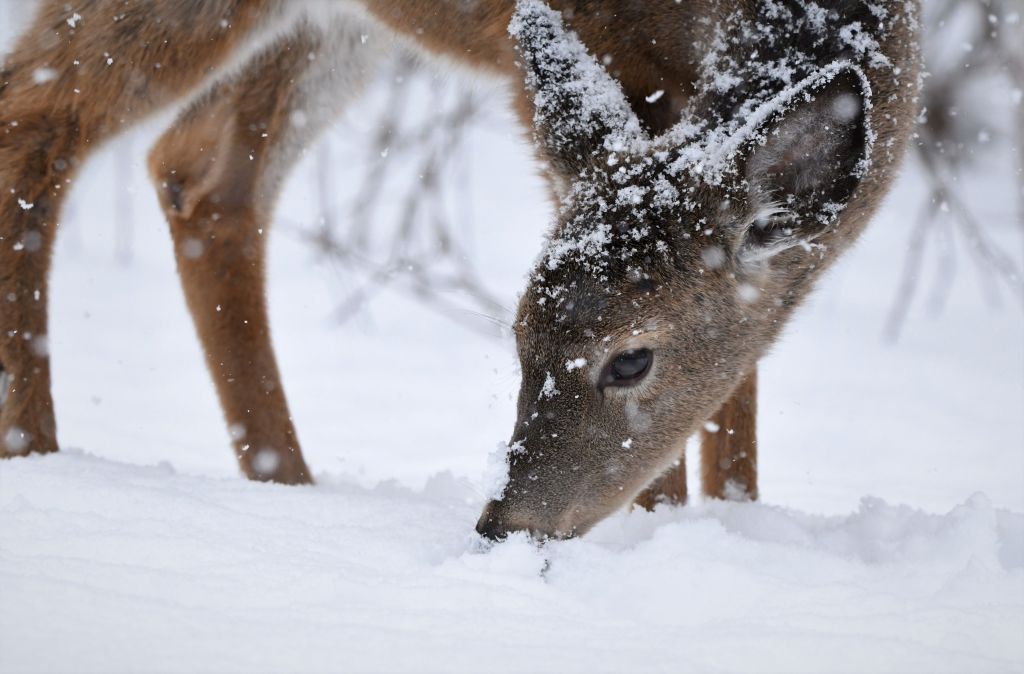
Fawn in the greenery near our house

It wasn’t long before I had exhausted the shutter life of that second camera, with well over 100,000 pictures, and started looking for yet another camera and an even longer lens!

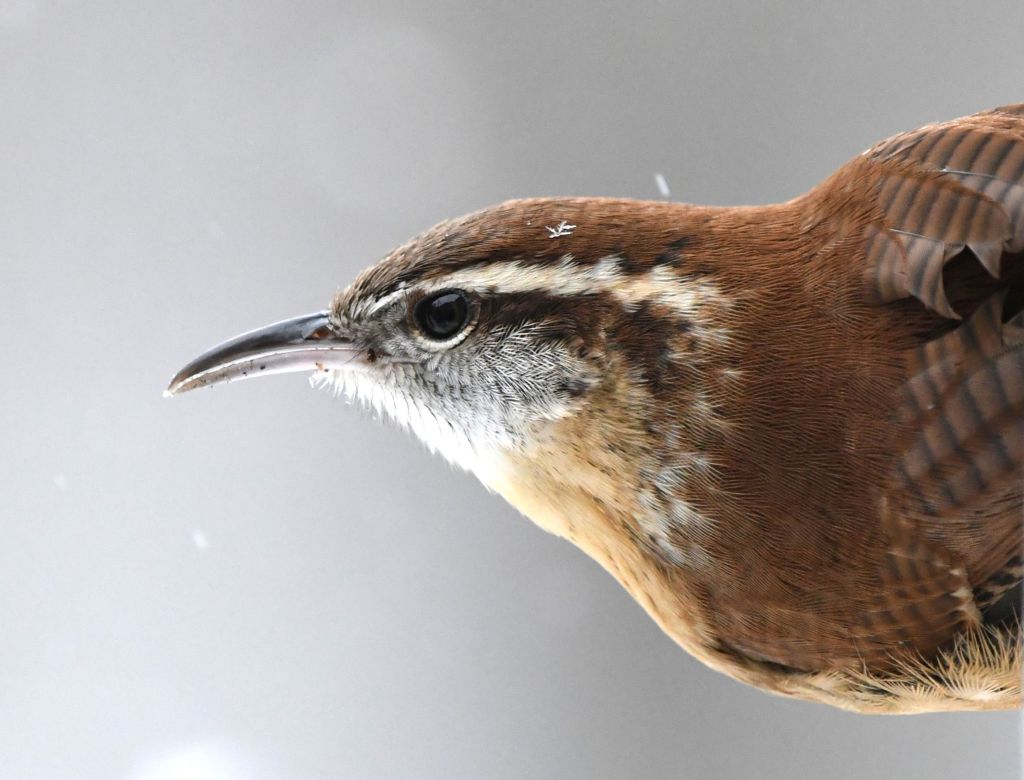
Carolina Wren on our deck

To date, I’ve gone through four cameras in seven years, mostly because I exceed the recommended shutter life of each of them. My current camera is a Nikon D500 with a shutter life of 200,000 cycles; I’m well over 127,000 after only a couple of years! The lens I use most often is a Sigma 150-600mm.  The D500 camera and the Sigma lens have been the perfect combination for me and for the things I like to photograph.

Nikon camera with Sigma lens on a monopod

I go out almost every day in all kinds of weather, even if ‘going out’ means just standing on our deck or in our backyard. Some of my favorite shots have happened right outside our back door where I have a ‘designated tree stump,’ placed in the yard, and a ‘designated tree branch’ attached to the deck for bird and mammal ‘portraits’. Plus, we have a beautiful bank of trees nearby and a small creek behind the house, both of which are attractive to a variety birds and mammals.

Red-breasted Nuthatch on the ‘portrait branch’

I love going on picture walks! I love looking for interesting things to photograph, whether it’s a bald eagle or a green bottle fly! It’s all quite fascinating, especially when I bring up the pictures on my computer and can see so many amazing details—like the individual hairs on a fly, or the tiny red mites on a dragonfly!

American Bald Eagle
Male Monarch (males have two distinct black spots on the lower wings)

One of the things I also enjoy doing after taking all those pictures is finding interesting facts about the creatures I’ve photographed and then sharing what I’ve found on Facebook, our local newspaper, or this blog.

Two male grackles on my ‘designated stump’ engaging in ‘bill tilt’ behavior to establish dominance. Whichever bird can maintain this posture the longest wins!

The name ‘picture walks’ started years ago when I first fell down this rabbit hole and was heading out the front door for a walk. If I was leaving the house without my camera, I’d tell my husband I was going on a ‘regular walk’, which meant I’d be home in an hour. If I was leaving the house with my camera in hand, I’d say I was going on a ‘picture walk,’ which was code for “I won’t be home anytime soon!”

White-crowned Sparrow in our backyard
White-tailed Deer in our backyard only a few feet from where I was standing

Some of the rabbit holes we fall into can be disastrous.

This one has been quite delightful.

Maybe Tomorrow…

March 5, 2020

Great Blue Heron

Mel and I have been to eight different nature preserves in as many days—both with cameras in hand.

Great Blue Heron with the catch of the day!
Purple Gallinule

One of my favorite new places that we visited was the Corkscrew Swamp Sanctuary in Naples, Florida, described as “a journey into the heart of the Everglades ecosystem… a 2.5-mile adventure through pine flatwoods, wet prairie, around a marsh, and finally into the largest old growth Bald Cypress forest in North America.” I had to go!

Black-bellied Whistling Ducks
Mama Alligator and her babies (look below her for the babies)

I wasn’t particularly interested in finding the usual swamp creatures like alligators and turtles, I’d already seen plenty of them. What I really hoped to find was a painted bunting. They are such incredibly beautiful birds– and I had never seen one before!

Pine Warbler
Gopher Tortoise

Ironically, Mel and I spent 5 hours taking pictures along the boardwalk, but I didn’t get my bunting picture until we were back at the visitor’s center and I saw one hanging out near the bird feeders! (I prefer to get my birdies out ‘in the wild’ rather than by a feeder, but I was not about to pass this one up over a technicality!)

Painted Bunting

Another new place we visited was the Babcock Ranch Preserve Footprints Trail in Punta Gorda. Unfortunately, the trail had just undergone a controlled burn and several areas near the trail were still smoldering. Even though we had a hard time finding much of anything to photograph, Mel spotted the one thing I had hoped to find the most—a Barred Owl. Everywhere we go, we look up in the trees hoping to spot an owl, but they are usually well camouflaged and hard to find. This one was high up in a tree, but otherwise visible. I zoomed in, took dozens of shots, and left happy. What a treat!

Barred Owl

All the other places we visited this past week or so, Celery Fields in Sarasota, Ollie’s Pond in Port Charlotte, Lemon Bay Park in Englewood, and the State College of Florida in Venice were places we had visited before at one time or another. They are all dependable places for finding birds, butterflies, bugs or alligators– and we were not disappointed!

Blue-winged Teal
Roseate Spoonbill

With all the preserves that Mel and I visited, we ended up with thousands of pictures. Not surprisingly, it takes hours and hours to go through them all. So sometimes, like today, we take a ‘picture holiday’ and just go for a walk without our cameras, but it’s really hard for me to do. I always see something that begs to be photographed! Today it was the iguanas and the dolphins that caught my eye. I didn’t get them today. Maybe tomorrow…