Chasing Butterflies

August 22, 2025

On a warm, sunny afternoon in early April, when it felt like spring might be settling in for good, I went looking for Mourning Cloak butterflies. This butterfly has dark, reddish-brown wings with a lacy-looking yellow edge that reminded someone long ago of the traditional garments worn by people in mourning and they dubbed it a ‘Mourning Cloak’ In Britain, however, they call it a Camberwell Beauty, a name that originated from its discovery in Camberwell, South London in 1748.

Mourning Cloak butterfly Portman Preserve April 12, 2025

I spotted my very first “winter” Mourning Cloak a few years ago in late March while there was still snow on the ground!  The temperature had climbed to a balmy 65-degrees, but I still didn’t expect to see a butterfly floating languidly over a pile of snow!  It seemed so incongruous! Prior to that day in March, I had no idea that some butterflies, like the Mourning Cloak, overwintered as adults!

Mourning Cloak butterfly three years earlier on the same date and the same location (April 12, 2022 Portman Preserve, Mattawan, Michigan)

Butterflies that overwinter as adults tuck themselves away in tree cavities, leaf litter, cracks in rocks, loose bark, and the crevices of unheated buildings in order to survive. When they emerge on a warm spring-like day, they feed on tree sap, particularly from oak and maple trees, to regain their strength. If the cold temperatures resume, which they inevitably do, overwintering adult butterflies head back to their hiding places and wait for warmer weather.

‘Summer’ Mourning Cloak July 9, 2023

Butterflies that don’t overwinter as adults spend the winter as a chrysalis, a caterpillar, or an egg. Other butterflies, like the monarch, migrate south to find more hospitable accommodations.

Monarch butterfly

When I ventured out in early April looking for a Mourning Cloak butterfly, I was pleasantly surprised to find several of them darting about! I also found a few Eastern Commas, and one tiny Spring Azure butterfly!  Spring Azures don’t overwinter as adults like the Mourning Cloaks and the Eastern Commas, but spend the cold winter months as a chrysalis. In late winter or early spring, they emerge as adults, find a mate, lay eggs, and die within just a few days!

Eastern Comma butterfly April 12, 2025
A tiny Spring Azure on April 12, 2025

After finding these three different butterflies so early in the season, I was hopeful that I would find even more varieties during the month of May. I went to several different nature preserves over the course of that month and managed to find even more butterflies than I did in April, but most of them were very, very small and not particularly colorful. I LOVE finding the bigger, flashier butterflies like the monarchs, fritillaries, and swallowtails, especially when they land on the bright orange butterfly weed, pink swamp milkweed, lavender bee balm, yellow salsify, or the beautiful magenta-colored ironweed. The combination makes for some stunning pictures.

Little Wood Satyr on Clover
Pearl Crescent
Hobomok Skipper
Pepper and Salt Skipper

The collection of butterflies I ended up with in May included a Hobomok Skipper, Little Wood Satyr, Pepper and Salt Skipper, Silver Spotted Skipper, Zabulon Skipper, a Wild Indigo Dusky Wing, Red-spotted Admiral, Viceroy, Eastern Comma, and several Pearl Crescents.

Zabulon Skipper on Clover
Wild Indigo Dusky Wing
Silver-spotted Skipper
Red-spotted Admiral
Viceroy Butterfly

In June, I saw my first Eastern Tiger Swallowtail and my first Spangled Fritillary of the season, plus two small butterflies that were different from the ones I had seen in May: a tiny Eastern-tailed Blue, and a little Essex Skipper. Both have wingspans of about an inch!

Eastern Tiger Swallowtail
Great Spangled Fritillary
Eastern-tailed Blue
Essex Skipper on a Daisy
Silver-spotted Skipper on Bee Balm June 29, 2025

July was my very best month for chasing butterflies! There were enough swallowtails, fritillaries, monarchs, viceroys, and red-spotted admirals to keep me happy, and there were a few I hadn’t yet seen during May and June: an American Lady, an Appalachian Brown, a Coral Hairstreak, a Little Glassy Wing Skipper, a Northern Broken Dash, a Northern Pearly Eye, a Tawny Emperor, and an Orange Sulphur. Whew!

American Lady butterfly
Appalachian Brown butterfly
Coral Hairstreak butterfly on Butterfly Weed
Little Glassywing Skipper on Bee Balm
Northern Broken Dash butterfly on Bee Balm
Northern Pearly Eye butterfly
Tawny Emperor butterfly
Orange Sulphur on Butterfly Weed

August didn’t bring me any new butterflies, but I continued to enjoy the butterflies I had already seen as they fluttered delicately through the various fields of fading summer flowers that I like to visit.

Black Swallowtail Butterfly on Bull Thistle
Eastern Giant Swallowtail on Purple Coneflower
Eastern Tiger Swallowtail on Ironweed
Eastern Tiger Swallowtail, black morph, on Bee Balm
Great Spangled Fritillary on Butterfly Weed

If you want to help overwintering insects like Mourning Cloaks and Eastern Commas, you can start by not cleaning up your yard too early in the spring! Leave all that leaf litter beneath your trees and in your gardens. It’s likely to contain overwintering caterpillars, eggs, or adult butterflies. You can also set up a fruit feeding station in the spring with overripe bananas, cantaloupe, or rotting fruit that will provide sustenance for the mourning cloaks and other butterflies that have been overwintering.

Viceroy Butterfly
Spicebush Swallowtail on Bee Balm

To continue enjoying these wonderful butterflies as well as other creatures, we all need to assume responsibility for maintaining as many natural areas as we can, including our own backyards, and refrain from the widespread use of insecticides!

Eastern Tiger Swallowtail on Meadow Salsify

Habitat loss and the use of insecticides are killing the creatures we love—not just the ones we don’t love!

What saves them, saves us.

Monarch butterfly on Swamp Milkweed

Silver Linings

September 1, 2020

I love going out in the cool morning light for a picture walk, especially during these hot summer days when the afternoon temperatures have been well into the 90s! But our lovely summer days are quickly coming to an end, a bittersweet reminder that fall and winter are close at hand. I am looking forward to the cool, crisp days of fall, but am acutely aware that they will come at a price– all the colorful butterflies, dragonflies and frogs that I love to photograph will soon be gone.  Come winter, the world will be even more monochromatic.

Eastern Tiger Swallowtail
American Bullfrog

That said, my walk the other morning was a perfect blend of Summer and Fall. It was deliciously cool in the morning, sunny and warm by the afternoon; much too cold for the frogs and dragonflies as the day began, but plenty warm a few hours later for all my favorite creatures to be out sunning themselves!

Blue Dasher
Monarch Butterfly
Black Elderberry

Knowing full well that colder weather is nipping at my heels, I’ve been out nearly every day for at least a couple of hours trying to capture what’s left of summer. Because of the pandemic, we haven’t traveled far and I’ve been limited to visiting the same preserves and natural areas closest to home many times over. When I’m in the midst of taking my 700th picture of a monarch or a blue dasher or a bullfrog in the same preserve I’ve been to hundreds of times, I stave off the potential monotony of it all by telling myself “It’s all practice, Jeanne, It’s all practice”– It’s a different day and a different light, every shot I take is a new challenge!

Barn Swallow
Painted Turtles
Female Baltimore Oriole

The silver lining to going back to the same places over and over again is that I really get to know its inhabitants; a case in point is the Wolf Lake State Fish Hatchery. I’ve been going there at least twice a week for years—and even more so during this pandemic. It’s a wonderful place to explore with dozens of ponds and lots of wildflowers. I’ve been there so many times that I know the best places to look for frogs; the most likely places to find the swallows perched on limbs, and which ponds the kingfishers favor most. I thoroughly enjoy this knowledge and this familiarity —but I am still longing for a change of venue. 

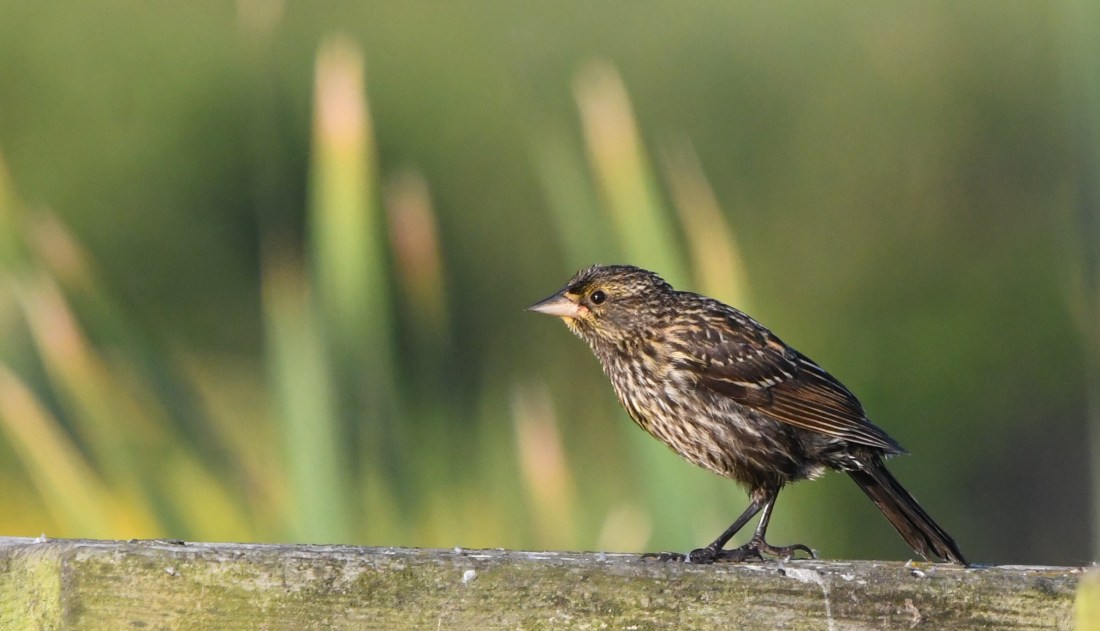
Female Red-winged Blackbird
Eastern Kingbird

Hopefully, by this time next year, the world will be open again and we can all feel safe in our travels—however small those travels may be.

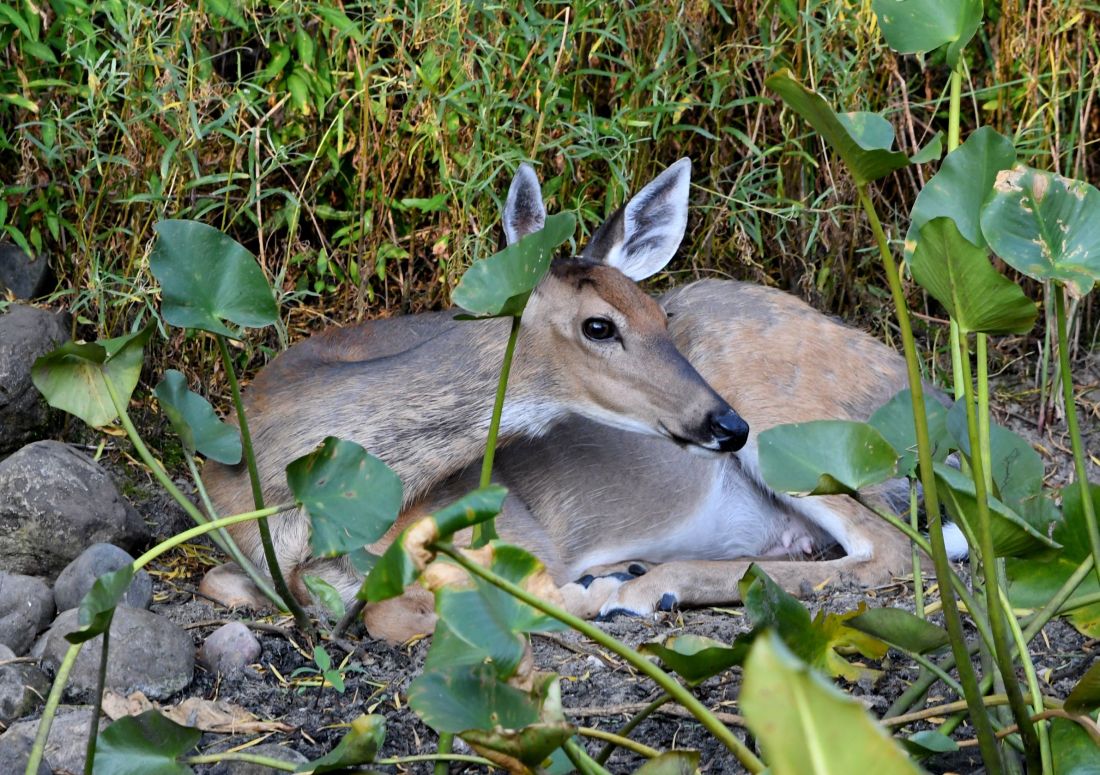
White-tailed Deer

A Photography Journey

August 4, 2020

As I pondered what to write today, I was thinking back on my short but immensely gratifying photography journey.

Juvenile Barn Swallow

It started innocently enough in the fall of 2016, when my husband asked me what I wanted for Christmas. I had no idea!  But, he likes finding things that surprise me, so I gave it some thought. What I came up with was “a better camera”. For many, many years, all I had was a very small, pocket-sized, Canon Powershot.

Willow Flycatcher

Once I told Mel about my ‘better camera’ idea, he went to work researching it. What he came up with was another model of the Canon Powershot –but a bigger, better version with a built-in zoom lens. I now refer to this camera as my ‘gateway drug’! As soon as I realized what was possible with a better camera, I was hooked!

Eastern Tiger Swallowtail on Butterfly Bush

It wasn’t long before I was outdoors nearly every day taking pictures of birds, butterflies, frogs, turtles– anything I could find that grabbed my attention. Eventually, though, I started musing about what I might be able to do with an even better camera—one that could capture the birds that were even farther away, and would also have a faster response time.

Slaty Skimmer

Male Eastern Pondhawk

Since Mel enjoys doing the research and I do not, he’s the one who went to work looking for another camera, one that would take a detachable telephoto lens. What he came up with was a Nikon D3400 and a 75-300mm lens. Once it arrived, I was out the door!

Painted Turtle

I think another year went by, maybe less, and I found myself wanting to capture creatures that were even farther away. Mel took off on another search and came up with a 150-600mm lens from Sigma that would probably do the trick. But it was much longer and much heavier than the one I currently had and I was hesitant. When it arrived, I was still hesitant. It just seemed too big and too heavy for me to handle comfortably. But I was eager to take close-ups and quickly overcame my reluctance. I have not put it down since!

Eventually, the constant lifting and focusing with a lens that size made my back ache and I reluctantly added a monopod to my set up.  It’s a bit of a bother sometimes to have the monopod attached, but I can now focus on a subject for an indefinite amount of time without having to give my back a break.

This insect was a huge surprise! It’s a female BOTFLY laying an egg on a blade of grass. I’ve never seen one before and didn’t know we even had them in the U.S.!

After the Nikon D3400, came a Nikon D5600, which is what I have been using for the last couple of years. This camera and I have gone on a picture walk together nearly every day and I have taken hundreds of pictures with it on each of those walks. Periodically, I have checked to see how much ‘shutter life’ it had left.

My D5600 had been given a shutter life of 100,000 shots. When I last checked, I had taken well over 151,000 pictures! I felt as if we were on borrowed time and decided to start looking for a new one.

Red-tailed Hawk

Once again, Mel returned to the drawing board to find a camera that was well suited for wildlife photography. What he found was a Nikon D500. It arrived a just a few days ago and we have already become fast friends!

With a shutter life of 200,000 shots, I’m looking forward to many years and many pleasant journeys with my newest walking companion!

Butterfly Weed