I am a 78 year old retired teacher with an avid interest in hiking and photography. I am not a professional photographer, but spend almost every day exploring the natural world, taking pictures and honing my skills. When I review the pictures I have taken, I love researching information about the things I have found-- and then sharing my results with others. The time I have spent walking in the woods (including 4 months on the Appalachian Trail at 68) has always been somewhat therapeutic. When I added photography to the mix a few years ago, it quadrupled the therapeutic effect! Opening pictures on my computer at the end of the day is like opening presents. There are always surprises! It allows me to see so many details that were not visible to my naked eye! I have learned so many new things about birds and bugs, reptiles and mammals that I never knew before--and I have also found, that when I share with others, I invariably learn something new!
October guests: Praying Mantis, White Crowned Sparrow, White-marked Tussock Moth Caterpillar
I’ve been posting nature stories and pictures on Facebook almost daily for close to three years now. What I have really enjoyed are the ‘memories’ that pop up from ‘one year ago today’ or ‘two years ago today’, or ‘three years ago today’. By looking at the same date in multiple years, I’m getting a better idea of what birds and insects I can expect to find in the spring and summer, which ones will have already left by fall, and which brave souls will stay here all winter. I am also learning which birds are likely to be migrating through our area during the spring and fall and where I might find them.
Lesser Yellowlegs, Killdeer, Solitary Sandpiper
Of course, Mother Nature has had a big roll to play in what I might see and when I might see it. October has always been a fickle month here, with great variations in the weather– hot one day and cold the next. It can rain cats and dogs on Monday and blanket us in snow on Tuesday. We just never know what we’re going to get.
Canada Goose, Mute Swan
The hot days seem to be getting hotter and more frequent, though. We’ve had temperatures in the 80s in October which is not normal and doesn’t bode well for the future. Unfortunately, we are also seeing extremes like this (and much worse) across the globe, the effects of which have already been profound and devastating for the birds and other creatures we share our planet with. I hope it’s not too late for us to right the wrongs we’ve inflicted.
Wilson’s Snipes
When looking back on all my nature related posts from the last three years, I was somewhat surprised to see how often the exact same things showed up on almost the exact same dates—like the Wilson’s Snipes I found the other day. They have arrived at the Wolf Lake State Fish Hatchery on or around October 9th for the last three years that I’ve been paying attention. Other birds that have shown up around the same time have been the Lesser Yellowlegs, the Killdeer, and the Sandpipers. I expect there are others, but these are the ones I have a photographic record of.
Sandhill Crane
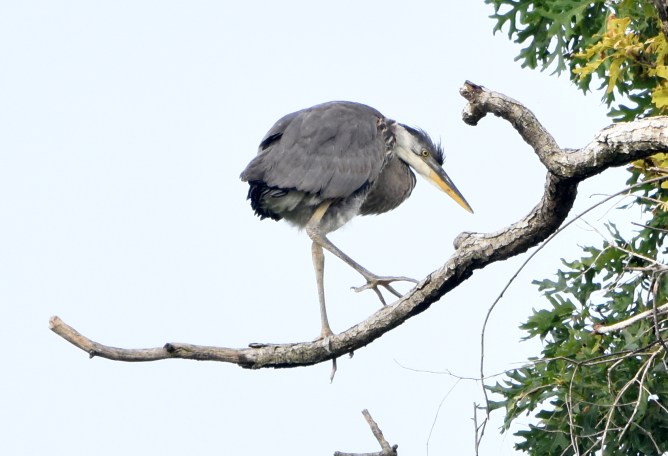
Great Blue Heron
Looking back over three years of pictures and posts was a fun but challenging activity. It was a good way for me to see patterns and to reminisce about the nature preserves and sanctuaries I love to visit. Deciding which pictures to leave out was difficult– there were so many that represented ‘the best of October’ that I had a hard time choosing. And even though there seems to be an excessive number of pictures here, I really did leave most of them on the cutting floor!
When I looked at the calendar to see how long it had been since Mel and I had returned from our vacation in Colorado, I was surprised to see that it hadn’t even been two weeks—It seems like forever ago!
Autumn Meadowhawk dragonfly
Clouded Sulphur
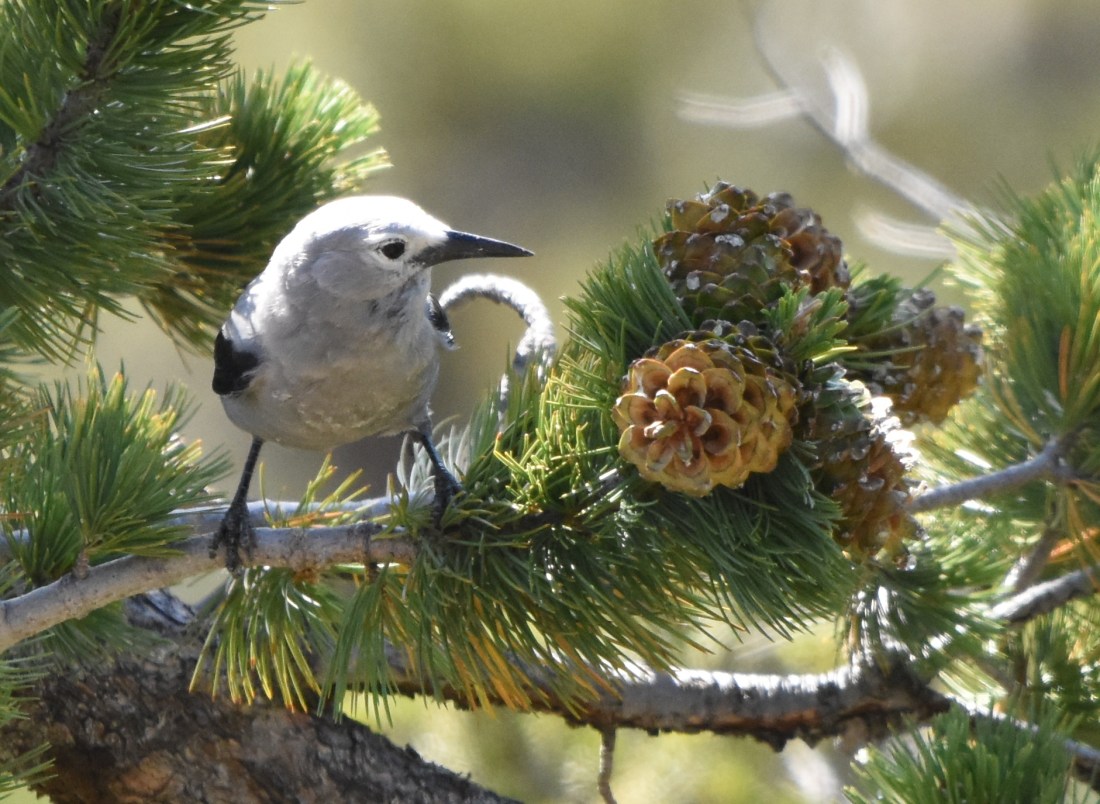
It was so much fun being someplace else and finding new things to photograph like the elk in Estes Park, the Pelicans in Ft. Collins and the Clark’s Nutcracker in the Rocky Mountains. Coming home was a stark reminder of how quickly we are moving towards winter.
Black-legged Meadow Katydid
This Katydid was such a pleasant surprise! I rarely find them because they usually blend in so well with their environment. This one stuck out like a sore thumb!
When I go out for picture walks now, it’s much harder to find birds, butterflies and dragonflies. The birds I am seeing now are mostly Goldfinches, Eastern Phoebes and Cedar Waxwings. In the butterfly department, I’m still seeing a few of the bright orange Monarchs, an occasional Silver Spotted Skipper, some Clouded Sulphurs and Orange Sulphurs, and a plethora of the little Cabbage Whites. A small assortment of dragonflies are still hanging around, especially the beautiful red Autumn Meadowhawks– and occasionally I see a Halloween Pennant or a Slaty Blue, but the dragonflies are few and far between these days.
Halloween Pennant dragonfly
Slaty Blue dragonfly
One very pleasant surprise this past week was a fox. I rarely see them and I’ve never gotten a picture until this one. I’ve also seen a couple of bald eagles –which is always a thrill, but I’ve not been able to get a good picture, they’re always too high in the sky!
A rare sighting for me, a beautiful Red Fox
Autumn Meadowhawks mating
Bullfrog on a lilypad
I love seeing the Sandhill Cranes up close at Kensington Metro Park
Bald Eagle
Great Egret
I always enjoy finding a pile of turtles. So often they slip into the water before I can get a picture!I don’t see these critters very often either, spiny softshell turtles.The deer near our home are fairly used to people so I’m often able to get close enough for a good shot.
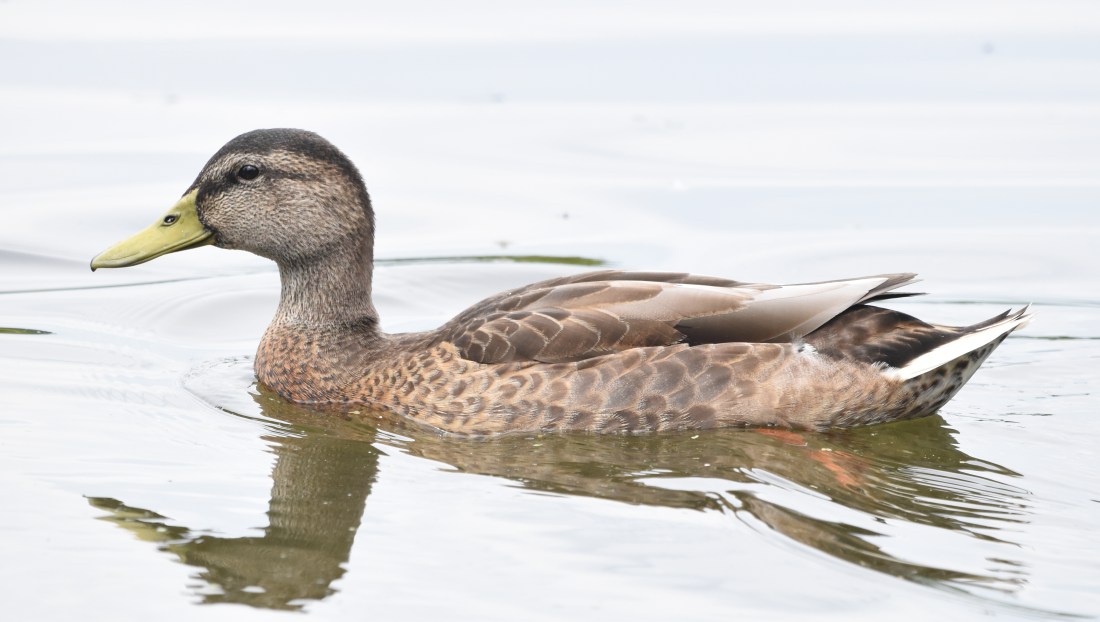
I keep seeing lots of female mallards but not very many of the males.
Cedar Waxwing
Eastern Phoebe
Female Wood Duck and a Blue-winged TealThe Autumn Meadowhawks are in great abundance this time of year!This is a giant puffball, an edible mushroom that can be found in the woods this time of year. I’ve taken these mushrooms home before and fried them up, but they don’t have much flavor. The acorn on top of this puffball is there just to show the relative size of this giant mushroom.It won’t be long before all my froggy friends will be going into a state of hibernation for the winter.
American Goldfinch
Eastern Phoebe
Orange Sulphur
American Goldfinch
I just loved the background colors, the blue of the water and the crisp reflections in this picture.There are still a few monarchs hanging around to brighten up the fading landscape.
Even though it saddens me to say goodbye to summer and its warm sunny days, there are things I look forward to with the coming of winter– like sitting in front of the fire with a cup of tea and a good book, or walking outside into the very first snowfall, or finding an unexpected bird weathering the elements in the middle of January. There’s always something to look forward to, but sometimes, on the coldest, darkest days of winter, I have to look really, really hard!!
I had no idea that Great Blue Herons hung out here in Michigan in the wintertime! I was totally surprised to find this ‘summertime bird’ standing in the snow
Mel and I have just returned from a vacation in Colorado
where we both enjoyed pursuing our passions—fly fishing for him, nature
photography for me.
August 28-29
Hitchcock Nature Center, Honey Creek, Iowa
Our four day, twelve hundred mile car journey from Michigan to Colorado took us through the states of Indiana, Illinois, Iowa and Nebraska. According to Google Maps, it’s only a 16 hour journey— that is if you don’t stop to sleep or eat or go to the bathroom! We did all of the aforementioned, plus took a side trip to Honey Creek Iowa where we spent two days in a cozy little cabin on the grounds of the Hitchcock Nature Center. While at the nature center, we took pictures walks along the Fox Ridge Run Trail and the Boardwalk Trail.
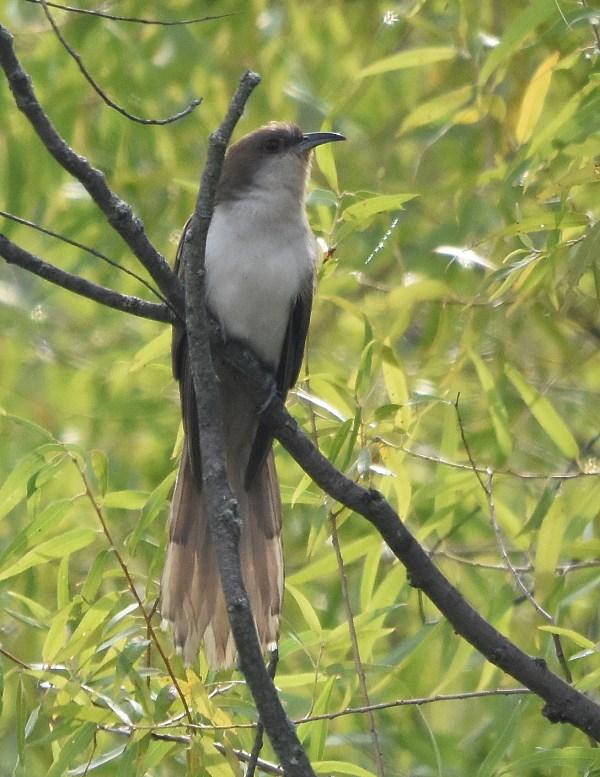
Yelllow-billed Cuckoo (Mel’s shot)
Dickcissel
Great Spangled Fritillary on Field Thistle
Baltimore Oriole
Red-headed Woodpecker (Mel’s pic)
August 30- September 2
Ft. Collins, Colorado
From Honey Creek, Iowa we headed through Nebraska to Fort
Collins, our first Colorado destination.
Fort Collins is well known for its excellent fly fishing opportunities and a multitude of natural areas to explore. Over the course of our stay in Fort Collins, Mel went fishing several places along the Cache La Poudre River, while I took picture walks along the Hewlett Gulch Trail, the Fossil Creek Reservoir (twice) and at the Colorado State University Annual Trial Flower Garden. Mel joined me for picture walks on one of my visits to the reservoir and at the university flower garden.
Cache La Poudre River where Mel was fishing (He took this picture while he was fishing and you can see the tip of his rod in the lower right corner.)
Bumble Flower Beetle (something I’d never heard of!)
Rock cairn on the Cache La Poudre River
I was surprised to find White Pelicans in Colorado! This one, as well as hundreds of others were hanging out at the Fossil Creek Reservoir in Fort Collins
Pied-billed Grebe
Western Grebe
Red-legged Grasshopper– one of hundreds at the Fossil Creek Reservoir
Barn Swallows waiting to be fed!
Musk Thistle
Swainson’s Hawk
Fossil Creek Reservoir is a huge tract of land! That’s me in the lower left corner!
Beautiful flowers and butterflies from the Colorado State Annual Trial Garden…
Painted Lady butterfly
Aphrodite Fritillary (I think)
September 3-5
Estes Park, Colorado
As soon as we arrived in Estes Park, Mel headed to the fishing shops and I headed out looking for pictures to take. Surprisingly, the Knoll-Willows Nature Preserve is right in town and only a stone’s throw from where we parked! Within a minute or so of commencing my walk, I spotted a huge bull elk lounging in the underbrush along the edge of the preserve! A little farther down the sidewalk, were several of his girlfriends. Apparently, elk are a very common sight right in Estes Park!
Bull Elk lounging around right in downtown Estes Park!
The Girlfriends
Looking around for a snack
Hmmm. No dogs allowed. What’s up with that??
“Hey, good lookin’, what’s cookin’?”
Teenage boy in Estes Park
Bull Daddy in Estes Park
In front of the Visitor’s Center at Estes Park, the Hummingbird Moths and the Hummingbirds were a delight to watch…
White-lined Sphinx Moth or Hummingbird Moth
Broad-tailed Hummingbird
Sunset in the Rocky Mountains
Osprey with his catch of the day
Red-tailed Hawk
California Poppy
Barn Swallow
Pygmy Nuthatch
Least Chipmunk (look at the length of that tail!!)
Mountain Cottontail
September 5, 2019
Rocky Mountain National Park
to Steamboat Springs
We spent the day driving through the scenic, breathtaking Rocky Mountain National Park to reach our second Colorado destination, Steamboat Springs. Mel and I stopped several times through the mountain route to take in all the spectacular views– but I never took any scenery pictures (they tend to be disappointing compared to the real thing), preferring instead to look for the smaller things like birds and butterflies and mammals.
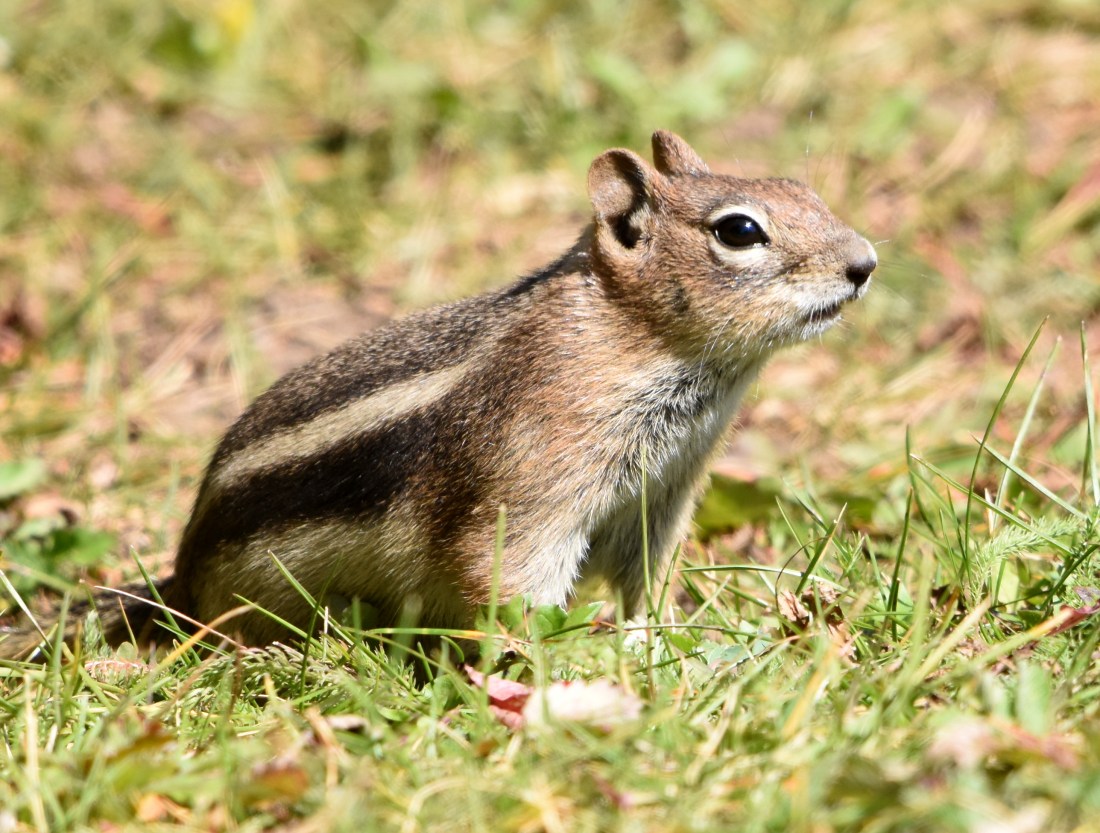
Clark’s Nutcracker (Clark’s Nutcrackers are mainly found in mountains at altitudes of 3,000–12,900 ft in conifer forests.)Gold-mantled Ground Squirrel in the Rocky Mountains This little critter looks a lot like a chipmunk but is much bigger– kind of like a chipmunk on steroids!
September 5-9
Steamboat Springs, Colorado
While Mel went fishing in the Yampa River, I went walking along the Yampa River Trail, a 7.5 mile multi-use trail that runs through the heart of Steamboat Springs and along the Yampa River. Along that trail, I found other points of interest like the Rotary Park Boardwalk and the Yampa Botanic Park, both of which were wonderful places for a quiet retreat as well as multiple picture opportunities.
Yampa River
Swift Moth
Two-striped Grasshopper
Black-billed Magpie along the Yampa River Trail
Cedar Waxwing
Osprey
Coronis Fritillary (I think) on coneflower
Yellow-rumped Warbler
bedraggled Robin
European Starling
Hollyhock
Yellow Warbler
Mourning Cloak butterfly
On one of the days that Mel didn’t go fishing,
we took a drive up to Fish Creek Falls
together for a picture walk and later spent hours at the Yampa Botanic Garden taking pictures of all the beautiful flowers,
birds and visiting insects.
White-lined Sphinx Moth (or Hummingbird Moth) in the Yampa Botanic Garden
Townsend’s Warbler up near Fish Creek Falls
Stunning flowers from the Yampa Botanic Garden…
Mel fishing the Yampa River
September 9-12
Colorado Springs, Colorado
Colorado
Springs was our last destination in Colorado and we made the best of the time
we had. As soon as we arrived on the afternoon of the 9th, we went for a
picture walk in Palmer Park on a
trail that turned out to be rockier and slipperier than we expected. Not many
pictures got taken—we were too busy watching our footing!
Cassin’s Vireo (I think) One of the few pictures I took at Palmer Park because I was too busy watching my footing!
The following morning we headed out to the Garden of the Gods, which is known for its enormous, awe-inspiring geologic
formations, including tall rock spires or hoodoos, and steep cliffs. It’s a
major tourist attraction and well worth the visit.
Garden of the Gods, Colorado Springs Garden of the Gods, Colorado Springs Garden of the Gods, Colorado Springs
After our visit to Garden of the Gods, Mel dropped me off at the Bear CreekNature Center to take pictures all afternoon while he explored the fishing shops, bookstores and coffee shops around Colorado Springs.
Vesper Sparrow
Woodhouse’s Scrub Jay
Rock Wren at Bear Creek Nature Center
Spotted Towhee
White-breasted Nuthatch
Scrub Jay
Lesser Goldfinch and Pine Siskin
On Wednesday, our last full day in Colorado, Mel dropped me off at the Cheyenne Mountain Zoo where I spent a delightful five and a half hours taking almost 800 pictures of the zoo animals and of the native birds that were flitting about in the nearby trees!
Baby Wallaby in his mama’s pouch– one of my favorite pictures from the zoo This baby wallaby is around 7 months old and barely fits in the pouch anymore! Here you see his head and legs sticking out!Mom and baby wallaby hanging out togetherThe Wallaby baby hopped around for a few minutes before scurrying back to the safety of his mother’s pouch.
Emu
Giraffe
The meerkats were great fun to watch. They are both curious and comical!
“What’s up, buttercup??”The meerkat on the right walked into the scene, laid down and decided to strike this rather suggestive pose! Their antics were so much fun to watch!Moose I had been hoping to see a moose in the wild in Colorado, but this is the closest I got!
Peacock wandering around in the zoo
Steller’s Jay at the zoo
Parakeets in the Budgie House at the zoo.Okapi Also known as the forest giraffe, Congolese giraffe, or zebra giraffe, native to Africa.
Male Wood Duck
Female Wood Duck
A young warthog (native of Africa)
Porcupine taking a nap
White-backed Vulture (Africa)
Red River Hog– native of Africa
The best part of going on vacation, besides getting away from every day routines, is finding things I’ve never seen before (and taking pictures!), eating things I’ve never tried before and meeting new people I’ve never met before.
It’s been a productive and surprising picture week—and it’s only Thursday! On some of the days this week, I ‘tripled up’ and went to three different places in one day! So I had hundreds and hundreds of pictures to go through, all of which needed cropping, editing and sorting—or deleting! It’s an enjoyable process, but time consuming.
Baltimore Oriole
Bluejay
Cardinal
American Goldfinch
My favorite part of the editing process is looking at the pictures on my computer screen and seeing everything up close. I’ve found some of the most surprising things during this process– like learning that dragonflies will eat each other and that they are sometimes covered with miniscule mites, that butterflies can still fly in spite of missing much of their wing mass and that our fair state of Michigan has cuckoos (or maybe that isn’t such a surprise!!).
Blue Dasher Dragonfly The underside of this dragonfly appears to be covered with hundreds of mites!!
Black-billed Cuckoo Bernard W. Baker Sanctuary, Bellevue, Michigan
Barn Swallow
American Goldfinch
Mallard
This past week was filled with a variety of other kinds of surprises as well. I found out that just by standing on my back deck taking pictures, I could ‘capture’ more birds than I ever could on a picture walk! In just two hours, I photographed fourteen different kinds birds! If I had waited longer, I expect that all the neighborhood birds would have eventually come by for a portrait shoot!
House Sparrow
Black-capped Chickadee
Downy Woodpecker
Tufted Titmouse
Nuthatch
Song Sparrow
On my way home from a different kind of photo shoot, I was surprised to find a young red-tailed hawk down on the ground beside a busy road. As soon as I could find a place to park, I went back to see what I could do. Since I had neither a towel nor a box to rescue the bird with, I called my husband to see if he could help. We were hoping to take the bird to a local bird rehab specialist. Fortunately, when Mel arrived and subsequently approached the hawk to cover it up and put it in a box, the bird was able to fly into a nearby tree! It wasn’t going to need a trip to rehab after all!
Juvenile Red-tailed Hawk
Juvenile Red-tailed Hawk
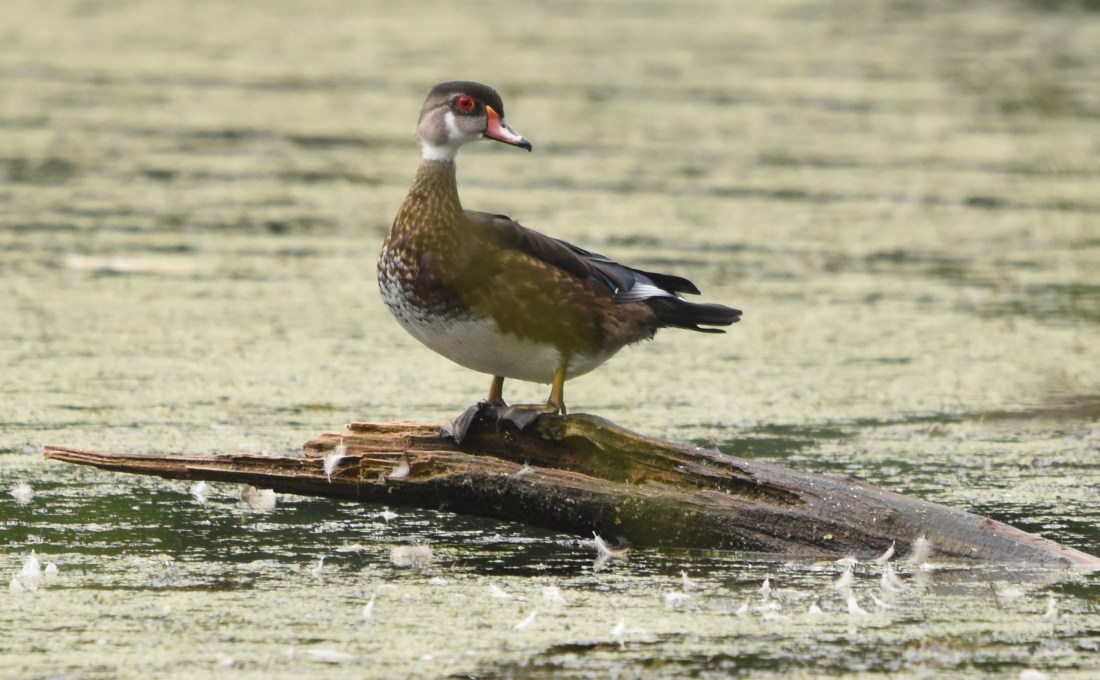
Another surprise was the weird looking duck I saw at the Bernard W. Baker Sanctuary in Bellvue, Michigan. I had been hoping the bird was one I hadn’t seen before, but when I got home and was able to do some research, I thought it might be a juvenile male Wood Duck. Later, on Facebook, another person posted a similar picture and also called it a juvenile male Wood Duck. They were informed that it was “an adult male wood duck in “eclipse plumage“. Eclipse plumage??? Apparently, the bird was NOT a juvenile, because “immature males wouldn’t have the red eyes yet.” My ‘weird’ looking duck had red eyes, so I guess it was ‘eclipsing’ rather than being immature! Who knew??
My ‘weird’ duck that turned out to be a male Wood Duck in ‘eclipse plumage’ Bernard W. Baker Sanctuary, Bellevue, MichiganWild Turkey family at the Bernard W. Baker Sanctuary
On my walk yesterday, along the Paul Henry–Thornapple River Trail in Middleville, Michigan, I was surprised to see a Lesser Yellowlegs and a Solitary Sandpiper. I don’t remember seeing them here in Michigan before and I’ve never seen them along the Paul Henry River Trail. I also saw a Common Green Darner dragonfly. My Google search informed me that this insect is “North America’s most common dragonfly”! For me, it’s actually the least common! I hardly ever see them and when I do, they rarely stop for pictures. This one, for whatever reason, was crawling out of the water –and easy to photograph!
Lesser Yellowlegs Paul Henry–Thornapple River Trail, Middleville, MichiganSolitary Sandpiper Paul Henry–Thornapple River TrailCommon Green Darner Paul Henry–Thornapple River TrailBlanding’s Turtle Blanding’s Turtles are “…considered to be an endangered species throughout much of its range. They are of interest in longevity research, as they show no common signs of aging and are physically active and capable of reproduction into eight or nine decades of life. Blanding’s Turtles are also fully protected in Michigan as a special concern species, and are not to be collected or harmed.” Female Wood DucksLook at the size of the back foot on this little turtle!!Killdeer Paul Henry–Thornapple River Trail
Keep your eyes and ears open! There are so many wonderful surprises out there!
Even though I sometimes get tired of going back to the same preserves over and over again, the truth is, no two days are ever the same. The location may be the same but everything else is up for grabs—the weather, the time of day, which creatures decide to show up and whether I can even get the settings right on my camera!
Barn Swallows My favorite photo this week!
Eastern Tiger Swallowtail
Painted Lady
Red-tailed Hawk at the top of a tree
8 Point Buck!
Great Blue Heron
This past week, I went back to the Wolf Lake State Fish Hatchery twice, the Chipman Preserve twice and three other places for repeat visits, but not in the same week—the Kalamazoo Nature Center, Western Michigan University’s Business Technology and Research Park, and Asylum Lake Preserve.
Monarch
Eastern-tailed Blue
Wild Turkey heading for cover!
Common Yellowthroat, female
Eastern Towhee
American Goldfinch and a Field Sparrow
The good thing about going back to the same place over and over again, though, is that I get to know the patterns and routines of some of it’s inhabitants, particularly the birds. In the last three visits to the Wolf Lake State Fish Hatchery, for instance, a small green heron has been fishing in the same pond, on the same log and at the same time every single day! I could practically set my watch by the regularity of his fishing expeditions.
Green Heron on his daily fishing expedition
American Bullfrog
Mallard
Brown Thrasher
Three Painted Turtles
Also at the Wolf Lake State Fish Hatchery, I’m guaranteed to find a Kingfisher or two hanging out around the back ponds. Unfortunately, kingfishers are very astute birds and can hear (or see) me coming long before I even leave the house! They are very good at making themselves unavailable for any kind of photo shoot. So, I have decided that, in order to get any kind of worthwhile pictures of a Kingfisher, I’m going to have to set up a bird blind at the hatchery– or just stand in one place, camera in hand, until my next birthday.
Indigo Bunting
Downy Woodpecker on Mullein
Female Red-winged Blackbird on Sumac
Another benefit of going to the same place repeatedly is that it increases the likelihood of noticing something that’s out of kilter, or not typical. On one of my repeat visits this week, it was a small blue speck in a tree that looked out of place. That small blue speck turned out to be an Indigo Bunting! I rarely ever see them and was happy to get several reasonably good shots before he flew away.
Great Spangled Fritillary on Bee Balm
Spicebush Swallowtail on Leatris
Bumblebee and a Hummingbird Moth on Bee BalmPearl Crescents on Butterfly WeedClose-up of a Silver Spotted Skipper (photo by Mel Church)
Also, as a regular visitor to our local preserves and sanctuaries, I sometimes run into other birders who have shown me the location of birds I would never have found on my own, like a Red-eyed Vireo, a Prothonotary Warbler and, most recently, a yellow billed cuckoo (Who knew we even had Cuckoos in Michigan??).
Autumn Meadowhawk dragonfly
Chickadee
House Wren
So, when I start out on a picture walk to a place I’ve been a million times before, I sometimes have to give myself a little pep talk so I don’t feel ho-hum about the same old place. My pep talk goes something like this…
“Even if you don’t find something new, this is a great place for a walk!” or
“This might be the day you get the best picture ever!” or
“This might be the day you get a picture of an eagle, or a cuckoo or even a blue footed booby!”
Field Sparrow
American Goldfinch on Thistle
It’s all good though, I always find something interesting, even if it’s not new. And, if nothing else, I get some exercise—although, with all the stopping I do to take a picture, it sometimes takes me three hours to walk a mile! My Picture Walks might more accurately be called Picture Shuffles!
I am always looking for someplace new to take pictures, but it isn’t always easy. Sometimes, it takes a little creativity to come up with a new venue and Mel got the prize for coming up with the Oshtemo Public Library as a possible photo walk opportunity. On the surface, a library seems like an odd choice– but this one was surrounded by wild flowers! So we grabbed our cameras and headed out the door.
My best picture for the day came quite by accident. While I was trying to be creative and shoot a flower from the ground up, a beautiful Tiger Swallowtail landed on top of it! What luck! I was so shocked, though, I almost lost the shot!
Eastern Tiger Swallowtail on a Coneflower
2.Portman Preserve, Paw Paw, Michigan
The Portman Nature Preserve is one of almost two dozen preserves in southwest Michigan that are maintained by the Southwest Michigan Land Conservancy. I’ve been to Portman many, many times, but there’s always something new to discover. Today it was all the butterflies and hummingbird moths flitting among the wildflowers near the parking lot!
Hummingbird Moth
Northern Crescent
Viceroy
Great Crescent Flycatcher
Female Indigo Bunting
Spicebush Swallowtail
Red-spotted Purple
3. Wolf Lake State Fish Hatchery, Mattawan, MI
The Wolf Lake State Fish Hatchery is one of my very favorite places to visit. With dozens of ponds scattered around the property and lots of places to hide in the surrounded bushes and trees, it’s a great haven for birds, butterflies, dragonflies, foxes, frogs, turtles, rabbits, deer– and a few snakes. I never run out of things to photograph here!
Great Blue Heron
Alder Flycatcher (I think)
Alder Flycatcher (I think)
Caspian Tern passing through our area– a real surprise!
Barn Swallow
Cedar Waxwing
Young Eastern Kingbird
4. Kellogg Bird Sanctuary, Augusta, MI
Kellogg Bird Sanctuary is another great place for a picture walk. In addition to large flocks of geese, swans and ducks, the bird sanctuary is home to many other smaller birds as well as a variety of birds that are just migrating through. On today’s visit, though, I mostly took pictures of butterflies!
Baby Barn Swallows Just before leaving the Kellogg Bird Sanctuary’s Visitor’s Center, I spotted these baby barn swallows, five in all, crammed into a little nest close to the ceiling of the breezeway.
Eastern Giant Swallowtail
Eastern Tiger Swallowtail
Eastern Amberwing dragonfly
Silver Spotted Skipper butterfly
Eastern Tiger Swallowtail
5. Kalamazoo Nature Center, Kalamazoo, MI
There are a variety of different habitats to visit at the Kalamazoo Nature Center including prairies, woods and gardens. Today, Mel and I both visited the Butterfly Garden as well as the nearby wildflower patches on the edges of the entry road. Both areas were bursting with butterflies, but my favorite catch of the day was a hummingbird!
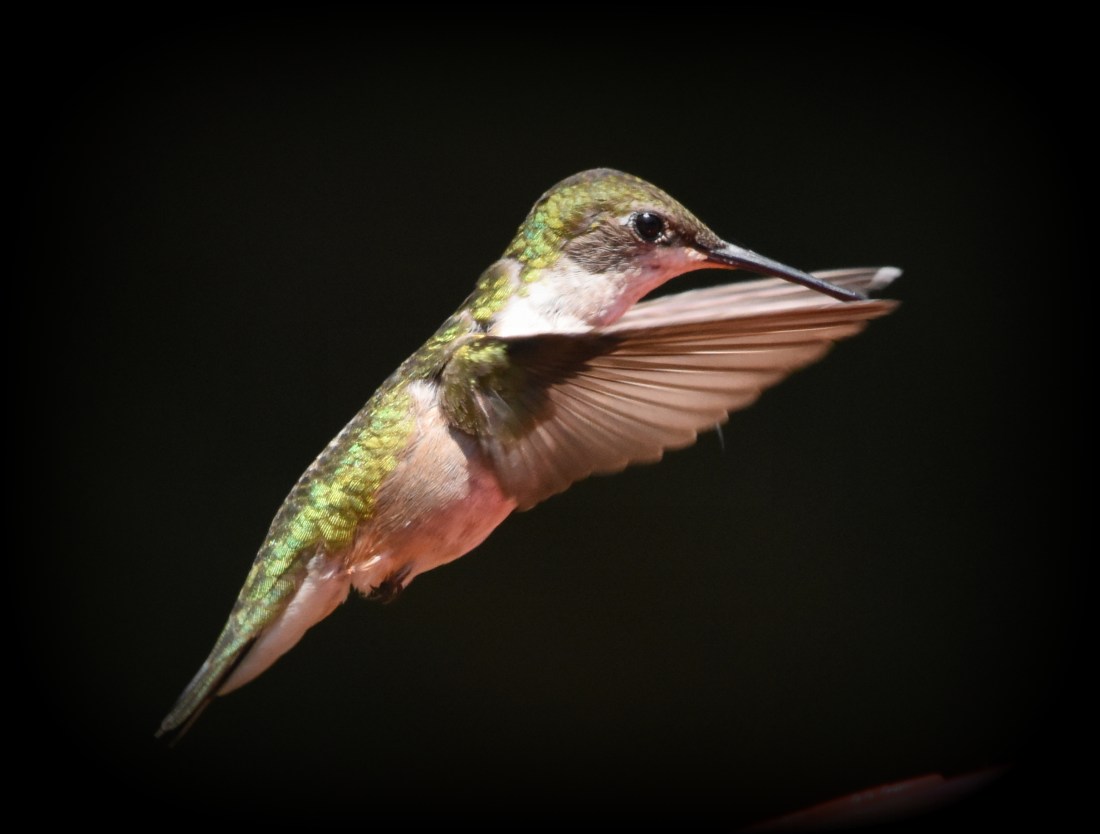
Ruby-throated Hummingbird
Eastern Giant Swallowtail
Monarch
Ruby-throated Hummingbird
Great Spangled Fritillary
Monarch
6.Paul Henry, Thornapple River Trail, Middleville, MI
I first learned about this trail along the Thornapple River last fall when Mel and I participated in a Woodpecker Festival! Since then, I’ve made a point of driving up to Middleville a few more times to take picture walks. It’s an easy walk along a paved trail and lots of different birds are attracted to the area in and around the Thornapple River. Here’s what I found…
Red-headed Woodpecker– my favorite catch of the day!
Belted kingfisher
Eastern Kingbird
Blue Dasher Dragonfly
Seven Turtles (can you find #7?)
Blue Dasher
Painted Turtle
Two-headed turtle– or big turtle on top of smaller turtle?
7. Gagie School Garden, Kalamazoo, MI
Along one of the main roads into downtown Kalamazoo, is a small garden that was created by the nearby, privately owned Gagie School. It is a beautiful patch of color along a busy commercial road…
A tattered American Lady butterfly
Cabbage White butterfly
Silver Spotted Skipper butterfly
Monarch butterfly
8. Wau-Ke-Na, William Erby Smith Preserve, Fennville, MI
The Wau-Ke-Na Preserve (“forest-by-the-water”) is another one of the natural areas being maintained and preserved for future generations by the Southwest Michigan Land Conservancy. There are two different sections to the preserve made up of a north and a south tract. Mel and I took the south tract today and ambled along a well mowed trail through prairie grasslands which were adjacent to forested areas. We heard a lot of birds in the nearby trees but weren’t able to capture many. They were too elusive. The butterflies, however, were close at hand and infinitely more cooperative!
The mowed paths at Wau-Ke-Na Preserve
Common Buckeye butterfly
Monarch butterfly
Eastern Kingbird high in a tree
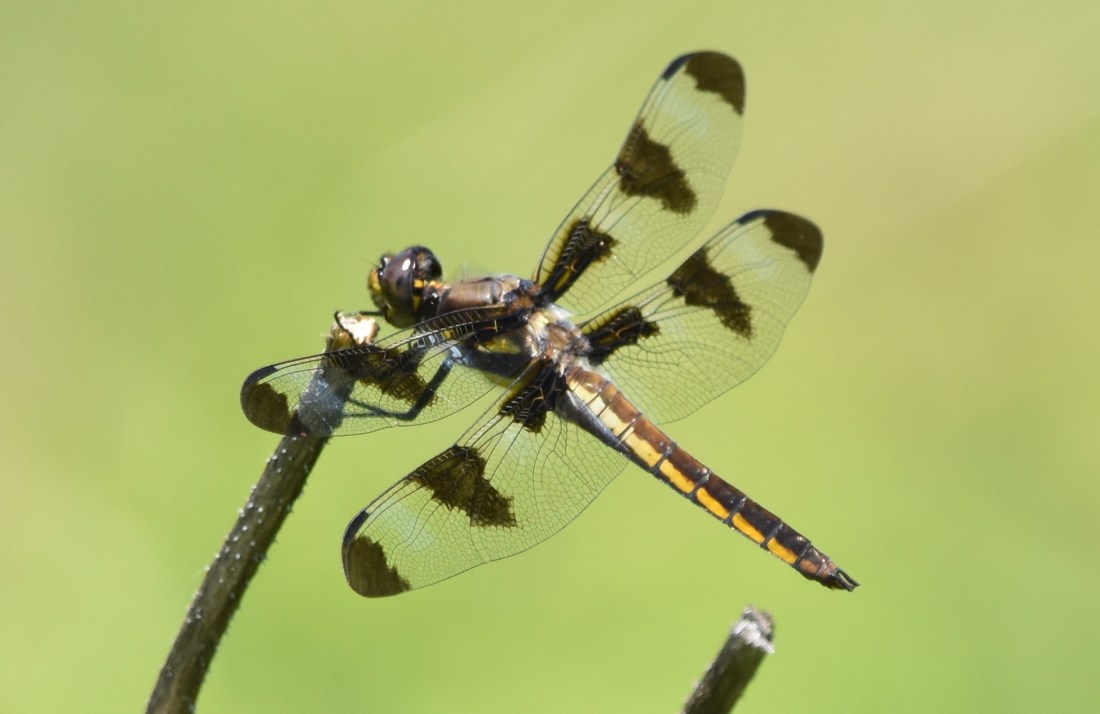
Twelve-spotted Skimmer
Virginia Ctenucha moth
Eastern Black Swallowtail
With so many beautiful things to see out there, it’s hard for me to even sit for awhile in my comfortable chair writing this. Fortunately, my chair faces a sliding glass door where I can look up periodically and be entertained by all the birds coming to our feeders or hanging out in the nearby trees–Red-winged Blackbirds, Chickadees, Bluejays, Grackles, Cardinals, Baltimore Orioles, Nuthatches, Tufted Titmice, Downy Woodpeckers, Red-bellied Woodpeckers, House Finches and the ubiquitous little Sparrows. What a feast!
Dr. Seuss’s children’s book, Oh the Places You’ll Go! came to mind this evening as I was reviewing all the places I’ve been these past 10 days on picture walks: Western Michigan University’s Business Technology and Research Park, which is right next door, Asylum Lake Preserve, which is right across the street, the Kalamazoo Nature Center, Ft. Custer State Park in Augusta, Wolf Lake State Fish Hatchery in Mattawan, Calvin Ecosystem Preserve & Native Gardens in Grand Rapids, Wau-ke-na Preserve in South Haven, and the Oshtemo Public Library just down the road!
American Bullfrog
Barn Swallow
Cottontail Rabbit
Slaty Blue Dragonfly
We are very fortunate, I think, to have so many beautiful places near at hand to explore— but, even a small backyard can be an inviting place for birds, butterflies and other creatures to visit if the environment is enticing enough for them to stay for awhile. Sometimes I enjoy just standing outside our back door ‘capturing’ all the birds as they sit in the trees before flying in to eat at our feeders. Our backyard itself is insignificant, but the communal yards of our condo development abut the edge of a woods and small creek– making it a haven for a large variety of birds, a small herd of deer and a rafter of wild turkeys. So even if I never left our our yard or our neighborhood, I’d still have lots of opportunities for pictures!
Black Swallowtail Butterfly
Halloween Pennant Dragonfly
Common Buckeye Butterfly
Common Yellowthroat, female
Every time I go out to explore, whether I wander near or far, I always wonder what I’ll find. Here’s the rest of what I found this week….
A beautiful fawn wondering what the heck I’m doing in his neighborhood!
Mallard Duck, female
Killdeer hiding in the grass
House Wren with a Praying Mantis for dinner
Common Green Darner
Eastern Amberwing
Slaty Blue Dragonfly
Mama Wood Duck and her brood
Widow Skimmer, female
Ruby Meadowhawk, male
Red Squirrel
American Robin
Autumn Meadowhawk
Pearl Crescent Butterfly
Green Heron with a tiny fishNorthern Rough-winged Swallows
Every time I sling my camera over my shoulder to go on a picture walk, I’m excited by the possibilities of what I might find. In the back of my mind, I’m always hoping that I’ll find something new. More often than not, I find something I’ve already seen before. The joy in that, though, is learning something new every time I watch a creature in its natural environment.
Viceroy Butterfly Viceroy and Monarch Butterflies look very similar but the Viceroy has a black line across the hind wings and the Monarch does not. The Viceroy is also a bit smaller than the Monarch. Also, the caterpillars of these two butterflies are significantly different in appearance.
Mallard
Mallard
Canada Geese I just liked the way these geese looked lined up along the shore with such a clear reflection.
Today, for instance. I was standing on the shoreline of one of the ponds at the Wolf Lake State Fish Hatchery observing dozens of swallows swooping through the air catching bugs. As I was watching, I noticed that some of the birds were taking breaks in a nearby tree—so I zoomed in. To my surprise none of the birds in the tree were swallows! They were cedar waxwings! I had never seen cedar waxwings swooping and diving over a body of water like that—or maybe I had always assumed the birds I was looking at were swallows! It was nearly impossible for me to tell the difference between the swallows and the waxwings as they quickly flew through the air snatching insects.
A beautiful Cedar Waxwing
While I was standing on the shore observing the swallows and waxwings, I noticed a small yellow bird flitting around sporadically in the underbrush below me. My heart skipped a beat! I thought for sure it was a Prothonotary Warbler like the one I had seen in the exact same spot last year. Back then, I had been so excited to find a bird I had never seen before– and then profoundly disappointed to find the battery on my camera was dead! In my naiveté, I thought if I rushed home for a new battery and then rushed back (40 minutes minimum), the bird would still be there. It was a huge long shot for sure, but I had nothing to lose. Surprisingly, though, I made it back in time to get the shot! Today’s bird, however, was not a Prothonotary Warbler, but a Yellow Warbler—equally cute but not particularly rare.
A lovely Yellow Warbler
After a million or so pictures of the Yellow Warbler and the Cedar Waxwings, I decided I needed to get a little exercise –it was, after all, a picture walk, and I had been standing in the same place for over an hour! Within 100 yards, though, I had to stop again because I spotted even more swallows swooping over an adjacent pond– with dozens more perched in a nearby tree along the bank. When I zoomed in on them individually, I could identify Bank Swallows, Northern Rough-Winged Swallows, Barn Swallows and Tree Swallows! I didn’t even know they all hung out together!
Barn Swallow
Northern Rough-winged Swallow
Swallow Squabble
Northern Rough-winged Swallow
Northern Rough-winged Swallow
Bank Swallow
Eastern Kingbird
Willow Flycatcher
As it turns out, I got very little exercise today, but tons of pictures! To make up for the walking shortfall, Mel and I went for a stroll in our neighborhood later in the day. As part of our itinerary, we stopped at our local Prairie Garden– and immediately spotted two Hummingbird Moths! They are such beautiful insects and I hardly ever see them– so I couldn’t wait to finish our walk and grab my camera! Not only were the two moths still there when I returned almost an hour later, they positioned themselves in just the right spot for pictures—plus they stayed around long enough for me to experiment with different settings so that I could freeze the wing action and get the right exposure. I was quite happy with the results.
Hummingbird MothHummingbird MothHummingbird Moth
In spite of all the pictures I took today, I didn’t find anything new– but I certainly had a great time looking!
It’s been a hot and steamy week with periodic bouts of rain, but I still managed to squeeze in a picture walk every day except Friday. It was just too hot to enjoy much of anything that day! The temperature peaked at 93 degrees and the heat index, or how it really felt outside, topped 100 degrees! I expect even the birds and the bees thought twice about expending any extra energy flitting about in that heat!
Sunday July 14, 2019
Kalamazoo Nature Center, 7000 N Westnedge Ave, Kalamazoo, MI
The Kalamazoo Nature Center is one of my favorite places to go for a picture walk. There are so many different habitats to visit and more than 14 miles of hiking trails. For today’s picture walk, I spent all my time in the Tall Grass Prairie looking primarily for birds but finding mostly flowers, butterflies and dragonflies.
Silver Spotted Skipper on Bee Balm 1/1000 sec, f/7.1, ISO 500
Coneflower 1/1000 sec, f/7.1, ISO 500
Twelve Spotted Skimmer, female 1/800 sec, f/7.1, ISO 400
Monday July 15, 2019
Al Sabo Land Preserve, 6310 Texas Drive, Kalamazoo MI
Ten days ago when Mel and I last visited the Al Sabo Preserve, we were blown away by how many different dragonflies there were: Blue Dashers, Calico Pennants, Common Whitetails, Dot-tailed Whitefaces, Eastern Pondhawks, Halloween Pennants, Spangled Skimmers, Twelve-spotted Skimmers and Widow Skimmers. That may not seem like enough to blow us away, but the male and female dragonflies of each type look totally different from each another so it always seems as if there are twice as many different types!
Dot-tailed Whiteface Dragonfly 1/500 sec, f/6.3, ISO 800
Spangled Skimmer 1/500 sec, f/8, ISO 800
There are apparently over 5000 different dragonflies and damselflies worldwide and about 162 different species in Michigan. I’ve found a wide variety of them, but nowhere near the state total!
Twelve Spotted Skimmer, male 1/640 sec, f/6.3, ISO 640
Widow Skimmer, male 1/800 sec, f/6.3, ISO 640
Today, though, when I walked the bike trail that skirts the woods and the meadows of Al Sabo preserve, there didn’t seem to be the same abundance of dragonflies as there had been a little over a week ago, but I still enjoyed my walk and was pleased to find an Eastern Comma butterfly, which I rarely see
Eastern Comma Butterfly 1/800 sec, f/6.3, ISO 1000
Tuesday July 16
Western Michigan University, Business Technology and Research Park, Intersection of Drake and Parkview Rd., Kalamazoo, MI
I particularly love this little ‘park’ –partly because it’s right next door and partly because I’m guaranteed to find something interesting –- Great Blue Herons and Swans, Barn Swallows and Tree swallows, Killdeer and ‘regular’ Deer, Frogs, Turtles, Geese and Goldfinches, and once upon a time, an elusive Green Heron. Even though it is not a ‘park’ in the strictest sense of the word, the green spaces around all the different buildings have been so well designed with an abundance of wildflowers and several ponds that it is a definite haven for a wide variety of birds, butterflies, amphibians and mammals.
Barn Swallow 1/640 sec, f/6.3, ISO 640
Cedar Waxwing 1/1000 sec, f/6.3, ISO 640
Local deer giving me the raspberries! 1/800 sec, f/6.3, ISO 500
Mute Swan 1/320 sec, f/6.3, ISO 800
Wednesday July 17
Kensington Metro Park
Nature Center, 4570
Huron River Parkway Milford, MI 48380
Kensington Metro Park is about 2 hours from our home, but since it is on the way to visiting our grandson, I make a point of stopping in for a picture walk every time I travel to that side of the state. It’s a unique environment with an active heron rookery, friendly Sandhill Cranes, fearless Songbirds, Red-winged Blackbirds and Woodpeckers who eagerly pester you to feed them out of hand, and an elusive white deer! I always find something of interest to photograph at Kensington.
Ruby-throated Hummingbird 1/1000 sec, f/6, ISO 640
Great Blue Heron high up in the Rookery 1/500 sec, f/6.3, ISO 500
Thistle 1/640 sec, f/6.3, ISO 500
Thursday July 18
Asylum Lake Preserve, Intersection of Drake and Parkview Rd., Kalamazoo, MI
The Asylum Lake Preserve, like the WMU Business Technology and Research Park is within walking distance from my home. Unlike the business park, though, the Asylum Lake Preserve is an undeveloped tract of land made up of prairies and woods and a small lake. I enjoy walking the trails through the tall grasses looking for new or unusual insects or looking up in the surrounding trees for a bird I haven’t seen before. On one very rare occasion, I saw a Black-billed Cuckoo. Up until that day, I didn’t even know we had cuckoos in Michigan! Today I managed to capture a rarely seen hummingbird moth, a never seen Northern Pearly-eye butterfly and my very first Spicebush Swallowtail for the season.
Hummingbird Moth 1/1250 sec, f/6.3, ISO 800Hummingbird Moth 1/1600 sec, f/6.3, ISO 1000Northern Pearly-eye Butterfly (shot with a flash)Spicebush Swallowtail Butterfly 1/1250 sec., f/6, ISO 800
Common Whitetail, male 1/640 sec, f/9, ISO 640
Slaty Skimmer, female 1/800 sec., f/6.3, ISO 1250
Friday July 19, 2019
The heat index topped 100 degrees today! I never went out to take pictures!
Saturday July 20,
2019
Kalamazoo Nature Center, 7000 N Westnedge Ave, Kalamazoo, MI
Mel and I both went out for a picture walk early this morning before it got beastly hot. It still got hot, but not beastly so. Both of us had been hoping to find some of the beautiful Swallowtail butterflies like we had seen this time last year at the Nature Center. But, it was either too early in the day or too early in the season to find them, because we never spotted a single one. Last year at this time, there were dozens of Tiger Swallowtails and Giant Swallowtails flitting around here and there over all the beautiful wildflowers along the entry road. What we found instead was a Ruby-throated hummingbird, a Blue-grey Gnatcatcher, a House Wren, an Eastern Phoebe and a few Cedar Waxwings. I’ll have to go back in a few days to see if I can catch the butterflies again!
Eastern Phoebe
House Wren
House Wren 1/800 sec., f/6.3, ISO 640
Blue-gray Gnatcatcher
Ruby Meadowhawk
Ruby-throated Hummingbird taking a rest high in a tree 1/1000 sec., f/6.3, ISO 800
If Kingfishers were more like dragonflies, I wouldn’t have to work so hard trying to get a picture! Dragonflies are abundant. Kingfishers are not. Dragonflies let me stand close and take dozens of pictures. Kingfishers notice my presence from a hundred yards away and take off. Dragonflies eventually take off but come right back to the same spot and pose again. Kingfishers disappear.
A beautiful blue Slaty SkimmerOne of my favorite dragonflies, a Widow Skimmer, male
Today was a perfect example. As I was walking slowly through the Wolf Lake State Fish Hatchery in search of something interesting to photograph, I noticed a ‘blip’ out of the corner of my eye and froze—hoping not to startle whatever it might be. It was a barely visible belted kingfisher hunkered down on a tree limb! Rarely do I see them before they see me and this one was close enough (within 15 yards) for a decent picture– if I zoomed in all the way and was stealthy enough not to scare him.
Another Beautiful Widow Skimmer, maleThe Red Admirals were flitting around with the dragonflies.I waited around for a long time hoping to get a picture of this bullfrog catching one of the dozens of dragonflies fluttering around him, but he just sat like this forever!!
Ever so slowly, I started lifting my camera –maybe an inch, maybe two, and he was gone! That was all it took! Kingfishers are so incredibly perceptive—and skittish. Or maybe it’s just me. Mel said that the kingfishers he saw along the Kalamazoo river while he was canoeing this week were easy to spot and didn’t fly away when he approached. Hmmm. Whatever the reason, I’d lost my chance. Maybe if I had a duck blind and a year’s worth of patience, I could get the perfect shot, but I have neither.
Widow Skimmer, female
A lovely European Starling in the sunlight
I managed to catch a few of the beautiful, buttery yellow Cedar Waxwings on my walk today.
So I continued my languid walk in the late afternoon heat
hoping some other birds would be more cooperative. It didn’t take long before I
spotted three swallows sitting on a branch over the water, but they were on the
wrong side of the sun and difficult to photograph. I tried anyway.
One of the swallows I managed to capture just before hearing the distinctive sound of a nearby Kingfisher.
Slowly, I turned my camera in the direction of the sound and saw my kingfisher diving into the pond in search of dinner. Once the bird emerged from the water, I was able to follow its flight path into a tree on the edge of the pond. Unfortunately, the bird was so far away, all I could see was a small white dot in a sea of green. When she dove in again, I tried to follow her path with my camera– but at 25 miles an hour, it was mostly folly. Eventually, when the kingfisher landed on my side of the pond, I took a million and a half pictures hoping that one or two might actually turn out. She was still pretty far away.
Belted Kingfisher, female
The dive
The splashdown!
Belted Kingfisher, female
If this kingfisher had been a dragonfly, she would have landed within 10 feet of me. She would have stood around patiently for a variety of poses, flown away briefly and then come back for a few more shots. As it was, I was left with a super elusive bird that hates to have its picture taken and never hangs around for a minute if there’s any chance at all that someone might be watching!
This is what a kingfisher looks like from across the pond using a 600mm lens!A kingfisher fishing “Many young kingfishers die within days of fledging, their first dives leaving them waterlogged so they end up drowning.”