I always enjoy finding house sparrows! And I love hearing their cheerful voices as they sing outside my kitchen window during the cold winter months. They are a pleasant reminder that there is joy to be found even on the dreariest of days. House sparrows, however, are not everyone’s favorite bird!
House Sparrow
Some people dislike them because they are an invasive species—but they didn’t come here on their own! Nicholas Pike, the director of the Brooklyn Institute, imported the first eight pairs of house sparrows from Liverpool, England in 1850 to control insect pests like the linden moth caterpillars that were damaging trees on the East Coast. Pike only released 16 birds but within 30 years those sparrows, as well as others that were released across the country, turned into thousands of birds and became a serious agricultural problem and a significant threat to our native birds.
House Sparrow
House Sparrows are known for taking over the nest boxes of native birds, evicting the birds who have already established nests in those boxes, destroying the existing eggs, killing the nestlings, and even killing the females who are incubating the eggs! They are not America’s favorite bird!
House Sparrow on a nest box
I like to keep in mind, though, that it wasn’t their idea to come here in the first place and, in spite of their ‘shortcomings’, house sparrows play a very beneficial role in our environment by controlling a wide variety of pests including caterpillars, aphids, moths, and ants. They also eat mollusks, crustaceans, earthworms, lizards, frogs, berries, fruits, nuts, and our discarded scraps of food! Let’s hear it for the house sparrows!!
House Sparrow
House sparrows are also an excellent model organism for many avian biological studies. They are abundant, easy to raise, and generally don’t fear humans. Because these little birds are so adaptable and easy to study, there have been at least 5,000 scientific papers published over the years using them as the study species!
House Sparrow in winter
I love the house sparrows for their chattiness and their social skills! They often gather in big groups and fill the trees with their cheerful song, a series of ‘cheeps,’ made mostly by the males, and repeated incessantly during much of the year to announce that they possess a nest and they want to attract a female. When dozens of these little birds are singing happily together, it’s music to my ears.
House Sparrow
When I hear house sparrows singing, I stop to listen and, if they’re not preening and fussing too much, take a few pictures. I don’t think many photographers have any interest in these birds, however. House sparrows lack the ‘pizazz’ of their more colorful cousins, like the bright red Northern cardinals, the stunningly blue indigo buntings, or the very, very orange Baltimore orioles! I love a colorful bird as much as the next person, but sometimes a sparrow is all I need!
Northern Cardinal
Indigo Bunting
Baltimore Oriole
There have been so many times when I’ve stopped to take pictures of sparrows and ended up with so much more than I expected! The sparrows draw me in with all their chattiness, but the other birds, the more solitary ones, are often hiding nearby. Some birds, like the kingfishers, just stop by for a quick hello and disappear!
Belted Kingfisher
It happened again the other day! I was waiting to photograph a sparrow, in a tree full of sparrows, when an elusive belted kingfisher landed on a limb right above me! I only got one shot and he was gone! In the nearby trees, I saw the leaves rustling. There were three small warblers flitting about quietly; a Nashville, a Cape May, and a Yellow warbler. Warblers rarely sit still like the sparrows, but I still managed get a few pictures.
Cape May Warbler
Nashville Warbler
Yellow Warbler
If it hadn’t been for the chatty little sparrows, I never would have stopped for a picture. I never would have seen the warblers, or the kingfisher, or the beautiful wood duck that silently emerged from reeds in a nearby pond while I was still watching the sparrows!
Female Wood Duck in a nearby pond
Sometimes a sparrow is all I need get the ball rolling!
We’ve been back to our home state of Michigan for well over a month now after a three-month hiatus in Florida. I haven’t returned to my usual photography routine of taking pictures every day like I did in Florida or like I did through most of the pandemic years when all my regular routines were put on hold and I had time to pursue this hobby full time.
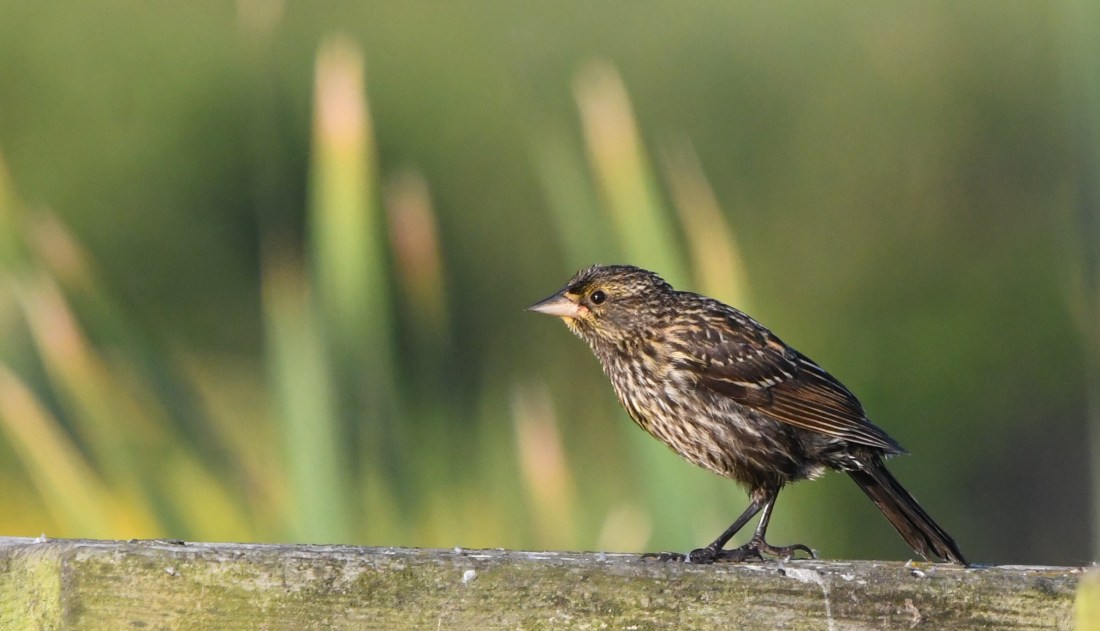
Male Rose-breasted GrosbeakEastern BluebirdAmerican RobinMale House FinchFemale Red-winged BlackbirdMale Red-winged Blackbird
My picture taking days have taken a nose dive since returning to Michigan. It’s not that I’ve lost interest, or sustained an injury, or had a spate of bad weather. It’s pickleball. I’ve been distracted by pickleball.
Blue JayFemale Northern CardinalMale Northern CardinalMale Barn Swallow
There are pickleball courts right next to our condo, and there’s a whole community of pickleball enthusiasts nearby who are readily available to play. It’s impossible for me to stay home if I know there’s a pickleball game going on. As a result, I haven’t gone on any ‘field trips’ this spring or gone for many picture walks.
A male Grackle enjoying my peanuts and seedsEastern TowheeWhite-throated SparrowWhite-crowned SparrowEuropean Starling
Mostly, I’ve been finding an hour or two here and there to stand outside our back door with my camera in hand to take pictures of all the usual suspects: woodchucks, woodpeckers, chipmunks, squirrels, white-tailed deer, and a wide variety of colorful songbirds. They’re all back there carrying on with their busy, productive lives even when I’m not there to document it.
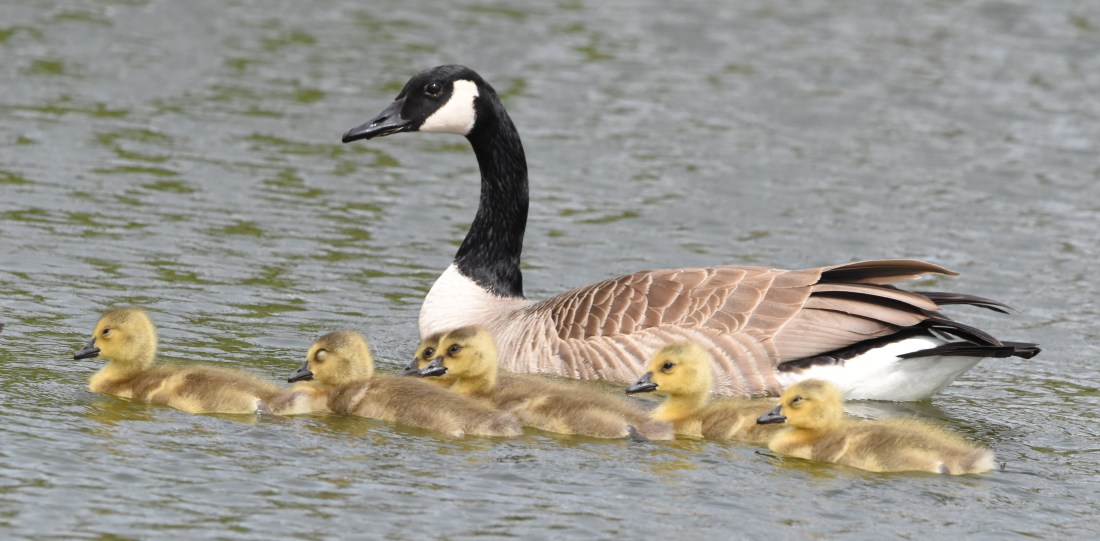
Eastern CottontailCanada Goose and goslingsFemale MallardsYoung house sparrow begging for food!
The most interesting critter in our backyard has been the local woodchuck. I was standing outside our back door taking pictures of all the different birds landing in the nearby trees when I noticed movement about 50 feet from where I was standing. When I zoomed in on the mystery creature, I discovered it was a mama woodchuck transporting her little babies, one by one in her mouth from point A to point B. I’m not sure why she was moving them, but it was so much fun to watch! By the way, did you know that those little babies are called chucklings? I loved learning that little bit of trivia!
Mama woodchuck with one of her several babies
Then, the other day a red-headed woodpecker showed up! I rarely ever see them, and I’ve never seen one in our backyard! Getting a picture of a red-headed woodpecker was almost as exciting as getting one of a pileated woodpecker, but the pileateds are regular visitors to our yard, and the red-headed woodpecker was definitely not! So it was a great find!
The cutest little visitors are the chipmunks and the squirrels. They’re everywhere out there eating the fallen birdseed, digging holes everywhere in the grass, and constantly trying to steal birdseed from our second story feeders. But, they’re so darned cute and so photogenic I’m inclined to think of them as entertainment rather than irritating pests.
ChipmunkRed SquirrelFox SquirrelHot squirrel!
Among the most stunning creatures in our backyard are the wood ducks, the Baltimore orioles, the white-tailed deer, the yellow warblers and, perhaps, even our resident turkey. In all fairness, though, all the creatures I photograph are beautiful to me.
Wood Duck on Cherry Creek behind our houseBaltimore OrioleYellow WarblerOne of our local turkeys!
I feel quite lucky to have such a wide variety of interesting creatures right outside my back door and I treasure all the opportunities I have to photograph them.
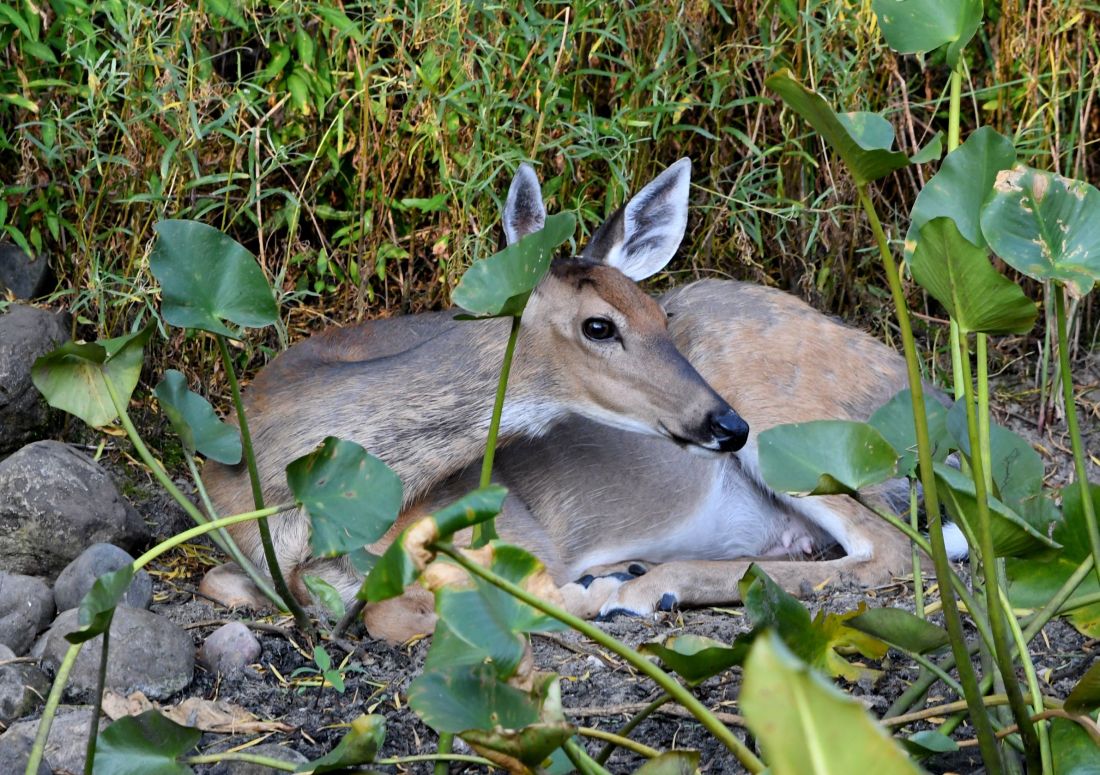
White-tailed Deer wondering what I’m up to
There’s no need to travel far to be amazed.
White-tailed fawn at the edge of the small wooded area behind our row of condos
I love going out in the cool morning light for a picture walk, especially during these hot summer days when the afternoon temperatures have been well into the 90s! But our lovely summer days are quickly coming to an end, a bittersweet reminder that fall and winter are close at hand. I am looking forward to the cool, crisp days of fall, but am acutely aware that they will come at a price– all the colorful butterflies, dragonflies and frogs that I love to photograph will soon be gone. Come winter, the world will be even more monochromatic.
Eastern Tiger Swallowtail
Autumn Meadowhawk and Eastern PondhawkAmerican Bullfrog
Common Jewelweed and a Redbud leaf
That said, my walk the other morning was a perfect blend of Summer and Fall. It was deliciously cool in the morning, sunny and warm by the afternoon; much too cold for the frogs and dragonflies as the day began, but plenty warm a few hours later for all my favorite creatures to be out sunning themselves!
Blue Dasher
Differential Grasshopper and a Widow SkimmerMonarch Butterfly
Black Saddlebags and a Blue DasherBlack Elderberry
Knowing full well that colder weather is nipping at my heels, I’ve been out nearly every day for at least a couple of hours trying to capture what’s left of summer. Because of the pandemic, we haven’t traveled far and I’ve been limited to visiting the same preserves and natural areas closest to home many times over. When I’m in the midst of taking my 700th picture of a monarch or a blue dasher or a bullfrog in the same preserve I’ve been to hundreds of times, I stave off the potential monotony of it all by telling myself “It’s all practice, Jeanne, It’s all practice”– It’s a different day and a different light, every shot I take is a new challenge!
Barn Swallow
Common Buckeye and a Silver-spotted SkipperPainted Turtles
Female Baltimore Oriole
The silver lining to going back to the same places over and over again is that I really get to know its inhabitants; a case in point is the Wolf Lake State Fish Hatchery. I’ve been going there at least twice a week for years—and even more so during this pandemic. It’s a wonderful place to explore with dozens of ponds and lots of wildflowers. I’ve been there so many times that I know the best places to look for frogs; the most likely places to find the swallows perched on limbs, and which ponds the kingfishers favor most. I thoroughly enjoy this knowledge and this familiarity —but I am still longing for a change of venue.
Female Red-winged Blackbird
American Goldfinch and a Ruby-throated HummingbirdEastern Kingbird
Bull Thistle and Sneezeweed
Female Rose-breasted Grosbeak and a Starling
Hopefully, by this time next year, the world will be open again and we can all feel safe in our travels—however small those travels may be.
Amid the hundreds of thousands of deaths across the globe due to COVID-19, the senseless and horrific deaths of black men and women at the hands of white racists here in the states, the rioting across our country as the result of those crises, and the ‘leadership’ of a president who continues to fan the flames of hate and intolerance, it’s often hard to find joy.
This one daisy standing alone in a dark field reminded me of how hard it is to find joy when everything looks so bleak.
Most days, what saves my soul from total despair are my picture walks. When I’m out and about on a trail with my camera, the sadness of the world falls away as I look for things to photograph that capture my attention, my curiosity or my heart. It feels like a form of meditation.
A Flycatcher and a Goldfinch
A Nessus Sphinx Moth (aka Hummingbird Moth)
Baltimore Oriole and a Gray Catbird
A Barn Swallow and a Tree Swallow
Yellow Warbler
The Cambridge English Dictionary defines meditation as, “the act of giving your attention to only one thing, either as a religious activity or as a way of becoming calm and relaxed.”
A Brown Thrasher and an Eastern Kingbird
White-tailed deer looking coy
Once I spot something that looks interesting or beautiful or odd, there’s no room in my brain for any worries other than how to get the best shot that I can. It’s a game of sorts really–one that I never seem to tire of. Did I get the settings right? Should I change where I’m standing? Can I get a little closer without scaring the animal away? When I do get most of those things right, and the picture turns out clear and crisp and appealing, I feel like I’ve accomplished something.
The Bullfrogs always bring a smile to my face!
Columbine
Green Heron
A Painted Turtle and an American RobinMourning Dove
In addition to feeling like I’ve accomplished something, my picture walks are good therapy. At the end of a very long day of unrelenting heartbreak in the news, I can take to the trails to unwind and re-focus, both literally and figuratively, to find all the beauty that still remains.
A Gosling and a pair of MallardsSpotted Sandpiper
Mute Swan
A Red-winged Blackbird and a Tree SwallowNorthern Map turtle shedding its scutesLupine
We have been sheltering in place for over two months now and our lives have fallen into a new rhythm, a new pattern, a new kind of un-hurriedness.
Baltimore Oriole and Blue Jay
Red-bellied Woodpecker
Male and Female Cardinal
Yellow-rumped Warbler
Even though the restrictions in our state are loosening and many businesses are gradually opening up (within certain guidelines and directives), Mel and I will be following our own guidelines for the foreseeable future. We won’t really feel safe until there’s a vaccine for COVID-19, which isn’t expected, at the earliest, until January 2021. In the meantime, we are wearing our masks in public, avoiding the grocery store as much as possible, and giving each other pandemic haircuts!!
Palm Warbler
Black-capped Chickadee and Eastern Bluebird
American Goldfinch
Female and Male Rose-breasted Grosbeak
That said, we do make a point of getting out for a walk every day, and I make a point of getting out for a Picture Walk nearly as often. In an effort to avoid running into other people, however, many of my picture walks have become ‘picture visits’. A picture visit involves little or no walking and a fair amount of sitting. One of my easiest ‘picture visits’ involves walking out our back door to the deck and taking pictures of the neighborhood birds perched on the branches in the nearby trees.
American Redstart and a Downy Woodpecker
Ruby-crowned Kinglet and House Wren
A sweet young deer in our nearby woods
Barn Swallow
Tree Swallow
Another kind of ‘picture visit’ involves walking 50 yards or so down to the edge of the creek with my lawn chair and camera to sit for awhile and watch Mother Nature’s live TV show with cameo appearances by Great Blue Herons, White Egrets, Mr. and Mrs. Wood Duck, a Canada Goose family, Mr. and Mrs. Mallard, a muskrat, a woodchuck, and a bird I’d never seen before, the Northern Water Thrush!
Northern Water Thrush and a WoodchuckAn unusual blue-headed Mallard (they usually have green heads) in the creek behind our house
Canada Goose and Great Blue Heron
Great Egret
Eastern Kingbird
Most of my picture walks lately have been close to home, where I just walk out the door and wander through the nearby woods, or, if I wander a little further, to the college campus next door where there are numerous ponds and plenty of open spaces to attract both large and small birds. Some of my best surprises have included a Spotted Sandpiper, a Solitary Sandpiper, a Yellow Warbler and, my favorite, the Green Heron.
Green Heron
A Solitary Sandpiper and a Yellow Warbler
Mute Swan
Female Red-winged Blackbird and a White-crowned Sparrow
Every picture walk or ‘picture visit’ is a discovery of one sort or another—sometimes it’s a new bird, sometimes it’s a new behavior, and sometimes it’s just enough to be outside and rediscover what a privilege it is, especially during this pandemic, to be in good health and to have the time to enjoy so many of nature’s wonders.
A Blanding’s turtle making life a little easier for his fellow turtle!
I have been staying close to home for most of my picture walks lately because of COVID-19 and the need for social distancing. It’s amazing to me that some of my favorite places to walk have been ‘packed’ with people–at least the parking lots have been over-flowing when I drive by. These days, having so many people to worry about is anxiety provoking for me. So, I’ve been taking more pictures from our deck, our backyard and the nearby woods. Occasionally, I’ve gone for a short drive to our state fish hatchery where there are several large ponds and plenty of room to walk without running into anyone, or to the not-so-distant bird sanctuary that is also lightly populated.
Backyard Birds:
Blue Jay
American Goldfinch
Common Grackle
Red-bellied Woodpecker
Downy Woodpecker
White-crowned Sparrow
White-throated Sparrow
Even when I do find a fairly isolated place, I always have a mask tied around my neck ready to pull up over my mouth and nose if need be. Perhaps, I’m being overly cautious, but as an older person with no desire to die just yet, I’m not willing to take more risks than necessary. The stakes are too high.
More Backyard Birds:
Black-capped Chickadee
Male Cardinal
Baltimore Oriole
Male House Finch
Female House Finch
Starling
Backyard Critters: Black Squirrel, Fox Squirrel and Red Squirrel
After two and a half months of summer-like weather in Florida, it’s been fun to watch spring unfold here in Michigan. The trees are getting greener, the flowers are starting to bloom, the migrating birds are coming back, and our favorite spring peepers are ‘singing’ in the creek behind our house. Every evening, if our windows are open, we can fall asleep to a comforting chorus of these tiny melodic frogs.
Spring Peeper (picture from the Internet) and a Green Frog from the same creek as our peepers
“Spring peepers are to the amphibian world what American robins are to the bird world. As their name implies, they begin emitting their familiar sleigh-bell-like chorus right around the beginning of spring. The spring peeper is Michigan’s smallest frog (0.75 – 1.38 in. long) also its loudest.”
Tree Swallow
Barn Swallow
Barn Swallows Squabbling
Yellow Warbler
Palm Warbler
Eastern Phoebe
As I write this blog in the early in the morning light, our windows are open, the sun is shining and, from the comfort of my easy chair, I can watch all the different birds coming to our feeders or to the nearby trees just beyond our deck —Baltimore Orioles, American Goldfinches, Blue Jays, Cardinals, House Finches, Starlings, Red-winged Blackbirds, Grackles, Black-capped Chickadees, and a variety of woodpeckers. I’m still waiting for the Red-breasted Grosbeaks, the Cedar Waxwings and the Hummingbirds to arrive.
Male and Female Red-winged Blackbirds
Canada Goose on the wing
Gosling
Female Brown-headed Cowbird
Canada Goose and Six Goslings
Muskrat
Painted Turtle
Trumpeter Swan
Female Wood Duck
Male Wood Duck
I spend as much time as I can outdoors, usually with my camera, even if it means just sitting outside for hours watching the birds and the squirrels and the chipmunks. I learn so much about animal behavior. It’s also the best prescription I have for finding joy.
We have much in common with the Solitary Sandpiper these days
Mel and I have just returned from a vacation in Colorado
where we both enjoyed pursuing our passions—fly fishing for him, nature
photography for me.
August 28-29
Hitchcock Nature Center, Honey Creek, Iowa
Our four day, twelve hundred mile car journey from Michigan to Colorado took us through the states of Indiana, Illinois, Iowa and Nebraska. According to Google Maps, it’s only a 16 hour journey— that is if you don’t stop to sleep or eat or go to the bathroom! We did all of the aforementioned, plus took a side trip to Honey Creek Iowa where we spent two days in a cozy little cabin on the grounds of the Hitchcock Nature Center. While at the nature center, we took pictures walks along the Fox Ridge Run Trail and the Boardwalk Trail.
Yelllow-billed Cuckoo (Mel’s shot)
Dickcissel
Great Spangled Fritillary on Field Thistle
Baltimore Oriole
Red-headed Woodpecker (Mel’s pic)
August 30- September 2
Ft. Collins, Colorado
From Honey Creek, Iowa we headed through Nebraska to Fort
Collins, our first Colorado destination.
Fort Collins is well known for its excellent fly fishing opportunities and a multitude of natural areas to explore. Over the course of our stay in Fort Collins, Mel went fishing several places along the Cache La Poudre River, while I took picture walks along the Hewlett Gulch Trail, the Fossil Creek Reservoir (twice) and at the Colorado State University Annual Trial Flower Garden. Mel joined me for picture walks on one of my visits to the reservoir and at the university flower garden.
Cache La Poudre River where Mel was fishing (He took this picture while he was fishing and you can see the tip of his rod in the lower right corner.)
Bumble Flower Beetle (something I’d never heard of!)
Rock cairn on the Cache La Poudre River
I was surprised to find White Pelicans in Colorado! This one, as well as hundreds of others were hanging out at the Fossil Creek Reservoir in Fort Collins
Pied-billed Grebe
Western Grebe
Red-legged Grasshopper– one of hundreds at the Fossil Creek Reservoir
Barn Swallows waiting to be fed!
Musk Thistle
Swainson’s Hawk
Fossil Creek Reservoir is a huge tract of land! That’s me in the lower left corner!
Beautiful flowers and butterflies from the Colorado State Annual Trial Garden…
Painted Lady butterfly
Aphrodite Fritillary (I think)
September 3-5
Estes Park, Colorado
As soon as we arrived in Estes Park, Mel headed to the fishing shops and I headed out looking for pictures to take. Surprisingly, the Knoll-Willows Nature Preserve is right in town and only a stone’s throw from where we parked! Within a minute or so of commencing my walk, I spotted a huge bull elk lounging in the underbrush along the edge of the preserve! A little farther down the sidewalk, were several of his girlfriends. Apparently, elk are a very common sight right in Estes Park!
Bull Elk lounging around right in downtown Estes Park!
The Girlfriends
Looking around for a snack
Hmmm. No dogs allowed. What’s up with that??
“Hey, good lookin’, what’s cookin’?”
Teenage boy in Estes Park
Bull Daddy in Estes Park
In front of the Visitor’s Center at Estes Park, the Hummingbird Moths and the Hummingbirds were a delight to watch…
White-lined Sphinx Moth or Hummingbird Moth
Broad-tailed Hummingbird
Sunset in the Rocky Mountains
Osprey with his catch of the day
Red-tailed Hawk
California Poppy
Barn Swallow
Pygmy Nuthatch
Least Chipmunk (look at the length of that tail!!)
Mountain Cottontail
September 5, 2019
Rocky Mountain National Park
to Steamboat Springs
We spent the day driving through the scenic, breathtaking Rocky Mountain National Park to reach our second Colorado destination, Steamboat Springs. Mel and I stopped several times through the mountain route to take in all the spectacular views– but I never took any scenery pictures (they tend to be disappointing compared to the real thing), preferring instead to look for the smaller things like birds and butterflies and mammals.
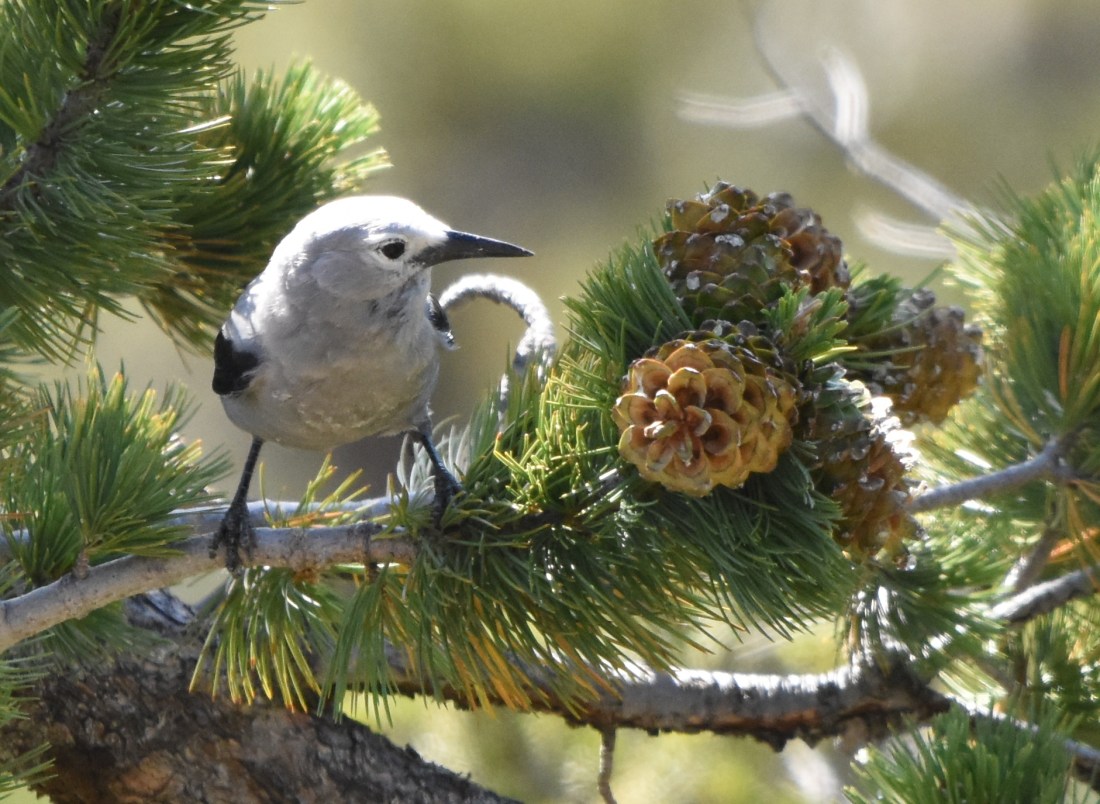
Clark’s Nutcracker (Clark’s Nutcrackers are mainly found in mountains at altitudes of 3,000–12,900 ft in conifer forests.)Gold-mantled Ground Squirrel in the Rocky Mountains This little critter looks a lot like a chipmunk but is much bigger– kind of like a chipmunk on steroids!
September 5-9
Steamboat Springs, Colorado
While Mel went fishing in the Yampa River, I went walking along the Yampa River Trail, a 7.5 mile multi-use trail that runs through the heart of Steamboat Springs and along the Yampa River. Along that trail, I found other points of interest like the Rotary Park Boardwalk and the Yampa Botanic Park, both of which were wonderful places for a quiet retreat as well as multiple picture opportunities.
Yampa River
Swift Moth
Two-striped Grasshopper
Black-billed Magpie along the Yampa River Trail
Cedar Waxwing
Osprey
Coronis Fritillary (I think) on coneflower
Yellow-rumped Warbler
bedraggled Robin
European Starling
Hollyhock
Yellow Warbler
Mourning Cloak butterfly
On one of the days that Mel didn’t go fishing,
we took a drive up to Fish Creek Falls
together for a picture walk and later spent hours at the Yampa Botanic Garden taking pictures of all the beautiful flowers,
birds and visiting insects.
White-lined Sphinx Moth (or Hummingbird Moth) in the Yampa Botanic Garden
Townsend’s Warbler up near Fish Creek Falls
Stunning flowers from the Yampa Botanic Garden…
Mel fishing the Yampa River
September 9-12
Colorado Springs, Colorado
Colorado
Springs was our last destination in Colorado and we made the best of the time
we had. As soon as we arrived on the afternoon of the 9th, we went for a
picture walk in Palmer Park on a
trail that turned out to be rockier and slipperier than we expected. Not many
pictures got taken—we were too busy watching our footing!
Cassin’s Vireo (I think) One of the few pictures I took at Palmer Park because I was too busy watching my footing!
The following morning we headed out to the Garden of the Gods, which is known for its enormous, awe-inspiring geologic
formations, including tall rock spires or hoodoos, and steep cliffs. It’s a
major tourist attraction and well worth the visit.
Garden of the Gods, Colorado Springs Garden of the Gods, Colorado Springs Garden of the Gods, Colorado Springs
After our visit to Garden of the Gods, Mel dropped me off at the Bear CreekNature Center to take pictures all afternoon while he explored the fishing shops, bookstores and coffee shops around Colorado Springs.
Vesper Sparrow
Woodhouse’s Scrub Jay
Rock Wren at Bear Creek Nature Center
Spotted Towhee
White-breasted Nuthatch
Scrub Jay
Lesser Goldfinch and Pine Siskin
On Wednesday, our last full day in Colorado, Mel dropped me off at the Cheyenne Mountain Zoo where I spent a delightful five and a half hours taking almost 800 pictures of the zoo animals and of the native birds that were flitting about in the nearby trees!
Baby Wallaby in his mama’s pouch– one of my favorite pictures from the zoo This baby wallaby is around 7 months old and barely fits in the pouch anymore! Here you see his head and legs sticking out!Mom and baby wallaby hanging out togetherThe Wallaby baby hopped around for a few minutes before scurrying back to the safety of his mother’s pouch.
Emu
Giraffe
The meerkats were great fun to watch. They are both curious and comical!
“What’s up, buttercup??”The meerkat on the right walked into the scene, laid down and decided to strike this rather suggestive pose! Their antics were so much fun to watch!Moose I had been hoping to see a moose in the wild in Colorado, but this is the closest I got!
Peacock wandering around in the zoo
Steller’s Jay at the zoo
Parakeets in the Budgie House at the zoo.Okapi Also known as the forest giraffe, Congolese giraffe, or zebra giraffe, native to Africa.
Male Wood Duck
Female Wood Duck
A young warthog (native of Africa)
Porcupine taking a nap
White-backed Vulture (Africa)
Red River Hog– native of Africa
The best part of going on vacation, besides getting away from every day routines, is finding things I’ve never seen before (and taking pictures!), eating things I’ve never tried before and meeting new people I’ve never met before.